
Every spring, Central Park transforms into one of the most magical places in New York City. The cherry blossom trees burst into soft pink and white blooms, drawing thousands of visitors from around the world. If you’re planning a visit, you probably have a lot of questions when do they bloom, where exactly should you go, and how do you avoid the crowds?
This guide covers everything you need to know about Central Park cherry blossoms. I’ve broken it down by location, timing, photography tips, and practical advice so you can plan a visit that’s actually worth your time. Whether you’re a first-timer or returning for the season, this guide will help you make the most of it.
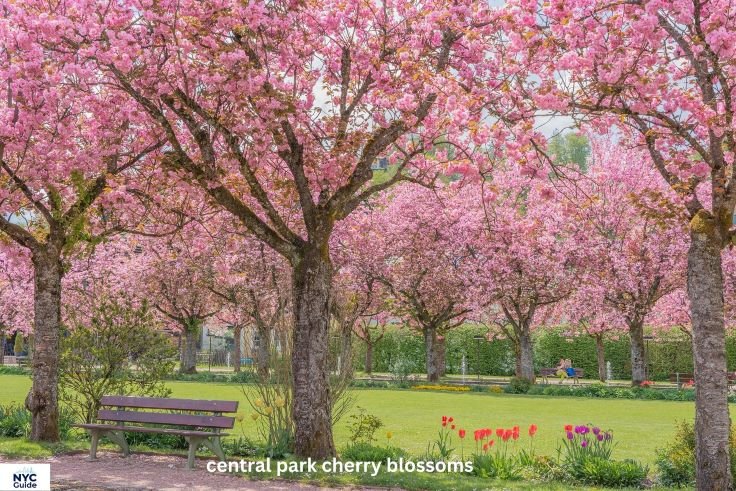
Spring in Central Park is genuinely special. The air feels lighter, the park fills with colour , and even long time New Yorkers slow down to appreciate the blooms. Let’s get into everything you need to know.
What Makes Central Park Cherry Blossoms So Special?
Cherry blossoms have a deep cultural meaning rooted in Japanese tradition. In Japan, the concept of sakura is more than just flowers it represents the beauty of life, impermanence, and renewal. Families gather under blooming trees for hanami (flower viewing) picnics, celebrating the brief but stunning arrival of spring. This tradition has traveled far beyond Japan, and New York City has fully embraced it.
Central Park’s cherry blossoms are famous for good reason. The park sits in the middle of one of the world’s most vibrant cities, and during bloom season, it offers a rare escape. You’re surrounded by pink petals while skyscrapers rise in the background it’s a contrast that’s hard to find anywhere else on earth.
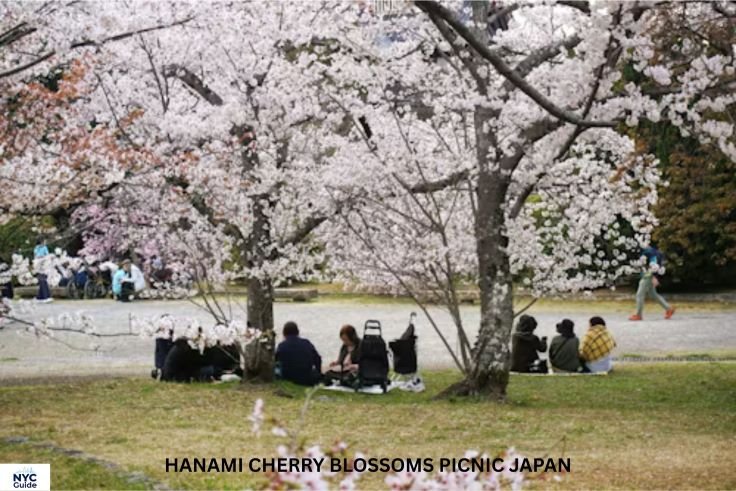
The experience and vibe during cherry blossom season is unlike any other time of year. Photographers set up their tripods at dawn. Families spread out picnic blankets. Couples stroll along the paths. Street musicians play near the blooming trees. The whole park feels alive in a way that’s genuinely hard to describe until you’ve been there yourself.
History of Cherry Blossoms in Central Park
The story of cherry trees in New York City is connected to a long tradition of cultural exchange between the United States and Japan. In the early 20th century, Japan gifted thousands of cherry trees to Washington D.C. as a symbol of friendship a gesture that became iconic. New York received its own share of this goodwill over time, and Central Park gradually became home to dozens of cherry tree varieties.
The landscape of Central Park was originally designed by Frederick Law Olmsted and Calvert Vaux in the 1850s and 1860s. Over the decades, the park’s management added ornamental trees, including Japanese cherry trees, to enhance seasonal beauty. Additional plantings continued through the 20th century, with some trees donated by Japanese organizations and cultural institutions as symbols of peace and partnership.
Today, Central Park has hundreds of cherry trees spread across its 843 acres. They include both early-blooming and late-blooming varieties, which means the blossom season in the park stretches across several weeks rather than just a few days.
When Do Cherry Blossoms Bloom in Central Park?
Cherry blossoms in Central Park typically bloom between late March and late April. The exact timing shifts every year depending on winter temperatures and the arrival of spring warmth.
Bloom Timeline Overview:
- Early Bloom (Late March – Early April): Yoshino cherry trees lead the season. These are the lighter, more delicate blossoms that open first. Pilgrim Hill is one of the best spots to catch this phase.
- Peak Bloom (Mid-April): This is when most of the trees are fully open and the park looks its most spectacular. Peak bloom usually lasts about one to two weeks.
- Late Bloom (Late April): Kwanzan cherry trees bloom later and stay open longer. They have fuller, deeper pink blossoms. The area around the Jacqueline Kennedy Onassis Reservoir is great for this phase.
How Weather Affects Bloom Timing:
A warmer-than-average winter often pushes bloom earlier, sometimes into mid-March. A colder spring delays things into late April. Rain and wind during peak bloom can knock petals off quickly, shortening the display. If you’re planning a trip specifically for the blossoms, keep an eye on forecasts starting in early March.
Year-to-Year Variation:
Bloom timing can shift by two to three weeks from one year to the next. In 2023, some trees bloomed unusually early due to a mild winter. In cooler years, peak bloom stretches closer to late April. Following the NYC Parks Department’s website or apps like the National Cherry Blossom Bloom Tracker can help you time your visit precisely.
Best Places to See Cherry Blossoms in Central Park
Central Park is large, and not every corner has cherry trees. Knowing where to go saves you a lot of wandering time. Here are the best spots, based on bloom type, timing, and overall experience.
🌸 Pilgrim Hill (Early Bloom Spot)
Pilgrim Hill, located near the East 72nd Street entrance, is where cherry blossom season in Central Park often begins. The trees here tend to bloom earlier than most other spots in the park, making it a great first destination if you’re visiting in late March or very early April.
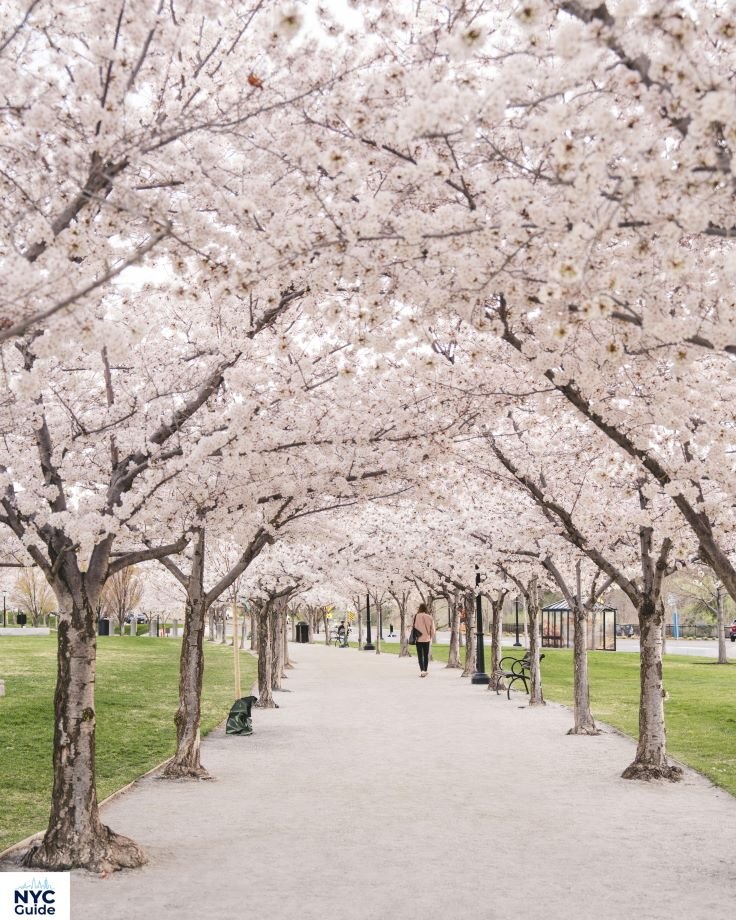
The hill itself offers a gentle slope with open views. It’s not a dramatic landscape, but during early bloom, the soft white and pale pink flowers against bare branches create a delicate, almost ethereal look. I visited here on a cool April morning once and was surprised to find it nearly empty a stark contrast to the crowds that arrive later in the season.
Tip: Arrive early in the morning on a weekday for the most peaceful experience here.
🌸 Cherry Hill (Iconic Photo Location)
Despite its name, Cherry Hill isn’t actually covered in cherry trees but it sits near some of the most photographed blossom trees in the park. Located close to the 72nd Street Transverse and near The Lake, this area offers a combination of open paths, water views, and flowering trees that photographers love.
The surrounding landscape makes it one of the most visually complete spots in the park during spring. You get the blossoms, the green lawns, the reflections on the water all in one place. It’s genuinely beautiful and worth a visit even if you’re not a serious photographer.
Tip: The path near The Lake just south of Cherry Hill gives you lovely water reflection shots in the morning light.
🌸 Jacqueline Kennedy Onassis Reservoir (Late Bloom Area)
The Reservoir, running track, and surrounding area near 86th to 96th Streets is one of the best places to catch late-season blooms. The Kwanzan cherry trees here are stunning fuller, more vibrant pink flowers that look almost fluffy compared to the earlier Yoshino variety.
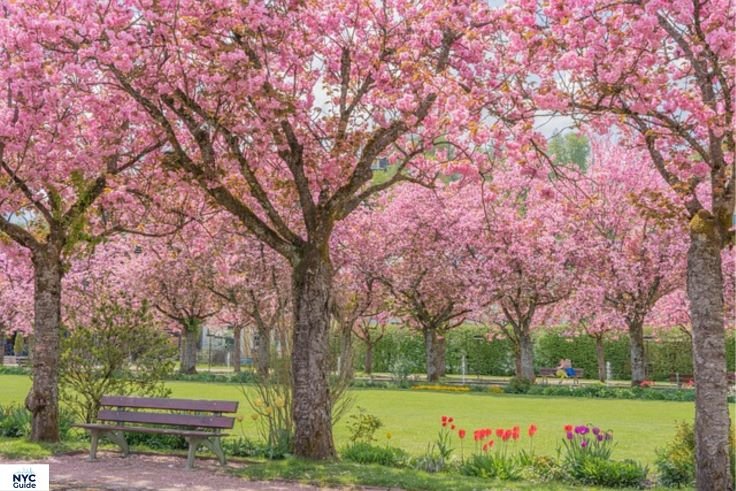
Walking the 1.58-mile running path around the Reservoir while the trees are blooming is one of those experiences that stays with you. The water reflects the blossoms and the sky, and the scale of it all that pink against the blue water is genuinely breath taking.
Best time to visit: Mid to late April, during the Kwanzan bloom phase.
🌸 The Ramble (Hidden Scenic Area)
The Ramble is Central Park’s woodland section, a deliberately wild and wooded area between 73rd and 79th Streets. It’s a favorite with birdwatchers and anyone who wants to escape the busier parts of the park.
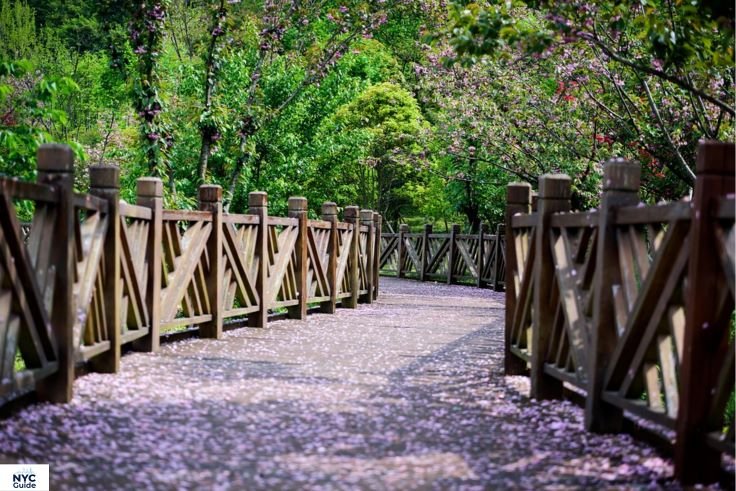
During cherry blossom season, scattered trees bloom among the woodland paths, creating a more intimate, forest-like experience. It doesn’t have the open vistas of other spots, but the contrast of delicate pink blossoms against dark tree bark and woodland greenery is something special. My friends who visited in early April described it as feeling like a hidden garden that most tourists don’t find.
Tip: The Ramble’s paths can feel confusing. Pick up a park map before you head in.
🌸 Bow Bridge & The Lake (Romantic Views)
Bow Bridge is arguably the most iconic spot in all of Central Park. The cast-iron bridge arches over The Lake, and when the cherry trees on either bank are in bloom, the scene is genuinely stunning. Petals sometimes float across the water’s surface. The reflections on still mornings are picture-perfect.
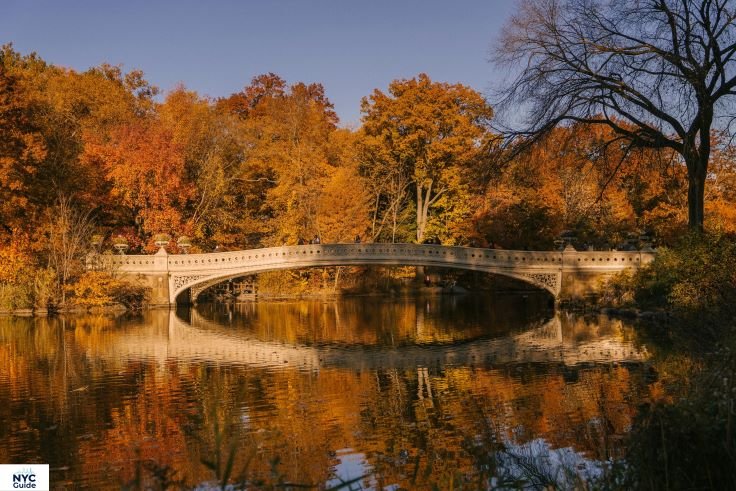
This is also one of the busiest spots during peak bloom. If you want it to yourself, come at 7 a.m. on a weekday. By 10 a.m. on a weekend, it will be packed. That said, even with crowds, it’s worth the visit — the views don’t disappoint.
Tip: For the best light and fewer people, visit at sunrise or in the early morning.
🌸 Great Lawn (Open Space Experience)
The Great Lawn, centrally located in the park between 79th and 85th Streets, doesn’t have the densest concentration of cherry trees, but it offers the open-space experience that many visitors love. During bloom season, the surrounding trees frame the lawn beautifully.
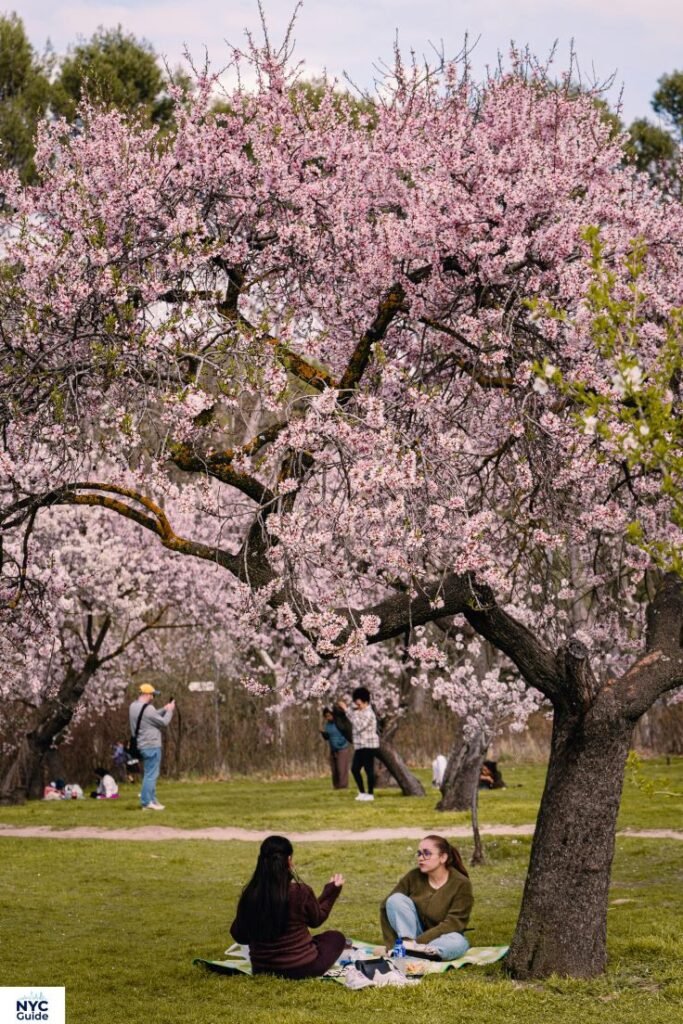
The Great Lawn is also where you’ll find picnic culture at its best during spring. Families, friends, and couples gather here on sunny days. It’s a wonderful place to slow down, spread out a blanket, and take in the whole spring atmosphere rather than just chasing the best photo spot.
Cherry Blossom Map & Bloom Types in Central Park
Understanding the two main types of cherry trees in Central Park helps you plan smarter.
Yoshino Cherry Trees (Early Bloom)
- Bloom time: Late March to early April
- Appearance: Single, light pink to white flowers, delicate and airy
- Best locations: Pilgrim Hill, east side paths near 72nd Street
- These trees tend to bloom and drop petals within one to two weeks
Kwanzan Cherry Trees (Late Bloom)
- Bloom time: Mid to late April
- Appearance: Double flowers, deep pink, fuller and more dramatic
- Best locations: Around the Reservoir, near the 90th Street entrance
- These trees stay in bloom slightly longer than Yoshino varieties
Why Location Matters for Bloom Timing: Trees on the south side of the park tend to warm faster and bloom earlier. Trees in shaded or north-facing areas near the Reservoir bloom later. This natural variation actually extends the overall blossom season, giving visitors more flexibility in their timing.
Best Time of Day to Visit
Timing your visit by time of day makes a big difference, especially during busy periods.
Morning (7–9 a.m.) This is the best time, without question. The light is soft and golden. The crowds haven’t arrived yet. You can stand on Bow Bridge or walk the Reservoir path in relative quiet. If you’re a photographer, morning is non-negotiable. The low-angle light creates depth and warmth that midday light can’t match.
Golden Hour (Sunset) Late afternoon light about an hour before sunset is the second best option. The warm orange tones complement the pink blossoms beautifully. Crowds thin out compared to midday, especially on weekdays.
Midday (10 a.m. – 3 p.m.) This is peak crowd time, especially on weekends. The light is harsh for photography. If you must visit at midday, focus on shaded spots like The Ramble or less popular sections of the park.
Weekday vs. Weekend Strategy: Weekday mornings are ideal. If you can only visit on a weekend, arrive before 8 a.m. to beat the crowds at popular spots like Bow Bridge. Weekend afternoons can be overwhelming at peak bloom beautiful, but very crowded.
Best Photo Spots for Cherry Blossoms
If you’re serious about photography, here are the spots that consistently deliver strong images.
Terrace Drive The tree-lined path near 72nd Street offers long, tunnel-like views when the trees are in bloom. Walk slowly and look for natural frames where branches meet overhead.
Reservoir Paths The running path around the Reservoir gives you continuous bloom on one side and open water on the other. Early morning reflections on calm days are exceptional for both photos and pure enjoyment.
West 72nd Street Entrance The entrance near West 72nd Street and Central Park West has several prominent cherry trees and opens onto a wide path. The angle from inside the park looking back toward the entrance creates a dramatic framing effect during peak bloom.
Bridge + Water Reflections Bow Bridge and the areas around The Lake provide water reflections that add depth and romance to any shot. Come during calm, windless mornings for the clearest reflections.
Practical Photography Tips:
- Use a wide aperture (f/1.8–f/2.8) to separate the blossoms from the background
- Overcast days produce soft, even light that’s actually very flattering for blossom photography
- Include foreground elements a path, a bench, a railing to add dimension
- Get low to shoot upward through the branches for a dramatic perspective
Tips for Visiting Central Park During Cherry Blossom Season
Timing Strategy Track bloom progress using the NYC Parks Department updates or apps like Leafsnap. Plan your visit within the first three to five days of peak bloom for the fullest experience. Waiting until the second week of peak bloom risks finding many petals already on the ground.
Crowd Avoidance
- Visit on weekday mornings
- Aim for 7–9 a.m. at popular spots
- Avoid weekends between 10 a.m. and 4 p.m. during peak bloom
- Rainy days actually offer beautiful, moody conditions with fewer visitors
What to Bring
- Comfortable walking shoes (you’ll likely cover 3–5 miles)
- A light layer April mornings can be cool
- Water and snacks (food is expensive near the park’s main entrances)
- A camera or fully charged phone
- A small blanket if you want to sit and picnic
Etiquette — Please Protect the Trees This is important. Every year, people shake branches to create a “petal shower” for photos or videos. This damages the trees and shortens the bloom. Please don’t do it. The same applies to climbing on trees or pulling branches. The NYC Parks Department actively monitors this during cherry blossom season. Being respectful ensures these trees stay healthy for future visitors.
Other Spring Attractions in Central Park
Cherry blossoms are the headliner, but spring in Central Park brings other natural and cultural highlights worth experiencing.
Tulips and Magnolias Tulips bloom in several formal garden areas of the park, particularly near Conservatory Garden on the northeast side. Magnolia trees with their dramatic, large white and purple flowers often bloom even before the cherry trees, sometimes in mid-March. They’re worth seeking out as a spring warm-up before peak blossom season.
Street Performers Spring brings out the park’s famous street performers in full force. Near Bethesda Terrace, Strawberry Fields, and the main plazas, you’ll find musicians, dancers, acrobats, and artists. The energy is infectious and adds to the overall festive atmosphere.
Picnics and Activities The Great Lawn, Sheep Meadow, and Heckscher Ballfields all become gathering spots for picnics as soon as temperatures rise. Frisbee, yoga sessions, and impromptu sports games fill the open spaces. Renting a rowboat on The Lake is a popular activity during bloom season drifting on the water with blossoms around you is one of those quintessential New York spring experiences.
Cherry Blossoms and Central Park’s Ecosystem
Cherry blossom season isn’t just beautiful for humans it plays a meaningful role in Central Park’s ecosystem.
When the trees bloom, they provide one of the first major nectar sources of the season for bees and other pollinators. You’ll often see honeybees moving between blossoms on warm, still days during peak bloom. This early pollinator activity supports the broader food web in the park.
The seasonal change from winter to spring also triggers increased bird activity. Central Park is one of the most important migratory bird stopovers on the East Coast, and many species arrive in April, coinciding with cherry blossom season. Birdwatchers in The Ramble report significantly higher species counts during this period.
Fallen petals, though seemingly just beautiful, also contribute organic material to the soil as they decompose. The annual leaf-out and bloom cycle of the cherry trees is part of a larger seasonal rhythm that the park’s wildlife, including squirrels, songbirds, and insects, depends on.
Nearby Attractions to Visit After Cherry Blossoms
If you’re spending a full day in the park, these nearby attractions pair beautifully with a cherry blossom walk.
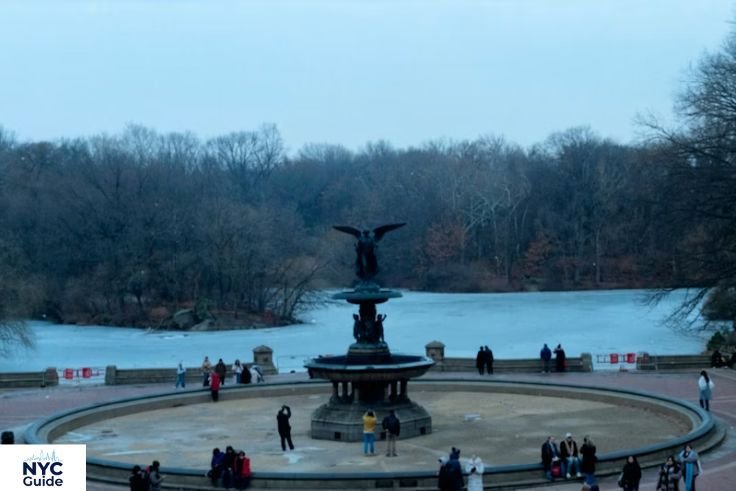
Bethesda Terrace Located at the heart of the park near 72nd Street, Bethesda Terrace is one of Central Park’s most architecturally stunning features. The intricate tilework, the famous Bethesda Fountain, and the view over The Lake make it a must-visit. During spring, the terrace is surrounded by blooming trees, and it’s a popular gathering point for both tourists and locals.
Belvedere Castle Perched on Vista Rock at 79th Street, Belvedere Castle offers some of the best elevated views in the park. From the top, you can see the Great Lawn, the surrounding treetops, and on clear days, the Manhattan skyline. It’s free to enter and well worth a short detour.
Strawberry Fields Located on the west side of the park near 72nd Street, Strawberry Fields is the memorial to John Lennon. The iconic “Imagine” mosaic is a quiet, contemplative spot. It’s always visited, but during spring, the surrounding trees add a softer, more peaceful atmosphere.
Other Places to See Cherry Blossoms in New York City
Central Park is the most famous blossom destination in NYC, but it’s not the only one.
Brooklyn Botanic Garden This is arguably the best cherry blossom destination in the entire city. The Brooklyn Botanic Garden has over 200 cherry trees and hosts a dedicated Cherry Blossom Festival (Sakura Matsuri) each spring. Admission is required (around $20 for adults), but the experience is exceptional more concentrated blooms, organized events, and a beautifully curated setting.
Roosevelt Island The cherry trees along the Roosevelt Island promenade offer a quieter, less crowded alternative. The tram ride over from Manhattan is an experience in itself, and the waterfront setting with views of the Manhattan and Queens skylines is uniquely beautiful.
Flushing Meadows Corona Park This large Queens park has cherry trees scattered throughout, and it sees far fewer tourists than Central Park or Brooklyn. If you want a relaxed, neighborhood feel without the crowds, this is a good option.
FAQs About Central Park Cherry Blossoms
Peak bloom typically falls between mid and late April, though it can arrive as early as late March in warm years. Most years, the window of fullest bloom lasts about one to two weeks.
Cherry blossoms in Central Park generally last two to three weeks in total across all varieties. Yoshino trees bloom first and drop petals within 7–10 days. Kwanzan trees follow and stay in bloom slightly longer, sometimes up to two weeks.
Yes, completely free. Central Park is a public park with no admission charge. You can visit any time of day without any cost.
Absolutely. Picnicking is allowed throughout Central Park, including near cherry trees. Just be respectful of the trees and other visitors. Bring a blanket, some food, and enjoy the experience.
It depends on where you want to go. The 72nd Street entrances on both the East and West sides put you closest to Cherry Hill, Bow Bridge, and the main blossom areas. The 90th Street east entrance is best if you’re heading to the Reservoir for late-season Kwanzan blooms.
Final Thoughts: Experiencing Cherry Blossoms in Central Park
There’s a reason Central Park cherry blossoms draw visitors from across the world every spring. The combination of natural beauty, urban energy, and the brief, delicate nature of the blooms creates an experience that’s hard to replicate anywhere else. Whether you’re a photographer chasing the perfect shot, a family looking for a spring outing, or simply someone who wants to feel the season change this is a place worth visiting.
The key is timing. Check bloom forecasts as early as mid-March. Plan for a weekday morning if you can. Head to Pilgrim Hill for early blooms, Bow Bridge for the most romantic views, and the Reservoir for the late-season Kwanzan display. Pack light, wear comfortable shoes, and give yourself a few hours to wander without a strict agenda.
Central Park cherry blossoms are free, accessible, and genuinely beautiful. In a city that never stops moving, they offer a rare invitation to pause. Take it.