
If you’re planning a visit to Central Park and wondering where to start, The Mall Central Park is honestly one of the first places I’d send anyone. It’s that straight, tree-covered walkway you’ve probably seen in a dozen movies without even realizing it. First-timers often walk past it or confuse it with other paths, which is a shame because it’s one of the most beautiful spots in all of New York City.
This guide covers everything you need to know before you go. From the famous Literary Walk statues and the towering American elm trees to the best photo angles and the closest subway stops, I’ve broken it all down for you. Whether you’re visiting for the first time or coming back to explore more carefully, this guide will help you get the most out of your visit.
You don’t need to spend money to enjoy The Mall. It’s free, open year-round, and just a short walk from some of Central Park’s biggest attractions. Let’s get into it.
What Is The Mall in Central Park?
Why Is It Called “The Mall” in Central Park?
The name “The Mall” goes back to the 19th century. In European tradition, a “mall” referred to a shaded walkway where people would stroll, socialize, and be seen. The designers of Central Park, Frederick Law Olmsted and Calvert Vaux, borrowed this concept when they created the park in the 1850s and 1860s. They wanted one formal, straight promenade in an otherwise naturalistic park. That became The Mall.
It was designed as a place for New Yorkers to walk and mingle in a dignified, open setting. The name has stuck ever since, and today it remains the only straight path in the entire park.
Where Is The Mall Located in Central Park?
The Mall sits in the southern half of Central Park, running roughly between 66th Street and 72nd Street. It stretches from south to north, connecting the Concert Ground area near 72nd Street down toward the Bethesda Terrace and Fountain. It falls within the section of Central Park that sees the heaviest foot traffic, making it easy to find and easy to access from multiple entry points.
Why The Mall Is One of Central Park’s Most Famous Walkways
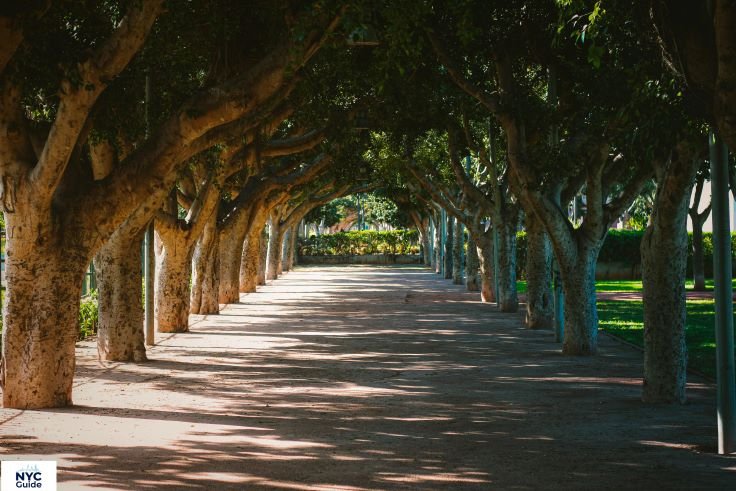
A few things make The Mall stand out from every other path in the park. First, it’s perfectly straight unusual for Central Park, which was intentionally designed with winding, organic paths. Second, it’s lined with four rows of American elm trees that form a dramatic canopy overhead. Third, the southern half of The Mall contains the Literary Walk, home to some of the most famous outdoor statues in New York City.
When I first walked through it on a quiet morning, I genuinely stopped mid-step. The trees arch over the path like a cathedral ceiling. It feels completely different from the rest of the park.
History of The Mall & Literary Walk
The Original Vision Behind The Mall
Frederick Law Olmsted and Calvert Vaux won the design competition for Central Park in 1858 with their “Greensward Plan.” Most of their design intentionally avoided straight lines, favoring curves that mimicked nature. But they made one exception: The Mall.
They envisioned it as a promenade where New Yorkers from all walks of life could gather. At the time, the wealthy typically enjoyed private gardens and estates. The Mall was meant to be a democratic public space elegant but open to everyone. It was one of the first such public promenades in America.
How Literary Walk Became Part of Central Park
The southern section of The Mall became known as Literary Walk because of the statues placed along it, mostly during the late 1800s. Several of the statues were donated by private individuals or civic groups who wanted to honor great literary and cultural figures. The decision to cluster them along this prominent walkway gave the area its identity.
Over time, the name “Literary Walk” became widely used, though officially it remains part of The Mall. Today it’s recognized as one of the largest collections of statues of real people in any American park.
The Role of The Mall in New York City History
The Mall has been central to New York City’s cultural life for over 150 years. It was a fashionable gathering place in the Victorian era. It hosted public concerts and civic events. It appeared in early photographs of Manhattan life. During periods when Central Park fell into disrepair in the 1970s, The Mall suffered too. Its restoration was part of the broader effort by the Central Park Conservancy, founded in 1980, to bring the park back to its original condition.
Today it’s considered a National Historic Landmark as part of Central Park, reflecting how significant this space has been to American urban history.
Map, Location & How to Get There
Exact Location of The Mall in Central Park
The Mall runs along the mid-east section of the southern half of Central Park. It stretches from approximately 66th Street in the south to 72nd Street in the north. The Literary Walk occupies the southern portion, between 66th and 69th Streets. The northern end of The Mall opens onto the Concert Ground, just above which sits Bethesda Terrace.
Best Entrances to Reach The Mall
There are several good entrances depending on where you’re coming from:
- East 72nd Street entrance (Fifth Avenue side): Walk west into the park and you’ll reach the northern end of The Mall fairly quickly.
- East 66th Street entrance: This drops you near the southern tip of Literary Walk, which is ideal if you want to walk the full length from south to north.
- Terrace Drive entrance at 72nd Street (West Side): Cross the park to reach The Mall from the west.
- 65th Street Transverse: If you enter near the Dairy Visitor Center or the Carousel, you’re just steps from the south end of The Mall.
Nearby Subway Stations
- N, R, W train – 5th Ave/59th St station: About a 10-minute walk north into the park.
- 6 train – 68th St/Hunter College station: Walk west on 68th Street and enter the park. The Mall is a short walk in.
- B, C train – 72nd Street station: One of the best options. Exit and walk east into the park. You’ll be right near the northern end of The Mall.
- 1 train – 66th St/Lincoln Center station: Walk east through the park from the west side.
Walking Directions From Popular Central Park Attractions
- From Central Park Zoo: Walk north along the East Drive, then veer left (west) toward The Mall. About 10 minutes on foot.
- From Bethesda Fountain: The Mall begins immediately to your south. You’ll see the tree-lined path as you climb the steps from the Terrace.
- From The Carousel: Head north. The Mall entrance at Literary Walk is just a few minutes away.
- From Strawberry Fields: Walk east through the park, crossing the main west drive, and continue toward the center. The Mall is roughly 10–12 minutes away.
The Mall Central Park Map
Central Park’s official website (centralparknyc.org) has a downloadable PDF map. The Mall is clearly labeled in the southern-center section. You can also find it easily on Google Maps by searching “The Mall, Central Park.” Most park maps available at the Dairy Visitor Center near 65th Street also show The Mall prominently.
What to See Along The Mall
The American Elm Trees That Line The Mall
The single most impressive thing about The Mall is its trees. Four rows of American elms run the full length of the promenade, creating a vaulted green tunnel that stretches for about a quarter mile. These trees are among the largest surviving stands of American elms in North America.
American elms were once common throughout the eastern United States, but Dutch elm disease devastated the population during the 20th century. Central Park has managed to protect its elms through careful monitoring and treatment. Walking beneath them feels rare now because it genuinely is.
In summer, the canopy is so thick it creates deep shade on even the hottest days. In fall, the leaves turn gold and yellow, making it one of the most photographed spots in New York City.
Bethesda Terrace and Bethesda Fountain
The northern end of The Mall opens onto Bethesda Terrace, one of the most architecturally elaborate spaces in the park. The terrace features intricate tile work, stone carvings, and two sweeping staircases leading down to the lower level and the famous Bethesda Fountain.
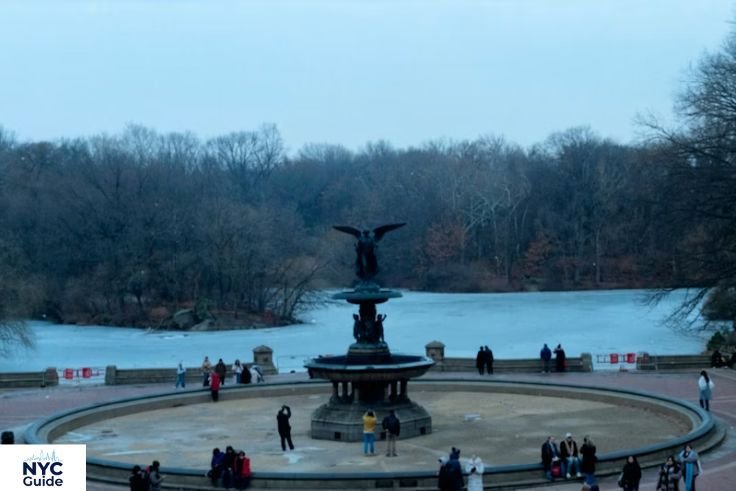
The fountain, completed in 1873, is topped by the Angel of the Waters statue one of the most iconic images in all of Central Park. I’d strongly recommend walking the full length of The Mall and ending at Bethesda Fountain. The transition from the tree tunnel to the open terrace is genuinely dramatic.
Street Performers, Musicians & Artists
One of the things that makes The Mall feel alive is the people. On any given day, especially on weekends, you’ll find musicians, dancers, rollerbladers, and artists set up along the promenade. Roller skating at The Mall has been a tradition since the 1970s, and you’ll often see groups dancing to music near the southern end, particularly on weekends from spring through fall.
When I was there on a Saturday afternoon in October, there was a saxophonist playing near the center of the path and a group of maybe 30 people rollerskating nearby. It felt festive and completely unplanned.
Benches, Views & Relaxing Spots
The Mall has plenty of benches along both sides of the promenade. These are perfect for sitting and watching the world go by. The benches near the tree canopy are especially pleasant in warm weather. You can sit in full shade, listen to whatever performer happens to be there, and just take in the atmosphere.
Horse Carriages Near The Mall
Horse-drawn carriages are a classic New York City experience, and their routes often take them through or near The Mall. You can usually find carriages near the park entrances, particularly on the south end of the park near Grand Army Plaza. If you’re interested, agree on a price before you board, as rates vary.
Literary Walk Statues Explained
What Is Literary Walk?
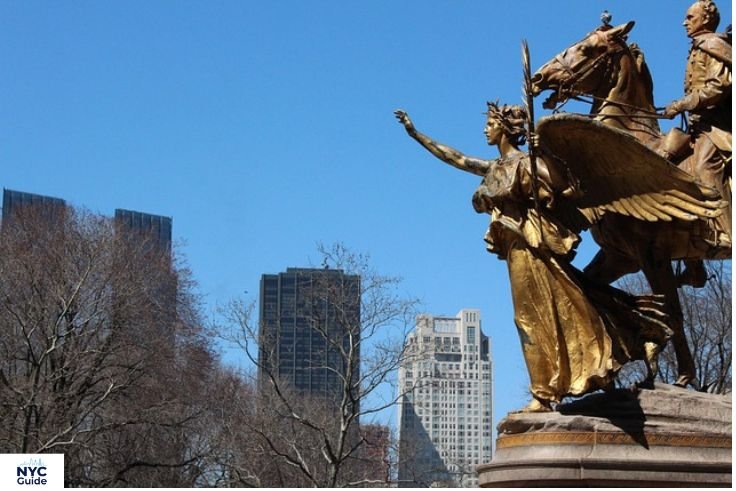
Literary Walk is the name given to the southern portion of The Mall, roughly between 66th and 69th Streets. It’s lined with statues of writers, poets, and historical figures. The name reflects the concentration of literary and cultural figures memorialized here. It’s considered one of the most significant collections of public sculpture dedicated to writers anywhere in the United States.
How Long Is Literary Walk?
Literary Walk runs for approximately 500 feet, or about 150 meters. It’s a short stretch within the longer Mall, but it’s packed with things to look at. Most visitors spend 20–30 minutes here if they stop to read the plaques and take photos. The full Mall, including Literary Walk, is about a quarter mile (roughly 400 meters) long.
Statues You’ll See Along Literary Walk
William Shakespeare
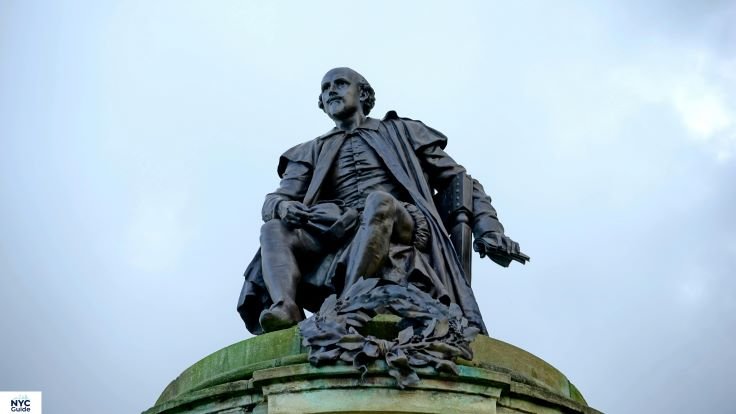
The Shakespeare statue is arguably the most famous sculpture on Literary Walk. It was unveiled in 1872 and stands near the southern end of the walk. The statue depicts Shakespeare in period dress, holding a scroll. It was sculpted by John Quincy Adams Ward, one of the most prominent American sculptors of the 19th century. Shakespeare is shown mid-thought, as if working through a scene in his mind.
Robert Burns
The statue of Scottish poet Robert Burns was unveiled in 1880. Burns is best known for writing “Auld Lang Syne” and is considered Scotland’s national poet. The statue was installed largely through the efforts of New York’s Scottish immigrant community, who raised funds to place it here. It stands as a tribute to his influence on literature and on Scottish cultural identity.
Sir Walter Scott
Scottish novelist and poet Sir Walter Scott stands nearby. Scott is known for works like Ivanhoe and Rob Roy. His statue was unveiled in 1871, making it one of the earliest on Literary Walk. Like the Burns statue, Scott’s presence here reflects the strong Scottish immigrant community in 19th-century New York.
Christopher Columbus
While technically a historical explorer rather than a literary figure, the statue of Christopher Columbus appears on Literary Walk. It was placed here in the late 19th century, reflecting the cultural significance Columbus held for Italian-American communities in New York at the time. The statue has prompted ongoing discussions about historical legacy and representation.
Fitz-Greene Halleck
Fitz-Greene Halleck was an American poet, popular during the 19th century, whose fame has largely faded over time. His statue was one of the first placed on Literary Walk, unveiled in 1877. President Ulysses S. Grant attended the dedication ceremony. Today it stands as a reminder that literary fame is often temporary, and that the figures we honor shift with time.
Why These Statues Matter
The statues of Literary Walk are historically significant not just as art, but as a record of which figures 19th-century New Yorkers chose to celebrate. Most are European literary giants or figures important to specific immigrant communities. Their presence reflects the cultural values of the era in which they were placed and continues to spark conversations about history, representation, and public space.
Best Time to Visit The Mall
The Mall in Spring
Spring is one of the best times to visit. The elms leaf out in April, gradually filling in the canopy. The park fills with visitors but tends to be less overwhelming than summer. Temperatures in April and May are comfortable for walking. Flowers bloom throughout Central Park, adding color around the edges of The Mall.
The Mall in Summer
Summer brings the full canopy of leaves and a constant buzz of activity. Performers are out most weekends. The shade from the elm trees makes The Mall one of the cooler places in the park during a hot July or August day. It does get crowded, especially on weekends. If you want a quieter experience, go early in the morning on a weekday.
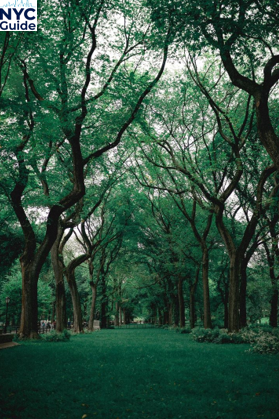
The Mall in Fall
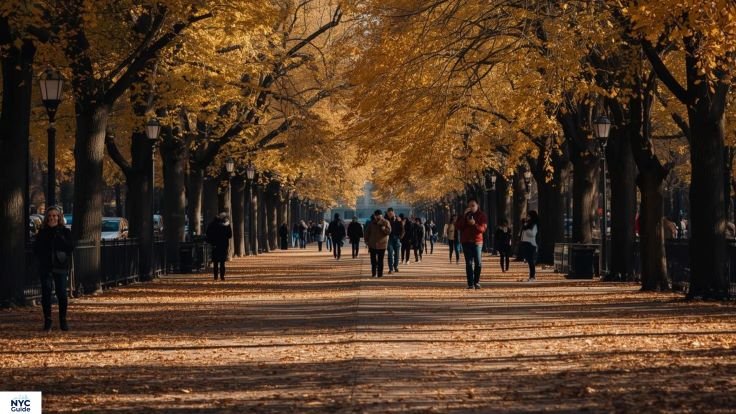
Fall is, without question, the most photographed season at The Mall. The American elms turn gold and yellow, usually peaking in mid-to-late October. The light on a clear October afternoon filters through the leaves in a way that’s almost cinematic. I visited in mid-October one year and I’ll be honest I took more photos in 20 minutes there than in the rest of the trip combined.
Weekends in October can be very crowded, so plan to arrive early or visit on a weekday for the best experience.
The Mall in Winter
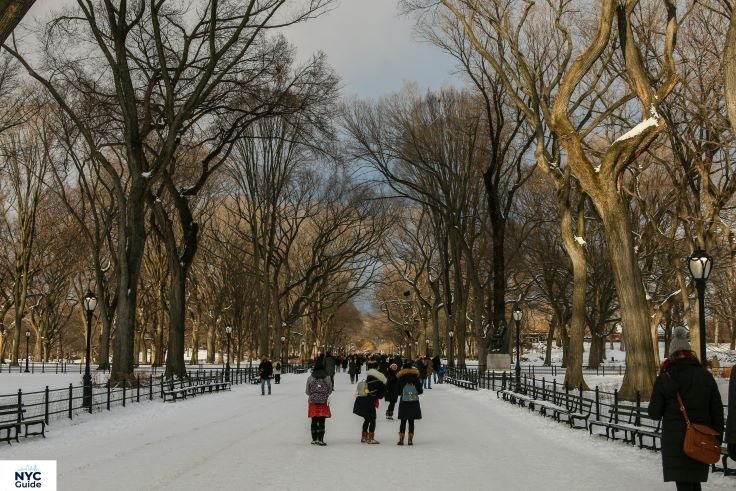
Winter strips the trees down to their bare branches, but it reveals the true architectural structure of the elm canopy. The interlocking branches overhead create a skeletal tunnel that’s striking in its own way. Snow transforms The Mall completely it becomes one of the most peaceful spots in the city. Crowds thin out significantly, and you may find you have long stretches of the path almost to yourself.
Best Time of Day for Photos
For photography, the golden hours are your best bet. Early morning, just after sunrise, gives you soft light and minimal crowds. Late afternoon, about an hour before sunset, produces warm golden tones that work beautifully with the yellow fall leaves or the green summer canopy. Midday light tends to be harsh, with deep shadows under the tree canopy not ideal for portraits.
Photography Tips & Best Photo Spots
Most Instagrammable Spots on The Mall
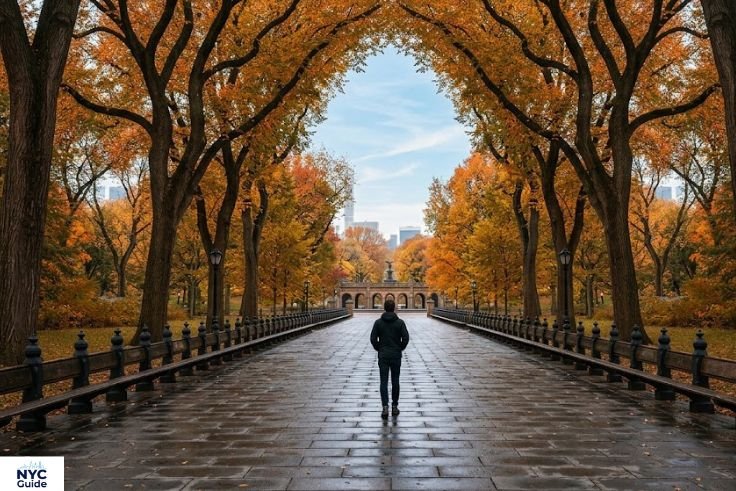
The full-length shot down The Mall is the classic. Stand at the southern entrance and shoot north you’ll capture the full tree tunnel receding into the distance. The symmetry is striking and works in all seasons. The Bethesda Fountain seen from the top of the Terrace stairs, looking back south toward The Mall, is another powerful composition.
Best Angles for Tree Tunnel Photos
For the tree tunnel shot, use a wide-angle lens or the widest setting on your phone. Position yourself at the center of the path and shoot straight ahead. The four rows of trees frame the path on both sides. Try a low angle for a more dramatic perspective crouching down makes the trees appear even taller. Including a person or two in the middle distance adds scale and life to the image.
Fall Foliage Photo Tips
Come in mid-to-late October for peak color. Arrive early the light at 7 or 8 AM in fall is warm and low, casting long shadows down the path. Overcast days can work well too, as they reduce harsh contrasts and let the yellow and gold tones pop. Avoid midday on sunny fall days the contrast between bright sky and shadowed path can be tricky to expose correctly.
Engagement, Wedding & Portrait Photography Ideas
The Mall is a popular location for engagement and wedding photos, and for good reason. The tree tunnel provides a natural backdrop that works year-round. For portraits, position your subject at the center of the path and use the converging lines of the trees to draw the eye toward them. Fall is especially popular with couples. Weekday mornings offer the most privacy and best light.
Things to Do Near The Mall
Visit Bethesda Terrace
Just steps from the northern end of The Mall, Bethesda Terrace is a must. The intricate Minton tile ceiling in the underpass beneath the terrace is one of the most detailed and beautiful architectural features in the entire park. Many visitors walk right through it without looking up don’t make that mistake.
Explore Bow Bridge
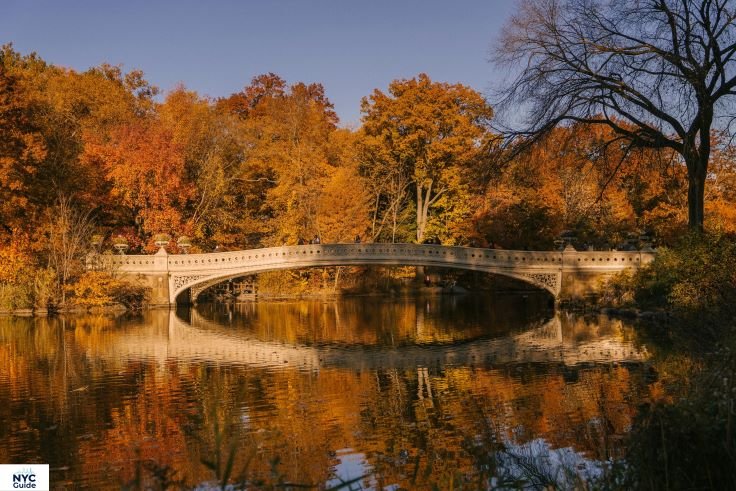
A short walk west from Bethesda Fountain brings you to Bow Bridge, a cast iron bridge over the Lake. It’s one of the most photographed bridges in New York City. The view from the center of the bridge looking west toward the San Remo apartment building is iconic. It appeared in multiple films and is a favorite spot for proposals and portraits.
Walk to Bethesda Fountain
Already mentioned, but worth repeating: walk through The Mall and end at Bethesda Fountain. The Angel of the Waters statue at the top of the fountain is a masterpiece, and the plaza around it is lively and beautiful, especially on warm days.
Visit Loeb Boathouse
Just east of Bethesda Fountain, Loeb Boathouse sits on the edge of the Lake. You can rent rowboats here from spring through fall. There’s also a restaurant if you want to sit down for a meal with a view of the water. It’s a relaxed, pleasant stop after walking The Mall.
Explore Sheep Meadow
Head south and slightly west from The Mall to reach Sheep Meadow, a vast open lawn that’s one of the best people-watching spots in the park. On sunny days it fills with sunbathers, picnickers, and kite flyers. It’s a good contrast to the structured, shaded feel of The Mall.
Visit Strawberry Fields
Located on the west side of the park near 72nd Street, Strawberry Fields is a memorial to John Lennon. The circular “Imagine” mosaic at the center is constantly surrounded by flowers and visitors paying their respects. It’s a short walk from The Mall and worth the detour.
Where to Stay Near The Mall in Central Park
Luxury Hotels Near Central Park
- The Plaza Hotel: Located at Fifth Avenue and 59th Street, directly at the south end of Central Park. An iconic New York address with easy park access.
- The Ritz-Carlton New York, Central Park: On Central Park South, with rooms overlooking the park. One of the best views in the city.
- Mandarin Oriental, New York: Located at Columbus Circle at the southwest corner of the park. Excellent access to The Mall via the 72nd Street entrance.
Mid-Range Hotels Near The Mall
- The Belleclaire Hotel: On the Upper West Side, close to the 72nd Street park entrance. Good value and well-located.
- Hotel Beacon: On Broadway near 75th Street. Comfortable rooms, reasonable rates, and just a few minutes from Central Park.
- Row NYC: Further south in Midtown, but still accessible to the park via subway or a long walk.
Budget-Friendly Hotels in Manhattan
Budget accommodation near Central Park is limited, but a few options exist:
- HI NYC Hostel: Upper West Side, close to the park. Clean, well-run, and affordable.
- Pod 51: Midtown East. Small rooms but good prices for Manhattan, accessible via the 6 train to 68th Street.
- Airbnb options: The Upper West Side and Upper East Side have many short-term rentals at various price points.
Best Areas to Stay for Easy Access
The Upper West Side (Central Park West, between 59th and 86th Streets) and the Upper East Side (Fifth Avenue and nearby streets) both offer close proximity to Central Park. The Upper West Side gives you the best access to Strawberry Fields, Bow Bridge, and the western park entrances. The Upper East Side puts you closer to the Metropolitan Museum and the east park entrances near The Mall.
Tips for Visiting The Mall
Is The Mall Free to Visit?
Yes, completely free. Central Park itself charges no admission. The Mall, Literary Walk, and all the statues are open to the public at no cost, any day of the year. There’s nothing to book or reserve.
How Much Time You Need
To walk The Mall from end to end and pause to look at the Literary Walk statues, plan on 20–30 minutes. If you want to explore, take photos, sit on a bench, and continue to Bethesda Terrace, budget 1–1.5 hours. If you’re combining it with nearby attractions like Bow Bridge, the Boathouse, and Sheep Meadow, a half-day is ideal.
Accessibility for Strollers & Wheelchairs
The Mall has a smooth, paved surface and is fully accessible for strollers and wheelchairs. There are no steps on the main promenade itself. The transition to Bethesda Terrace involves stairs, but there are accessible ramps nearby. The park’s official website has a detailed accessibility map.
Safety Tips for First-Time Visitors
Central Park is generally very safe, especially during daylight hours. The Mall and its surrounding areas see heavy foot traffic, which keeps them safe and lively. As with anywhere in a major city, stay aware of your surroundings, keep valuables close, and avoid isolated areas after dark. Stick to well-lit, well-traveled paths if you’re visiting in the evening.
What to Bring for Your Visit
- Comfortable walking shoes: The Mall is flat, but you’ll likely walk more than you expect.
- Water: Especially in summer. There are water fountains in the park but bring a bottle.
- Camera or charged phone: You’ll want it.
- Sunscreen: The Mall is shaded, but surrounding areas are open.
- Light jacket: Mornings and evenings can be cool even in summer, especially in fall.
- Snacks: Food vendors operate in and around the park, but prices are typical New York tourist-area rates.
FAQs About The Mall Central Park
The main statues on Literary Walk include William Shakespeare, Robert Burns, Sir Walter Scott, Christopher Columbus, and Fitz-Greene Halleck. These were placed primarily during the late 19th century and represent literary, historical, and cultural figures important to New York City’s communities at the time.
The Mall is lined with American elm trees (Ulmus americana). Four rows of elms run the full length of the promenade, creating an arched canopy overhead. These are among the largest surviving stands of American elms in North America, carefully protected by the Central Park Conservancy against Dutch elm disease.
Absolutely. The Mall is one of the most beautiful and historically significant walkways in New York City. Whether you’re interested in the elm tree canopy, the literary history, the photography opportunities, or simply a scenic stroll, it delivers. It’s also free and easy to reach, making it a no-brainer for any Central Park visit.
Bikes are not permitted on The Mall’s pedestrian promenade. However, cyclists can use the surrounding park drives and paths. The 72nd Street Transverse and the main Loop Drive are popular cycling routes that pass near The Mall.
Dogs are allowed in Central Park and on The Mall, but they must be on a leash at all times. Central Park has designated off-leash hours in certain areas typically early morning and evening but The Mall itself is a busy pedestrian area, so keep your dog leashed as a courtesy to other visitors.
Yes, though the level of activity varies significantly by season and day. Summer weekends are the busiest. Winter weekdays are the quietest. Fall weekends, especially in October, attract large crowds specifically for the foliage. If you want a quieter experience, visit on a weekday morning in any season.
The Mall and Literary Walk have appeared in numerous films and TV shows set in New York City. Notable examples include Kramer vs. Kramer, Home Alone 2: Lost in New York, Enchanted, When Harry Met Sally, and countless others. The distinctive tree tunnel is one of the most recognized outdoor filming locations in American cinema.
Final Thoughts
The Mall Central Park is one of those rare places that lives up to its reputation. It’s beautiful in every season, rich with history, and genuinely moving in a way that surprises people who expect it to feel like just another tourist stop. Walk it in the morning with a coffee if you can. Stand at the south end and look north through the tree canopy. It’s one of the most quietly spectacular views in New York City.
Whether you’re visiting for the Literary Walk statues, the elm trees, the photography, or simply a peaceful walk in the heart of Manhattan, The Mall delivers every time. Put it at the top of your Central Park itinerary and then stay longer than you planned.