
There’s a moment usually around sunset when the New York skyline stops you cold. Whether you’re crossing the Brooklyn Bridge or standing on a rooftop in Hoboken, the wall of glittering skyscrapers suddenly feels almost unreal. If you’re planning a trip and wondering where to find the best views, you’re not alone. Most visitors waste hours in the wrong spots and miss the magic entirely.
That’s exactly why I put this guide together. Over years of visiting New York City and making plenty of rookie mistakes along the way I’ve figured out which vantage points are worth your time and which are mostly hype. This article covers everything from iconic observation decks to hidden parks, photography tips, and the best time to see the New York skyline at its most dramatic.
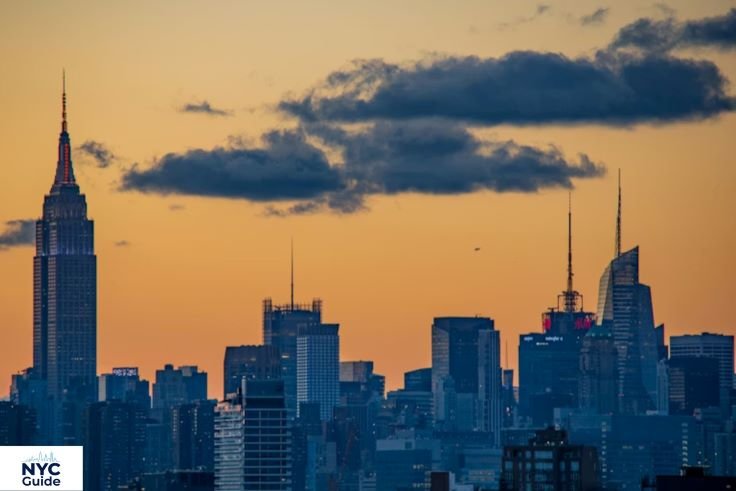
Whether you’re a first-time visitor or a seasoned traveler looking to finally nail that perfect skyline photo, this guide has something useful for you. We’ll cover Manhattan’s most famous buildings, the best parks for a free view, observation decks, photography locations, and even the rare Manhattanhenge phenomenon. Let’s get into it.
What Makes the New York Skyline So Iconic?
Few city skylines in the world carry the same emotional weight as New York’s. The Manhattan skyline view is instantly recognizable it’s appeared in thousands of films, photographs, and paintings, and it still manages to feel breathtaking in person. But what makes it so special?
Part of it is sheer density. Manhattan’s geography a narrow island hemmed in by the Hudson River and the East River forced the city to build upward. The result is one of the most concentrated collections of iconic high-rise architecture anywhere on earth. Unlike other cities where skyscrapers spread out across a flat plain, New York’s towers cluster together in dramatic vertical columns.
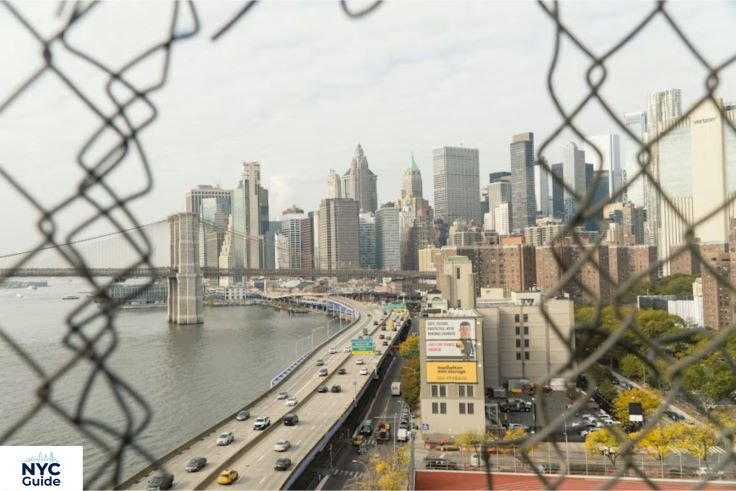
The skyline also spans more than a century of architectural history. You’ll see Art Deco masterpieces from the 1930s standing beside sleek modern glass towers and the quiet dignity of older stone buildings. The mix of modern glass towers and historic landmarks creates a visual tension that no other city quite replicates. Add the waterfront on all sides, the reflections on the East River at night, and the way the lights come on after dark and you have something genuinely unforgettable.
There’s also the symbolism. One World Trade Center stands as both a marker of tragedy and resilience. The Empire State Building has anchored the skyline for nearly a century. The Chrysler Building remains one of the most beautiful structures ever built. Together, these buildings don’t just form a skyline they tell a story.
Iconic Buildings That Define the New York Skyline
30 Hudson Yards
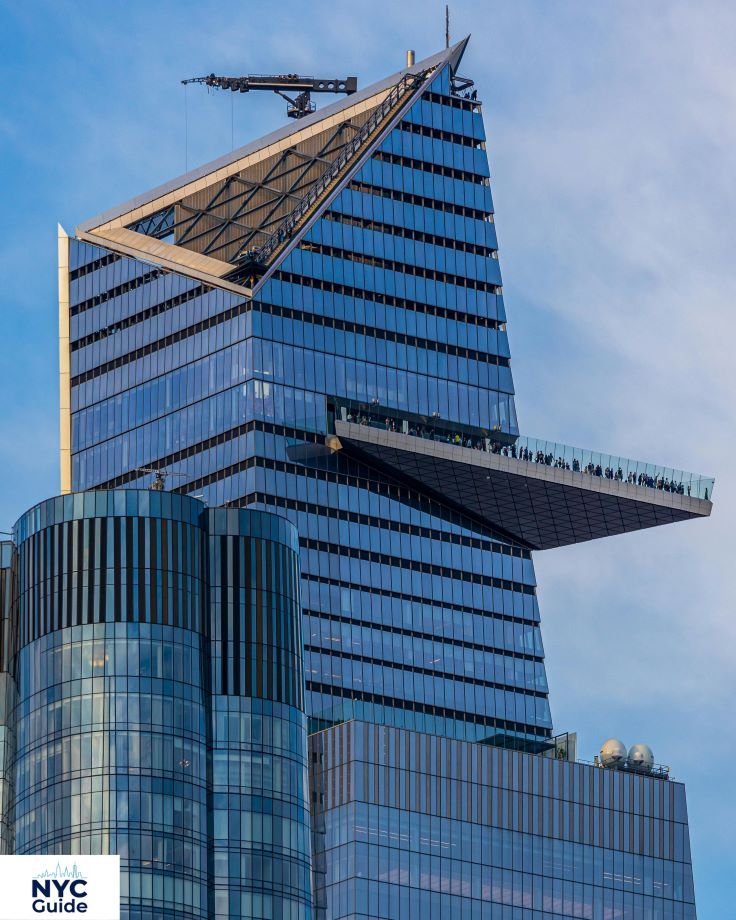
30 Hudson Yards is the tallest building in New York that you can actually go up in (One World Trade Center’s roof is higher, but access is limited). At 1,268 feet, it’s a striking glass tower on the west side of Manhattan. It houses The Edge, an outdoor observation deck on the 100th floor, and the Summit, an immersive experience one floor above. The building’s design with its angled glass crown makes it instantly recognizable from across the Hudson River. If you’re approaching Manhattan from New Jersey, 30 Hudson Yards is often the first landmark that catches your eye.
One World Trade Center
One World Trade Center is the tallest building in the Western Hemisphere at 1,776 feet a number chosen deliberately to match the year of American independence. It anchors the lower Manhattan skyline and is visible from virtually every vantage point in the city. The building’s reflective glass surface changes color depending on weather and time of day. At sunrise, it glows orange. At blue hour, it turns silver. Standing beneath it in the Financial District and looking up is one of those disorienting New York experiences you don’t forget.
![one world trade center new york city [nyc]](https://nycguide.online/wp-content/uploads/2026/03/One-World-Trade-Center-skyline.jpg)
Empire State Building
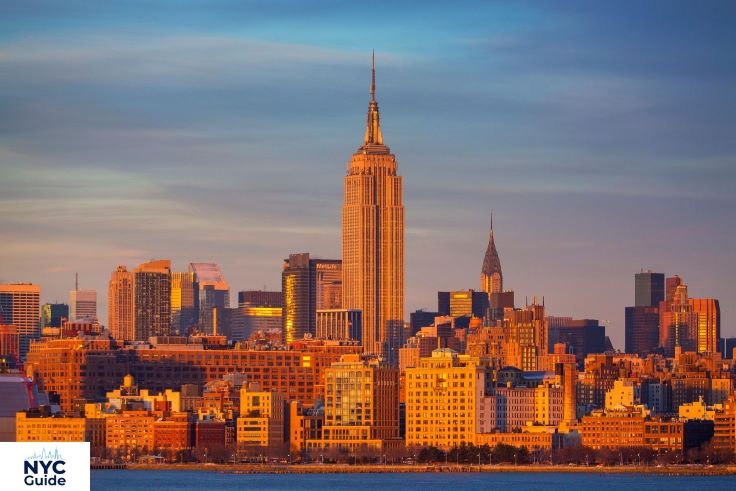
The Empire State Building has defined the famous skyscrapers in New York concept for over 90 years. Completed in 1931, it stood as the world’s tallest building for four decades. Today it still anchors Midtown Manhattan and its distinctive Art Deco crown is the most recognizable silhouette on the city skyline. It’s also one of the most photographed buildings on earth, visible from Central Park, from Brooklyn, from New Jersey, and from dozens of rooftops across the boroughs. The building is lit in different colors depending on holidays and events seeing it glow red and green at Christmas or rainbow colors during Pride Month is a New York experience in itself.
Chrysler Building
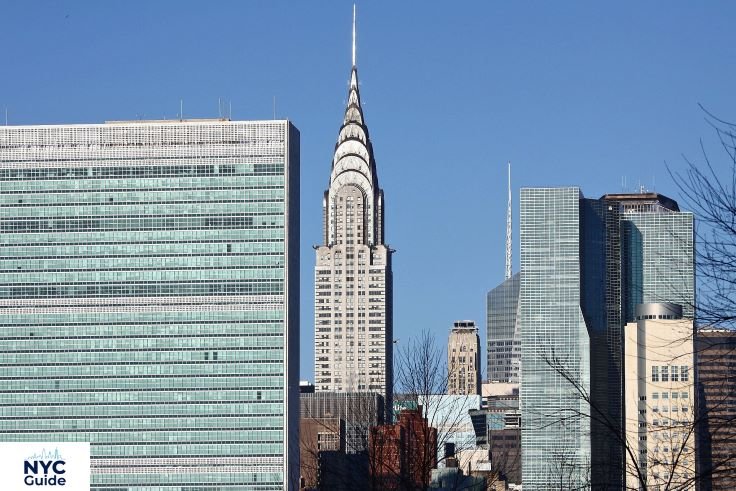
The Chrysler Building may be the most beautiful skyscraper ever built. Completed in 1930, its Art Deco eagle gargoyles and sunburst stainless steel crown are a masterpiece of decorative design. It stands at 1,046 feet and sits in Midtown on 42nd Street, right beside Grand Central Terminal. The Chrysler Building isn’t as tall as its neighbors, which means it can be easy to overlook but once you notice it, especially at sunset when the crown catches the light, it becomes impossible to ignore. Sadly, it’s not open for public observation access, but it appears in virtually every photograph taken of the Midtown skyline of Manhattan buildings.
The Edge at Hudson Yards
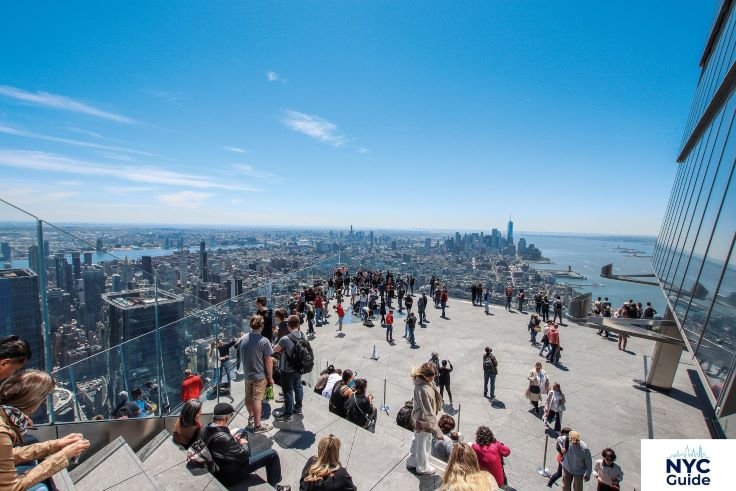
The Edge is technically part of 30 Hudson Yards but deserves its own mention. It’s the highest outdoor sky deck in the Western Hemisphere, sitting on the 100th floor at 1,100 feet above street level. What makes it unique is the design the glass floor extends outward from the building’s edge, so you’re literally standing over nothing, with panoramic views of Midtown Manhattan stretching in every direction. Tickets run around $36–$44 for adults. I’ll be honest: the first time I stepped onto that glass floor and looked straight down at the Hudson River, my legs turned to jelly. It’s worth every penny.
Best Parks to See the New York Skyline
You don’t have to spend a dollar to see one of the greatest views in the world. New York City has several parks that offer spectacular and completely free skyline views.
Hunters Point South Park (Queens)
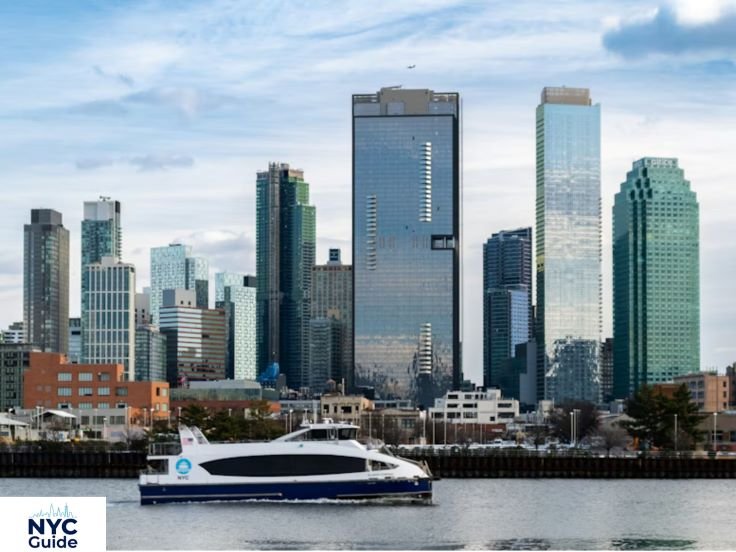
This is probably my favorite free skyline spot in all of New York. Hunters Point South Park sits right on the East River in Long Island City, directly across from Midtown Manhattan. The view here is jaw-dropping the full sweep of the Midtown skyline including the Empire State Building, Chrysler Building, and United Nations reflected in the river. At sunset, the light hits those towers directly and the skyline reflections on the East River are extraordinary. It’s a 10-minute subway ride from Midtown on the 7 train. Almost no tourists come here, which makes it even better.
Brooklyn Bridge Park (Brooklyn)
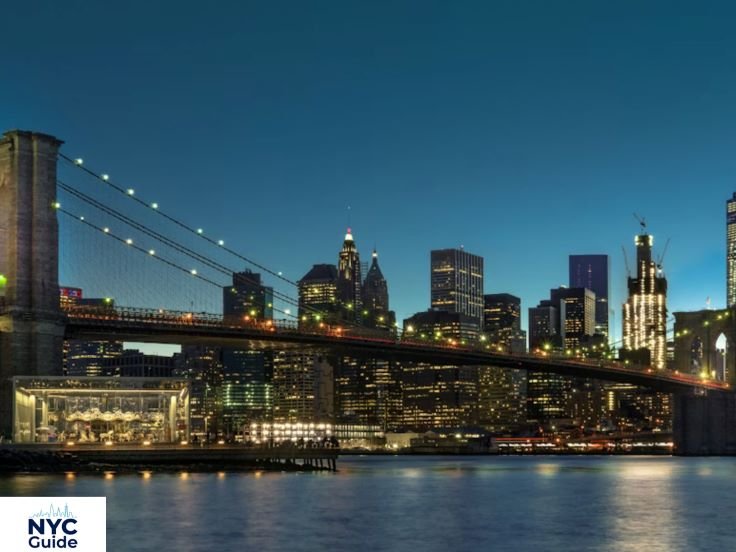
Brooklyn Bridge Park is one of New York’s most beloved green spaces, and the skyline views it offers are among the most photographed in the city. The lower Manhattan skyline One World Trade Center, the Battery Park towers, and the Brooklyn Bridge itself dominates the view from the park’s piers. Pier 1 and Pier 6 offer particularly good angles. The park is easily accessible from the High Street or Clark Street subway stops. Come at sunset for the golden light, or after dark for the illuminated cityscape after dark effect that makes this one of the most popular spots for New York skyline photography.
Central Park (Manhattan)
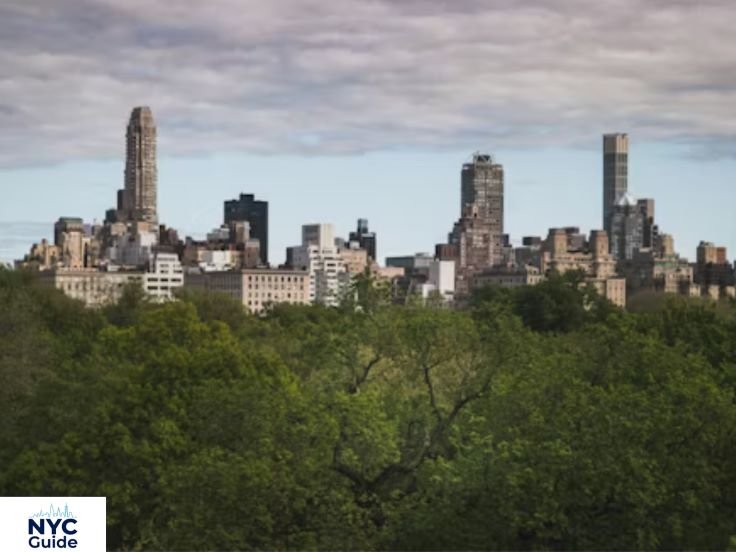
Central Park offers a different kind of skyline experience. Instead of looking across a body of water, you’re inside the city itself, surrounded by towers. The most dramatic spots are along the park’s southern edge, where the skyscrapers rise directly above the tree line. The Pond near 59th Street gives you a classic view of the buildings along Central Park South a mix of glass towers and elegant historic hotels. Sheep Meadow and the Great Lawn offer wider perspectives where you can see the skyline rising on multiple sides. It’s a deeply New York experience this enormous swath of nature surrounded entirely by the city.
Bushwick Inlet Park (Brooklyn)
Bushwick Inlet Park in Williamsburg sits on the East River waterfront and offers an excellent view of Midtown Manhattan from the north, including the Empire State Building framed by the skyline. It’s a quieter alternative to Brooklyn Bridge Park and tends to be less crowded. The sunset views here are excellent, and it’s a short walk from the Bedford Avenue L train stop.
Sunset Park (Brooklyn)
As the name suggests, Sunset Park is built for sunsets. The park sits on a hill in the Sunset Park neighborhood of Brooklyn, offering elevated views across the bay toward lower Manhattan and the Statue of Liberty. The vantage point here is slightly different from most Brooklyn skyline spots you’re higher up, looking across a wider stretch of water, which gives the cityscape a more dramatic sense of scale. Take the R train to 45th Street and walk up the hill.
Freshkills Park (Staten Island)
Freshkills Park is a former landfill being transformed into one of New York’s largest parks. It offers views of the skyline across Staten Island and the harbor, and because it’s a newer attraction, it remains largely unknown to tourists. Access is currently limited to organized tours and special events check the NYC Parks website for the latest schedule.
Queensbridge Park (Queens)
Queensbridge Park sits in Long Island City just north of Hunters Point, offering another excellent East River vantage point for the Midtown skyline. The park is directly beneath the Queensboro Bridge, which adds an industrial, architectural element to photos taken here. It’s easily accessible on the N/W trains to Queensboro Plaza.
Alice Austen Park (Staten Island)
Alice Austen Park in Staten Island is named after the pioneering American photographer who lived here. The small waterfront park offers sweeping views of the New York Harbor, the Verrazano-Narrows Bridge, and lower Manhattan in the distance. It’s a peaceful, lesser-known spot that rewards visitors who make the trip on the Staten Island Ferry. The views aren’t as close as Brooklyn or Queens, but the wide harbor perspective is uniquely beautiful.
Best Observation Decks for Skyline Views
One World Observatory
One World Observatory sits at the top of One World Trade Center, offering views from 1,250 feet. Tickets cost around $42 for adults and can be booked online. The ascent takes 60 seconds in an elevator with a time-lapse display showing the history of New York City. The deck itself is fully enclosed with floor-to-ceiling glass windows, offering 360-degree views of the entire city from the Statue of Liberty to the south, Brooklyn and Queens to the east, New Jersey to the west, and Midtown Manhattan to the north. The NYC skyline at night from here is breathtaking. I’d recommend going close to sunset so you can watch the transition from golden hour to blue hour to full darkness.
Top of the Rock
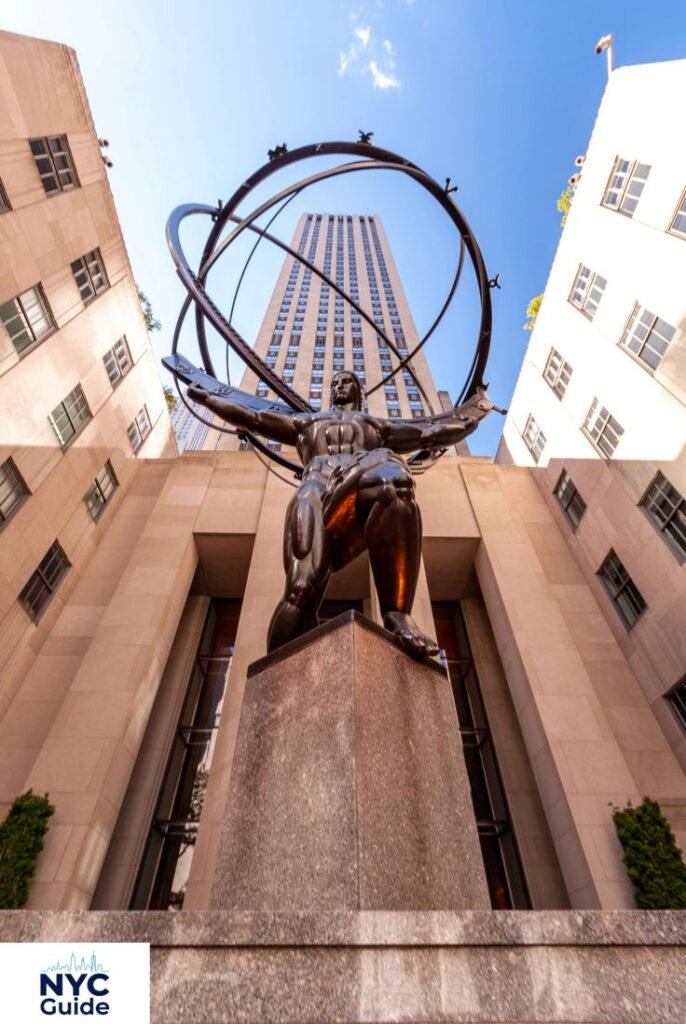
Top of the Rock at 30 Rockefeller Plaza is my personal favorite observation deck in New York. It sits at 850 feet lower than One World Observatory but it has a crucial advantage: you can see the Empire State Building from here. From One World Observatory, you can’t, because you’re standing inside the Empire State Building’s view. Top of the Rock has three levels, including an open-air top deck that gives you unobstructed, unfiltered views. The elevated observation deck experience here feels more authentic than some of the flashier newer venues. Tickets cost around $42 for adults. Book in advance online to avoid the line. The NYC skyline observation deck experience doesn’t get better than watching the sun set from here with the Empire State Building glowing in the foreground.
The Edge at Hudson Yards
Already mentioned above under iconic buildings, The Edge earns its spot here too. Unlike Top of the Rock or One World Observatory, The Edge actually extends out from the building, so you’re standing with nothing below you but air and the Hudson River. It’s the most visceral, physically intense deck in the city. For skyline photography from an elevated position, the views of Midtown Manhattan and the Hudson River are unmatched from this angle. Tickets run $36–$44 depending on the time and day.
Best Places to Photograph the New York Skyline
From Brooklyn
Brooklyn offers the classic New York skyline shot. The combination of the Brooklyn Bridge in the foreground and lower Manhattan rising behind it is arguably the most iconic urban photograph in the world. DUMBO (Down Under the Manhattan Bridge Overpass) is the most popular spot specifically the corner of Washington Street and Water Street, where you look down a cobblestone street with the Manhattan Bridge perfectly framed above and the Empire State Building visible in the gap. It’s crowded, especially on weekends, but the view earns it. The Brooklyn Heights Promenade is the other essential Brooklyn spot, offering an elevated waterfront perspective of the lower Manhattan skyline stretching north.
From Hoboken
Hoboken, New Jersey sits directly across the Hudson from Midtown Manhattan, and the views from its waterfront are extraordinary. The Empire State Building, Chrysler Building, and the glittering skyscrapers along the Hudson River line up along the western edge of Manhattan in a long, dense panorama. Hoboken is accessible via the PATH train from 14th Street, 23rd Street, or 33rd Street. The waterfront walkway runs for over a mile and gives you constantly shifting perspectives on the skyline. Sunset here produces some of the most dramatic golden hour skyline views you’ll find anywhere.
From Jersey City
Jersey City’s Exchange Place waterfront gives you a slightly different angle on the Manhattan skyline you’re looking more at the lower Manhattan financial district than the Midtown towers. The view of One World Trade Center from this position is particularly striking. Liberty State Park, further south in Jersey City, adds the Statue of Liberty to the composition and provides one of the widest, most dramatic waterfront skyline perspectives you can find.
From Weehawken
The Lincoln Harbor waterfront in Weehawken is one of the most underrated skyline photography locations in the entire New York area. You’re directly across from Midtown at roughly the same level as the 30s streets, giving you a straight-on view of the densest, most photogenic stretch of the Manhattan skyline. The view extends from the Hudson Yards towers in the south all the way to the George Washington Bridge in the north. There’s also a bluff called the Weehawken Summit with a famous historical marker where Aaron Burr and Alexander Hamilton dueled and from the top of that bluff, the panoramic views of Midtown Manhattan are remarkable.
From the Water (Ferry & Boat Tours)
Some of the best skyline views come from the water itself. The Staten Island Ferry is completely free and gives you a genuine harbor experience with views of lower Manhattan, the Statue of Liberty, and the Brooklyn waterfront. For a longer, more structured experience, Circle Line boat tours and other operator cruises circle Manhattan, giving you all four waterfront skyline perspectives in a single trip. Tickets for Circle Line typically run $35–$50. The best seats are on the upper open deck on the side facing Manhattan as you head upriver.
How to Photograph the New York Skyline (Photography Tips)
Best Time of Day (Golden Hour & Blue Hour)
Golden hour the 30–45 minutes after sunrise and before sunset produces warm, soft light that makes the skyline glow. Buildings catch direct orange-pink light, shadows are long and dramatic, and the sky provides natural color that no filter can replicate. Blue hour, which immediately follows sunset (or precedes sunrise), is arguably even better for city skyline photography. The sky turns a rich, deep blue, the city’s lights come on, and you get a perfect balance between ambient sky light and artificial building light. This is the moment that produces the most balanced, vivid skyline photographs. I usually arrive 30 minutes before sunset and stay for at least 30 minutes after to capture the full transition.
Recommended Camera Equipment
You don’t need professional gear to get great skyline shots, but a few tools make a significant difference. A mirrorless or DSLR camera gives you full manual control over exposure, which is essential for low-light shooting. A solid tripod is non-negotiable for blue hour and night photography handheld long exposures simply won’t work. A remote shutter release or your camera’s built-in timer prevents camera shake. And if you shoot on a smartphone, many modern phones now have excellent night modes that can produce surprisingly good skyline shots.
Best Lenses for Skyline Shots
For wide panoramic views, a 16–35mm lens on a full-frame camera is ideal. It captures the full sweep of the skyline in a single frame. A 24–70mm lens is the most versatile choice it covers wide-angle perspectives and compresses to medium telephoto for isolating specific buildings. For compression shots where you stack buildings together to create a dense, dramatic effect a 70–200mm telephoto lens is excellent. I’ve used this technique at Weehawken to compress the Midtown skyline into a nearly abstract wall of towers.
Long Exposure Settings for Night Photography
For night city photography, start with these settings as a baseline: ISO 100–400, aperture f/8–f/11 for maximum sharpness, and a shutter speed of 5–30 seconds depending on the available light. The lower your ISO, the cleaner your image. A narrower aperture (higher f-number) creates star-burst effects on bright building lights. Experiment with different exposure lengths longer exposures smooth out any water movement and create silky reflections on the river. If you’re capturing boat traffic on the Hudson, a very long exposure (15–30 seconds) will turn moving boats into ghostly light trails.
Manhattanhenge – A Unique New York Skyline Phenomenon
What Is Manhattanhenge?
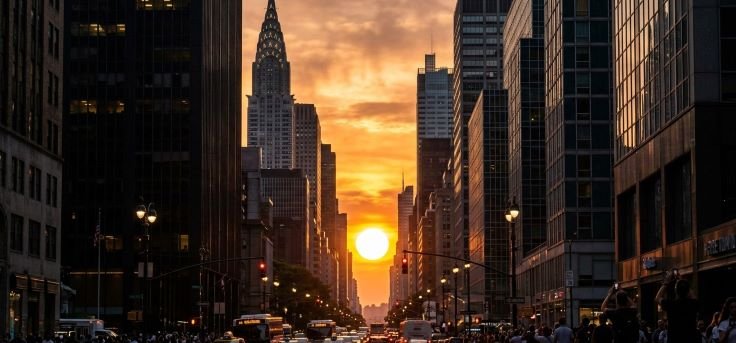
Manhattanhenge is a phenomenon that occurs twice a year when the setting sun aligns perfectly with Manhattan’s east-west street grid, flooding the cross streets with direct sunlight from horizon to horizon. The term was coined by astrophysicist Neil deGrasse Tyson, drawing a comparison with Stonehenge. It happens in late May and mid-July, usually on two consecutive evenings each time. When conditions are right a clear sky, no excessive haze the sun drops into perfect alignment with the grid and the cross streets turn into glowing corridors of golden light. Standing on a Midtown cross street during Manhattanhenge is one of the most spectacular things you can experience in New York City.
Best Locations to Photograph Manhattanhenge
The best viewing streets are the wide, unobstructed cross streets in Midtown: 14th Street, 23rd Street, 34th Street, 42nd Street, and 57th Street. The wider the street, the better. 42nd Street and 34th Street are the most popular because the buildings on either side frame the canyon effect most dramatically. Position yourself on the east side of the street, ideally with a clear sightline west. The American Museum of Natural History publishes the exact dates and times each year check their website in advance to plan. Arrive at least 30–45 minutes before the projected sunset time, because the streets get extremely crowded.
What Equipment Do You Need?
A wide-angle lens on a tripod is ideal for Manhattanhenge. The wide lens captures both the street corridor and the sky. Use a neutral density filter if the sun is too bright for your exposure settings. Smartphone photographers can do very well here too the wide-angle lens on modern phones captures the full scene, and the automatic HDR modes handle the extreme contrast between the bright sun and the shadowed buildings reasonably well.
Best Time to Visit for the Most Dramatic Skyline Views
The New York skyline is spectacular year-round, but different seasons offer different qualities.
Fall (September–November):is widely considered the best season. The air is crisp and clear, haze is minimal, and the light has a golden quality that’s unlike any other time of year. October in particular gives you brilliant clear-sky days with exceptional visibility. The foliage in Central Park adds a warm foreground element when shooting from inside the park.
Winter (December–February): offers the clearest, sharpest air of the year. Cold, dry air reduces atmospheric haze dramatically, meaning long-distance views are often more crisp in January than in July. The holiday lighting on buildings and in windows adds warmth to night photography. The downside is cold temperatures spending an hour on an outdoor observation deck at 1,100 feet in January requires serious layering.
Spring (March–May): brings unpredictable weather but also dramatic skies the kind with dark storm clouds clearing behind the skyline that make for extraordinary photographs. After a rainstorm, the streets are wet and reflective, and the air clears beautifully.
Summer (June–August): is the most popular tourist season but the least ideal for photography. Humidity and haze reduce visibility noticeably. That said, Manhattanhenge falls in July, and the long summer days give you more flexibility for golden hour timing.
FAQ’S About New York CITY Skyline
What is the best free view of the New York skyline?
Hunters Point South Park in Queens is arguably the best free skyline view in the city. It offers an unobstructed, close-up view of the full Midtown Manhattan skyline directly across the East River. The Brooklyn Heights Promenade and the DUMBO waterfront are also excellent free options.
What is the best observation deck in New York?
Top of the Rock at Rockefeller Center offers the most balanced experience open-air viewing, the Empire State Building in the foreground, and panoramic views of both Midtown and lower Manhattan. The Edge at Hudson Yards is more dramatic physically, with its glass floor extending over the street below.
What is the best time to see the NYC skyline at night?
Blue hour roughly 20–40 minutes after sunset is the best time. The sky retains enough color to balance the city’s artificial lights, creating the most vivid, dynamic nighttime skyline effect. Full darkness is also beautiful but produces a less balanced, more contrast-heavy image.
Where can I see the New York skyline from New Jersey?
The Hoboken waterfront and Jersey City’s Exchange Place waterfront are the best NJ options. Weehawken’s Lincoln Harbor is excellent for Midtown views and is less crowded than Hoboken. Liberty State Park in Jersey City adds the Statue of Liberty to the composition.
How do I get to the Brooklyn Bridge Park skyline views?
Take the A/C train to High Street–Brooklyn Bridge, or the 2/3 train to Clark Street. From either stop, it’s a 5–10 minute walk to Pier 1 or Pier 6, the best skyline viewing spots in the park.
Final Thoughts
The New York skyline is one of those rare things that exceeds expectations no matter how many photographs you’ve seen beforehand. Whether you’re standing on a free waterfront park in Queens, hanging off the glass edge of a Midtown observation deck, or waiting on a Midtown street for Manhattanhenge to align, the city has a way of producing moments that stick with you long after you’ve left. Plan your visit with this guide, pick your spots, and don’t forget to put the camera down occasionally some of the best skyline views are best experienced with your own eyes, not through a lens.