
If you’ve ever looked up at the New York City skyline and wondered how they built the Empire State Building, you’re not alone. Millions of people ask the same question every year. This iconic tower didn’t just appear overnight it has a fascinating story behind it that spans ambition, engineering genius, and one of the most dramatic construction races in history.
I visited the Empire State Building on a crisp October morning, and standing at the base of it, I remember feeling genuinely stunned. You know it’s tall. You’ve seen it in movies. But nothing quite prepares you for looking straight up at 1,250 feet of gleaming Art Deco steel. This guide covers everything from how and why it was built, to what you’ll experience when you visit today.
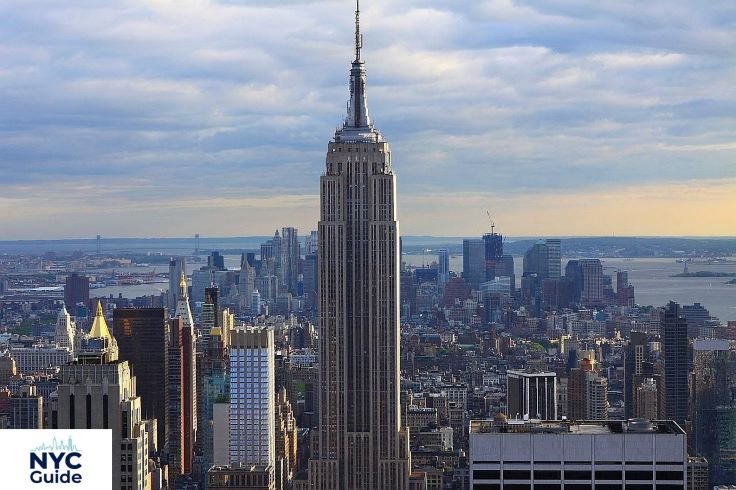
Whether you’re a history buff, an architecture lover, or just planning a trip to New York City, this article will give you the full picture. We’ll walk through the construction timeline, the engineering feats, the cultural significance, and practical tips for your visit.
Quick Facts About the Empire State Building
The Empire State Building stands in Midtown Manhattan as one of the most recognized structures on earth. Here’s a quick overview of its key details:
Location: 350 Fifth Avenue, New York City, U.S.A. Height: 1,250 feet (381 meters) to roof; 1,454 feet (443 meters) to antenna tip Opened: April 11, 1931 Developer: Empire State Corporation Architects: Shreve, Lamb & Harmon Architects Floors: 102
It held the title of the world’s tallest building for nearly 40 years after its completion. Today it remains a working office building, a major tourist attraction, and a true symbol of American ambition.
Timeline: From Concept to Completion
The original idea for the Empire State Building came in 1929, during an era of fierce competition among New York’s wealthiest businessmen. John J. Raskob and former New York Governor Al Smith led the Empire State Corporation and wanted to build something that would definitively top the Chrysler Building, which was under construction at the same time.
The planning phase moved fast. Architect William F. Lamb of Shreve, Lamb & Harmon was handed a basic brief that essentially said: make it as tall as possible. Lamb drew inspiration from a simple pencil standing upright. He designed the building in just two weeks, working from that straightforward visual concept.
Construction began on March 17, 1930. The pace was extraordinary workers completed an average of four and a half floors per week at the peak of construction. The building was officially opened on May 1, 1931, with President Herbert Hoover switching on the lights from Washington D.C. via telegraph. From groundbreaking to grand opening, the whole process took just about 410 days, which remains astonishing even by today’s standards.
The Race to the Sky: How They Built the Empire State
When people ask how they built the Empire State Building so fast, the answer comes down to planning, competition, and sheer human effort.
The rivalry with the Chrysler Building was very real. Walter Chrysler had secretly added a stainless steel spire to his building to beat a competing skyscraper. Raskob and his team responded by designing the Empire State Building taller from the outset and then adding a mooring mast at the top to push the height even further.
Construction in just 410 days required a workforce of up to 3,400 workers on site daily. Over the full construction period, roughly 7 million man-hours were logged. The workforce was incredibly diverse immigrant workers from dozens of countries, including a famous group of Mohawk ironworkers from the Kahnawake reserve in Canada who became known for their fearless work at extreme heights.
The engineering strategy was almost military in its precision. Materials were delivered on a carefully choreographed schedule. A small railway system was built inside the construction site to move materials quickly between floors. Steel was ordered in exact quantities and delivered just in time to be installed. There was almost no room for delays. The building has 1,860 steps from ground floor to the 102nd floor, and the structural framework required 60,000 tons of steel.
One mistake planners initially made was assuming the building would be used as a mooring dock for dirigibles but more on that later.
Architectural Design and Engineering
The Empire State Building is one of the finest examples of Art Deco architecture in the world. Art Deco was the dominant design style of the late 1920s and early 1930s characterized by bold geometric shapes, clean lines, decorative metalwork, and a sense of modern optimism.
William F. Lamb’s pencil-shaped inspiration gave the building its distinctive stepped silhouette. As floors rise, the building narrows in a series of setbacks. This wasn’t just aesthetic New York City’s 1916 zoning law required buildings to step back from the street to allow light to reach the sidewalks below.
The structural steel innovation behind the building was remarkable for its time. The steel frame was designed to handle immense wind loads critical for a structure of this height. Workers erected the steel skeleton floor by floor, with each piece of steel bolted and riveted into place. Red-hot rivets were thrown through the air by teams of workers and caught in buckets a dangerous and skilled job that was completely standard practice at the time.
The building contains 73 Otis elevators running through 7 miles of elevator shafts. The vertical transportation system was a critical engineering challenge. With over 102 floors, getting people up and down efficiently required a carefully planned system of express and local elevator banks, a concept that Otis Elevator Company helped develop specifically for this project.
A Cultural Icon in New York
The Empire State Building didn’t just become famous because of its height. Hollywood made sure of that. King Kong climbed it in 1933, just two years after it opened. Cary Grant and Deborah Kerr made it a symbol of romance in An Affair to Remember. Tom Hanks and Meg Ryan ended up there in Sleepless in Seattle. The building has appeared in hundreds of films, TV shows, and music videos.
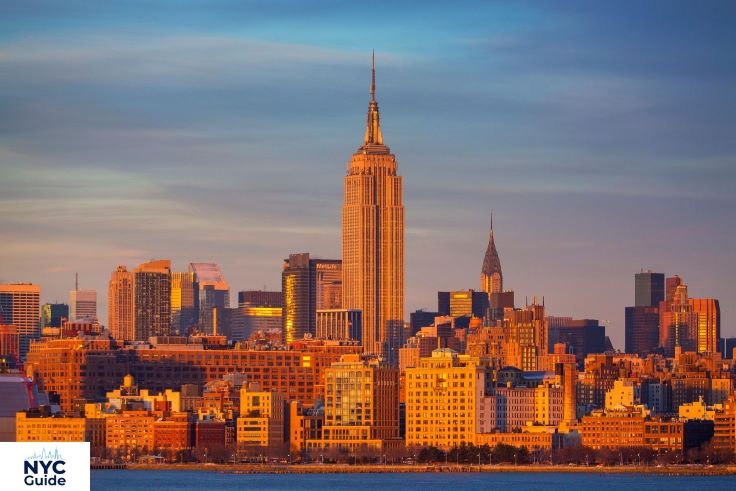
It’s consistently ranked as the most photographed skyscraper in the world. On any given day, tourists and New Yorkers alike stop on Fifth Avenue, along 34th Street, or from the High Line across the Hudson, to photograph it from a new angle.
The building draws around 4 million annual visitors to its observatories. That puts it among the top tourist attractions in the United States. Its Midtown landmark status is officially recognized by the New York City Landmarks Preservation Commission, which designated it a landmark in 1981.
When I visited, the line for the elevator moved faster than I expected. My friends who’d been before warned me to book online in advance and they were right. Tickets purchased at the door cost more and the wait is longer.
Unique Features and Fascinating Facts
The Empire State Building has its own zip code: 10118. That’s because so much mail arrives there daily that the U.S. Postal Service assigned it a dedicated code. It functions essentially as its own small city within a city.
On a clear day, you can see five states from the top New York, New Jersey, Pennsylvania, Connecticut, and Massachusetts. Visibility stretches up to 80 miles. The building’s antenna, added in 1953 to serve as a broadcast tower, pushes the total height to 1,454 feet.
Lightning strikes the building about 23 times per year on average. Rather than being a hazard, the building’s steel structure safely conducts lightning to the ground. It effectively acts as a giant lightning rod for Midtown Manhattan.
The original plan included a mooring mast at the top a dock for transatlantic dirigibles, or airships, which were briefly seen as the future of long-distance travel. The idea was that zeppelins would tie up at the top and passengers would descend directly into Midtown Manhattan. In reality, the plan was impractical and never used. Wind currents around a 1,250-foot tower made it impossible to safely moor an airship. The mast was eventually converted to a broadcast antenna instead.
Sustainability and Modern Innovation
The Empire State Building underwent a major sustainability renovation starting in 2009, becoming a model for retrofitting old skyscrapers to meet modern energy standards. The project reduced energy consumption by over 38 percent and is often cited as one of the most successful green building retrofits in history.
Windows were remanufactured on-site to improve insulation. The heating and cooling systems were completely overhauled. LED lighting replaced older systems throughout. The building now has an Energy Star certification and has been used as a case study by energy experts worldwide.
The visitor experience has also been completely reimagined in recent years. In 2019, the Empire State Building opened a new immersive museum experience on the second floor, covering the history of the building through interactive exhibits, historical photographs, and behind-the-scenes stories. The 86th floor observatory was also renovated, and an outdoor deck now offers open-air views from 1,050 feet. A new 102nd floor observatory was added, offering the highest views.
The Empire State Building in Midtown
The Empire State Building sits on Fifth Avenue between 33rd and 34th Streets in Midtown Manhattan. This part of New York is one of the busiest and most interesting neighborhoods in the world.
Nearby attractions include the Morgan Library and Museum, Herald Square, Madison Square Garden, and Bryant Park all within walking distance. Times Square is about a 10-minute walk north. The High Line elevated park is accessible via a short cab or subway ride to the west side.
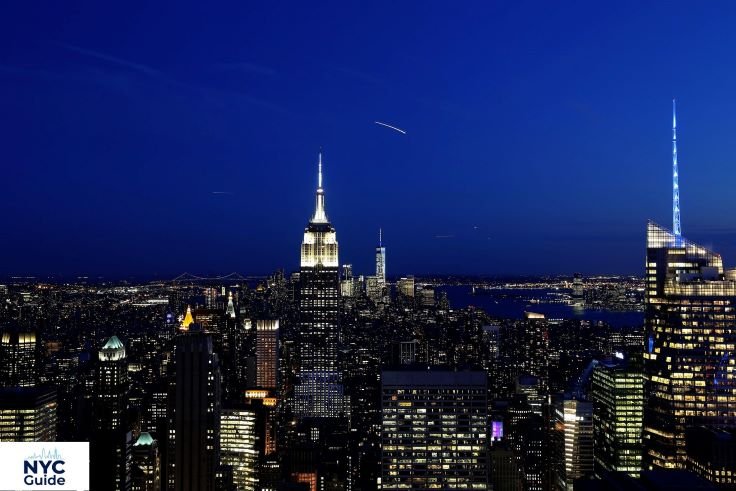
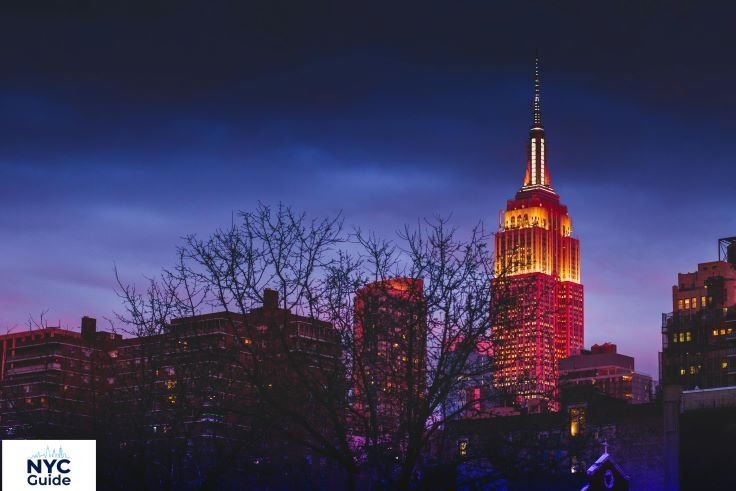
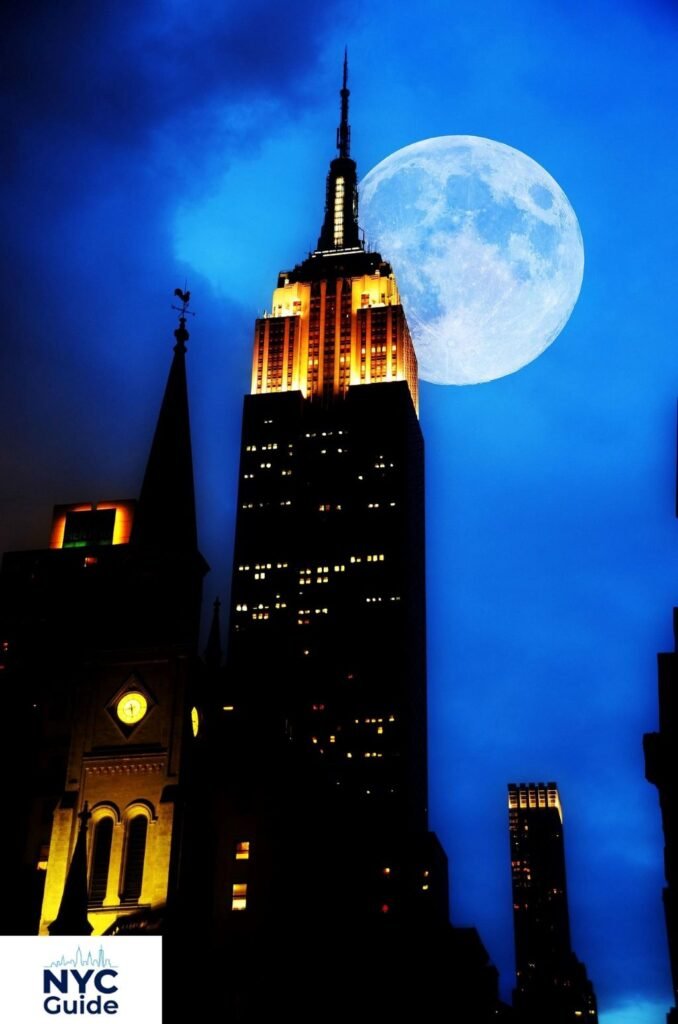
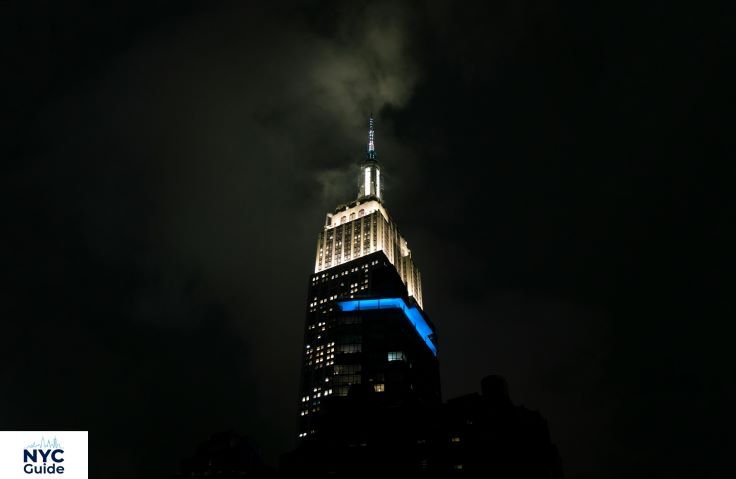
The building plays a central role in New York culture beyond tourism. It houses offices for hundreds of companies. Its lights are changed regularly to mark holidays, awareness campaigns, sports championships, and cultural moments you can check what color the building lights today by visiting the official Empire State Building website.
Getting there is easy. The closest subway stations are 34th Street–Herald Square (B, D, F, M, N, Q, R, W trains) and 34th Street–Penn Station (1, 2, 3 trains). From Penn Station, it’s a short three-block walk east.
Why You Should Visit the Empire State Building
The observatory views alone are worth the trip. Standing on the 86th floor open-air deck, with the wind in your face and Manhattan laid out below you in every direction, is genuinely one of the great experiences any city offers anywhere in the world. Looking south, you can see Wall Street and the tip of Manhattan. Looking north, Central Park stretches like a green rectangle through the grid of buildings.
The visitor experience highlights include the second-floor museum, the express elevators, the Art Deco lobby (don’t rush through it look up at the ceiling), and both observatory levels. Sunrise visits offer the clearest skies and the shortest lines. Sunset visits offer golden light and the transition into the city’s famous illuminated skyline.
What makes it timeless is harder to define, but I think it comes down to this: the Empire State Building was built during the Great Depression, when confidence was in short supply, and it said something bold and defiant about human ambition. People were out of work, banks were failing, and yet here were thousands of workers constructing the tallest building in the world in just over a year. That story never gets old.
Tickets for the 86th floor observatory start at around $44 for adults (prices vary by time slot and season). The 102nd floor costs more and is sold as an add-on. Booking online in advance is strongly recommended, especially during peak summer months and holidays.
Frequently Asked Questions
1. When was the Empire State Building built?
Construction began on March 17, 1930, and it officially opened on May 1, 1931.
2. How long did it take to build empire state?
It took approximately 410 days from ground breaking to completion.
3. How tall is the Empire State Building?
It stands 1,250 feet to the roof and 1,454 feet including the antenna.
4. Can you visit the top of the Empire State Building?
Yes, visitors can access the 86th-floor open-air observatory and the enclosed 102nd-floor observatory.
5. Why was the Empire State Building built?
It was built to win the race for the world’s tallest building and became a symbol of American ambition during the Great Depression.
Conclusion
The story of how they build empire state is more than just a construction tale it’s a symbol of ambition, resilience, and innovation. From a fierce skyscraper race in the 1930s to becoming one of the most visited landmarks in the world, the Empire State Building continues to define the skyline of New York City.
Whether you’re visiting for the breathtaking observatory views, the Art Deco design, or the powerful history behind its creation, this iconic tower delivers an unforgettable experience. If you’re planning a trip, make sure it’s at the top of your NYC itinerary because some landmarks aren’t just seen, they’re felt.