
Planning a trip to Manhattan, New York can feel overwhelming. The city is massive, loud, and packed with options. You don’t know where to start, which neighborhoods to explore, or how to fit everything into a few days. Believe me, I felt the same way on my first visit.
But here’s the good news: Manhattan is actually very walkable and easy to navigate once you understand its layout. The subway connects everything. The neighborhoods each have their own personality. And once you start exploring, the city reveals itself in the most rewarding way. This guide will walk you through everything you need to know.
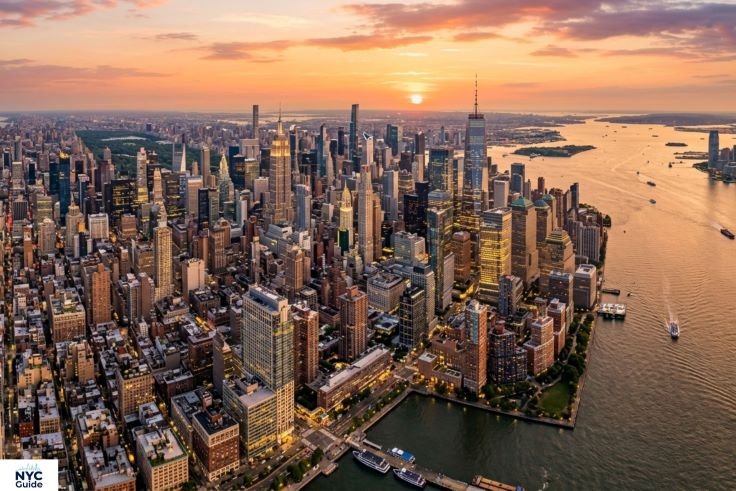
Whether you’re visiting for the first time or returning after years, this Manhattan sightseeing guide covers the best attractions, hidden gems, food spots, photography locations, and practical travel tips to help you plan a truly great trip.
Overview of Manhattan
Location Within New York City
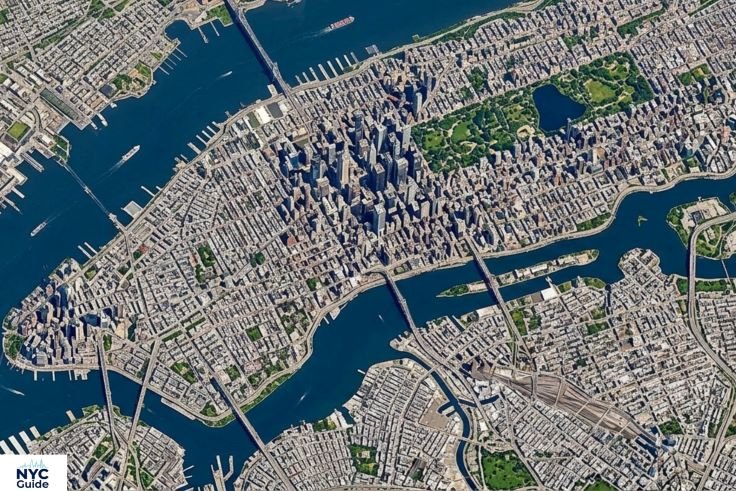
Manhattan is one of the five boroughs of New York City. It sits on a long, narrow island surrounded by the Hudson River to the west, the East River to the east, and the Harlem River to the north. Most of what people picture when they think of New York City is actually Manhattan the skyscrapers, Times Square, Central Park, and the Brooklyn Bridge.
The island runs roughly 13 miles from north to south and just over 2 miles at its widest point. Despite its relatively small size, it packs in an almost unbelievable amount of culture, history, architecture, and life.
Why Manhattan is the Heart of NYC
Manhattan is the cultural and financial engine of New York City. It’s home to Wall Street, Broadway, the United Nations, and some of the world’s most famous museums. The energy here is unlike anywhere else. People from every country, background, and walk of life share the same streets, subway cars, and coffee shops.
When I first walked out of Penn Station onto 7th Avenue, the sheer scale of it hit me immediately. Skyscrapers in every direction, yellow cabs honking, food carts on every corner. It’s sensory overload in the best possible way.
Brief History and Skyline Identity
Manhattan was originally inhabited by the Lenape people before European settlers arrived in the early 1600s. The Dutch established a trading post here and called it New Amsterdam. The British later took control and renamed it New York. By the 19th century, it had become one of the most important cities in the world.
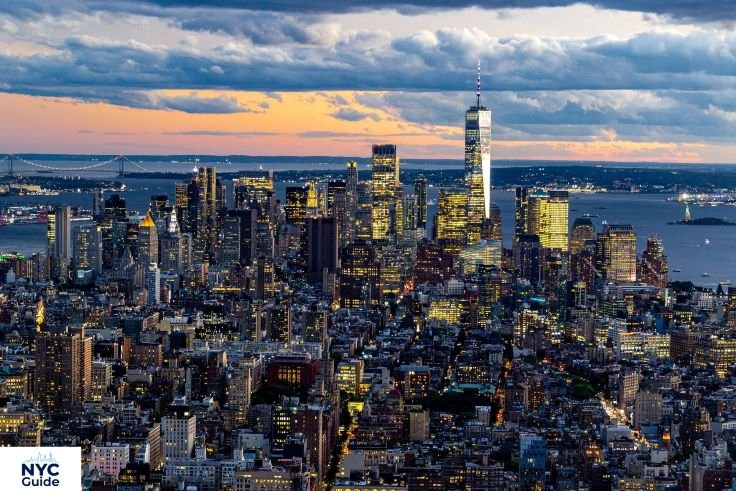
The iconic Manhattan skyline began taking shape in the early 20th century with the rise of skyscraper construction. The Empire State Building, completed in 1931, became a global symbol. Today the skyline includes One World Trade Center, the Chrysler Building, 30 Hudson Yards, and dozens of other towers that together form one of the most recognizable urban images in history.
Districts of Manhattan
Upper East Side
The Upper East Side runs along the eastern edge of Central Park and stretches toward the East River. It’s one of Manhattan’s most affluent neighborhoods, known for elegant prewar apartment buildings, high-end boutiques, and the stretch of 5th Avenue often called Museum Mile. This is where you’ll find the Metropolitan Museum of Art, the Guggenheim, the Frick Collection, and several other major cultural institutions.
Walking through the Upper East Side feels calm compared to Midtown. Tree-lined streets, quiet cafés, and beautiful architecture give it a neighborhood feel despite being in the middle of one of the busiest cities on earth.
Upper West Side
On the opposite side of Central Park, the Upper West Side has a slightly more laid-back, intellectual vibe. It’s home to Columbia University, the American Museum of Natural History, and Lincoln Center. The neighborhood is popular with families and longtime New Yorkers. Broadway here feels different from Times Square Broadway it’s lined with local restaurants, bookshops, and brownstone buildings.
Midtown Manhattan
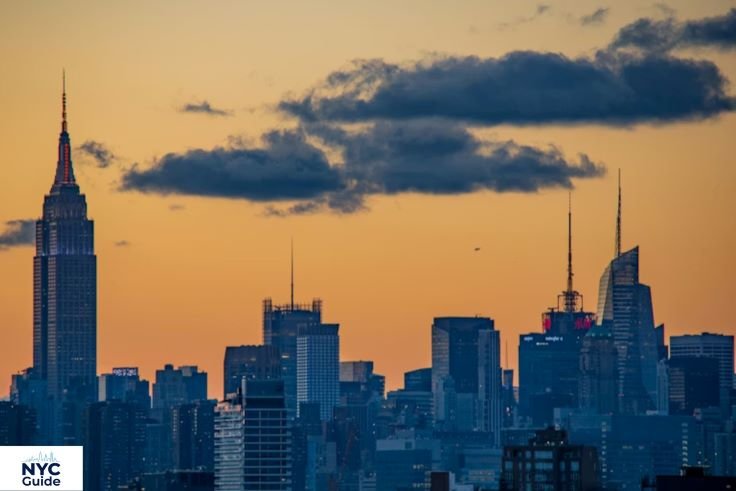
Midtown is the commercial heart of the city. This is where you’ll find Times Square, Rockefeller Center, the Empire State Building, Grand Central Terminal, and Madison Square Garden. It’s the busiest part of Manhattan and can be overwhelming, but it’s also where so many iconic experiences happen.
One mistake I made early on was trying to walk everywhere in Midtown during peak hours. The sidewalk congestion is real. Use the subway for longer distances and walk only for shorter stretches between sights.
Harlem
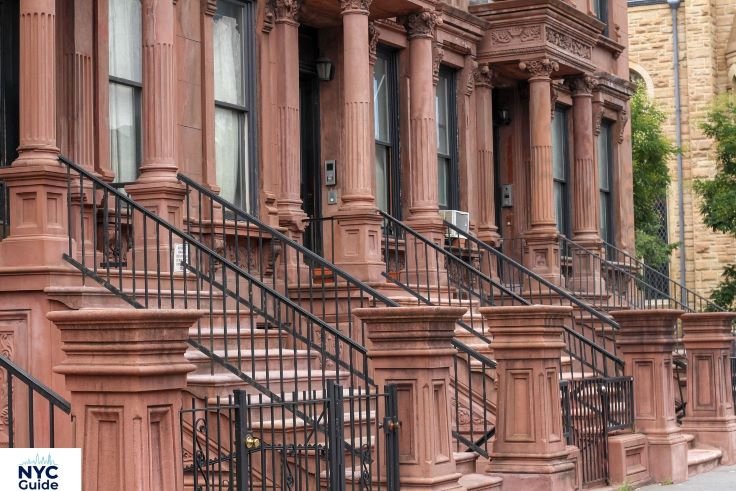
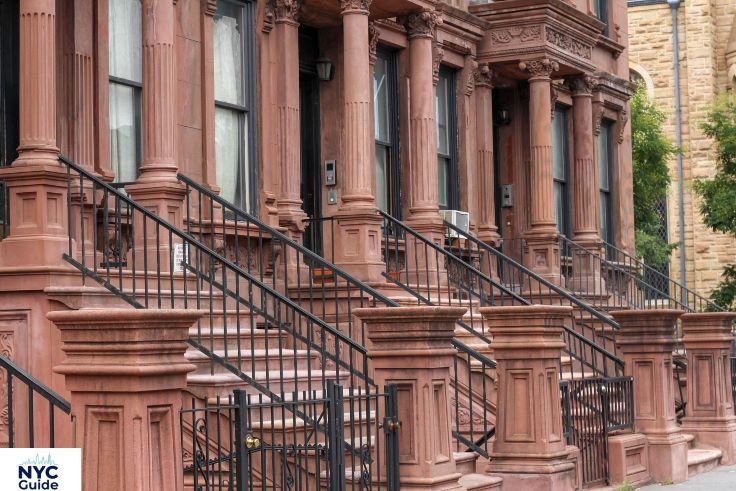
Harlem sits in northern Manhattan and carries enormous cultural and historical significance. It was the center of the Harlem Renaissance in the 1920s and 30s, a flowering of African American art, music, and literature that changed American culture. Today Harlem is a vibrant mix of longtime residents and newcomers, with great soul food restaurants, jazz venues, and beautiful brownstone-lined streets. The Apollo Theater on 125th Street remains one of the most storied entertainment venues in America.
Greenwich Village
Greenwich Village, or simply “the Village,” is one of Manhattan’s most beloved neighborhoods. For decades it was home to artists, writers, musicians, and activists. Bob Dylan played his early shows here. The Stonewall Inn on Christopher Street was the site of the 1969 riots that helped launch the modern LGBTQ+ rights movement. Today it retains a bohemian charm with narrow streets that don’t follow Manhattan’s usual grid, independent restaurants, and Washington Square Park at its center.
SoHo
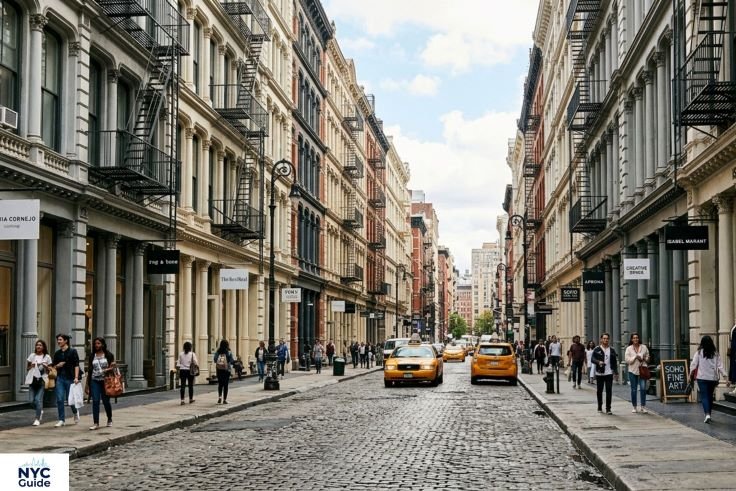
SoHo stands for South of Houston Street. It’s known for its cast-iron architecture, cobblestone streets, and high-end boutiques. It’s a great neighborhood for shopping and architecture lovers. The area has changed significantly over the decades — it was once a gritty industrial district, then became an artists’ hub in the 1970s and 80s, and is now one of Manhattan’s most upscale shopping destinations. Even if you’re not buying anything, a walk through SoHo is enjoyable.
Financial District
The Financial District, or FiDi, sits at the southern tip of Manhattan. This is where New York City began. Wall Street, the New York Stock Exchange, and the original Dutch settlement of New Amsterdam were all here. Today FiDi is also home to the National September 11 Memorial & Museum, One World Trade Center, and the Oculus transportation hub. It’s worth spending at least half a day here. On weekends the streets are noticeably quieter than weekdays, which makes exploring the historic area more pleasant.
What to See in Manhattan: Top Attractions
Central Park
Central Park is an 843-acre green space running through the middle of Manhattan. It stretches from 59th Street in the south to 110th Street in the north, and from 5th Avenue on the east to Central Park West on the west. The park was designed in the 1850s and 60s by Frederick Law Olmsted and Calvert Vaux and remains one of the great achievements in urban planning.
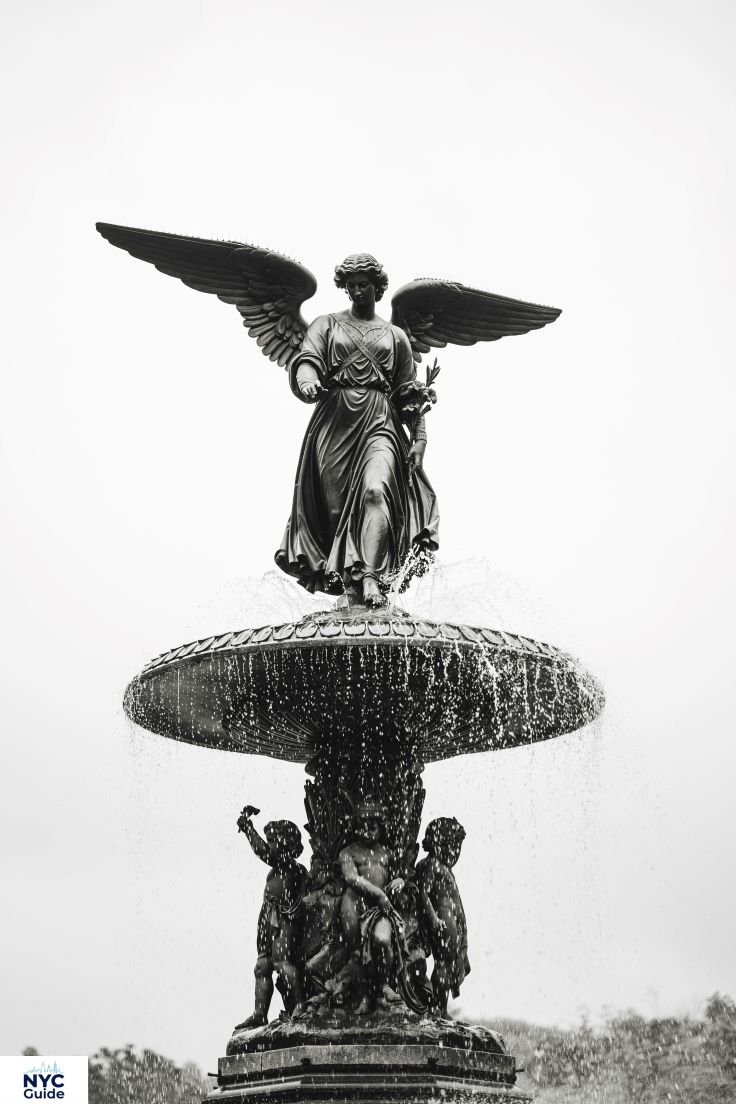
Inside the park you’ll find the Great Lawn, Bethesda Fountain, Strawberry Fields (a memorial to John Lennon), the Central Park Zoo, multiple lakes, and dozens of walking and cycling paths. It’s free to enter and open year-round. I’d recommend going early in the morning on a weekday if you want a quieter experience.
The Metropolitan Museum of Art
The Met, as locals call it, is one of the largest and most important art museums in the world. It sits on the eastern edge of Central Park on 5th Avenue. The permanent collection contains over two million works spanning 5,000 years of human history from Egyptian artifacts and Greek statues to Impressionist paintings and contemporary art.
Admission is around $30 for adults, $22 for seniors, and free for children under 12. The museum is closed on Tuesdays. Honestly, one visit is not enough. Plan for at least three to four hours, and even then you’ll only scratch the surface.
National September 11 Memorial & Museum
This is one of the most emotionally powerful sites in Manhattan. The memorial consists of two enormous reflecting pools built in the footprints of the original Twin Towers, with the names of all 2,977 victims inscribed around their edges. The adjacent museum tells the story of the attacks and their aftermath with great care and depth.
The memorial plaza is free and open daily. Museum admission is $29 for adults. I visited on a quiet weekday morning and found it deeply moving. It’s not an easy experience, but it’s an important one.
Empire State Building
The Empire State Building on 34th Street is one of the most iconic structures ever built. Completed in 1931 in just 410 days, it held the title of world’s tallest building for nearly 40 years. The observation decks on the 86th and 102nd floors offer stunning views of Manhattan and the surrounding boroughs.
General admission to the 86th floor observation deck starts around $44 for adults. The 102nd floor costs more. I’d recommend going at sunset the light on the skyline is extraordinary. Buy tickets online in advance to skip the line.
Top of the Rock
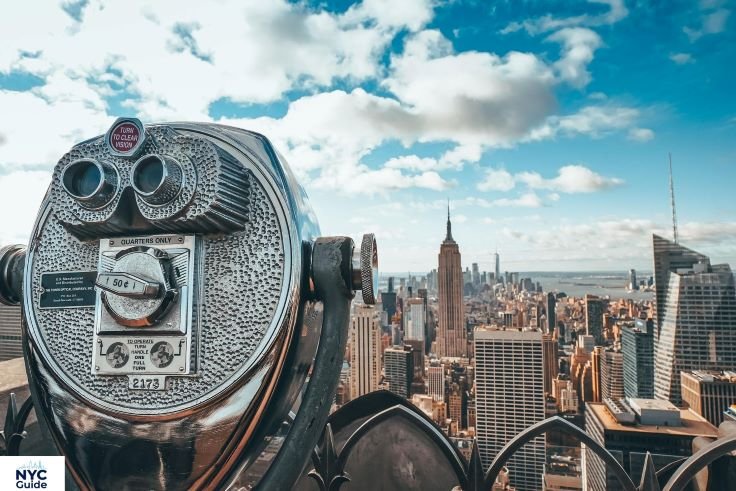
Top of the Rock is the observation deck at 30 Rockefeller Plaza in Midtown. Many photographers and visitors prefer it over the Empire State Building because from here you can actually see the Empire State Building in the skyline — you can’t see it from the top of itself, obviously. The views in every direction are spectacular.
Tickets start around $40 for adults. The deck is open until midnight on most nights, which makes it great for night photography.
The High Line
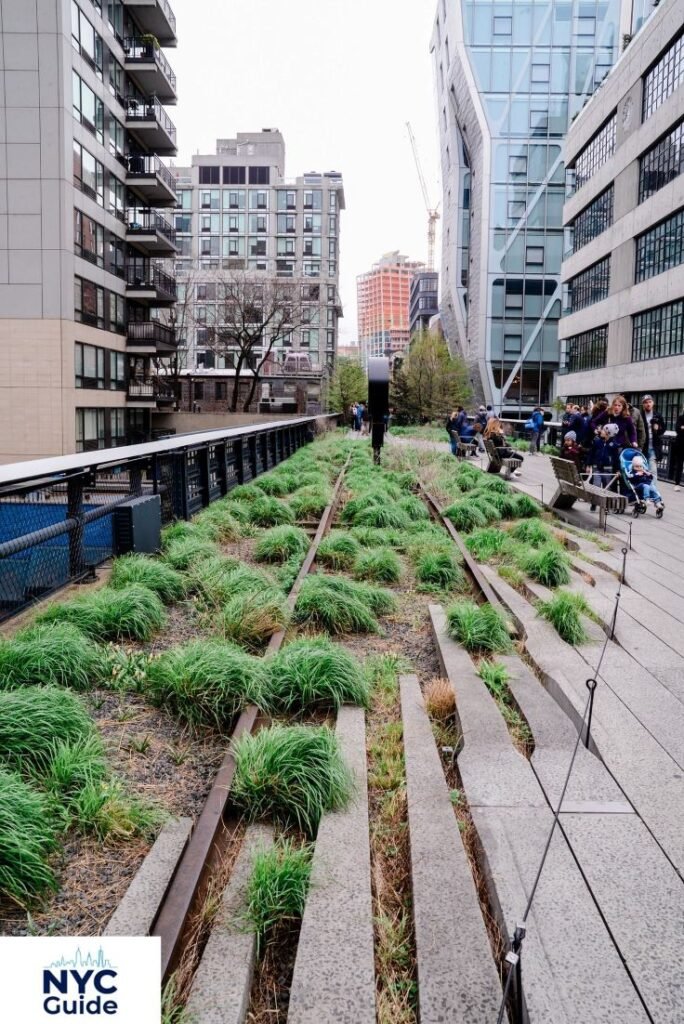
The High Line is one of Manhattan’s most creative urban projects. It’s an elevated park built on a disused freight rail line on the west side of the city, running roughly 1.45 miles from Gansevoort Street in the Meatpacking District to 34th Street. Along the route you’ll find public art installations, gardens, food vendors, and excellent views of the Hudson River and the city.
Entry is free. It’s best visited in the morning or late afternoon when the light is good and the crowds are more manageable. When we reached the section near 10th Avenue Square, the views down the avenue with the Empire State Building in the distance were absolutely worth the walk.
Little Island
Little Island is a small floating park in the Hudson River at Pier 55 in the West Village. It opened in 2021 and quickly became one of the most talked-about new public spaces in New York. The park features an amphitheater, walking paths, gardens, and great views of the river and New Jersey across the water. Entry is free, though reservations are sometimes required during peak season. It’s a lovely, less-touristy alternative to the High Line.
Oculus
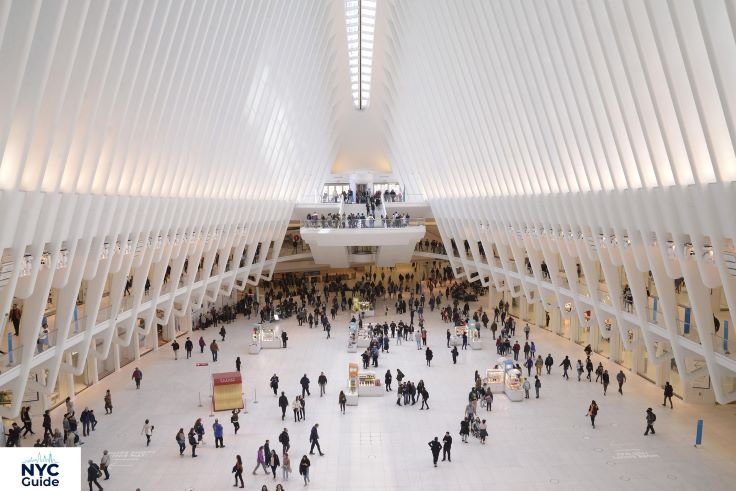
The Oculus is the transportation hub at the World Trade Center site. Designed by Spanish architect Santiago Calatrava, it looks like a giant white bird spreading its wings. The interior is one of the most dramatic architectural spaces in New York. It houses a shopping mall called Westfield World Trade Center, but even if you don’t shop, walk inside and look up the central hall is stunning, especially on sunny days when light pours through the spine of the roof.
American Museum of Natural History
Located on the Upper West Side at Central Park West and 79th Street, this museum is genuinely extraordinary. The dinosaur halls are world-class, and the Hall of Ocean Life with its 94-foot blue whale model is unforgettable. The Rose Center for Earth and Space, attached to the museum, houses a superb planetarium.
Suggested admission is $28 for adults and $16 for children. The museum is closed on Thanksgiving and Christmas.
Staten Island Ferry
The Staten Island Ferry is completely free and offers one of the best views of the Manhattan skyline and the Statue of Liberty you can get without paying for a boat tour. Ferries run 24 hours a day, 7 days a week, from Whitehall Terminal at the southern tip of Manhattan. The ride takes about 25 minutes each way. Most visitors simply ride it out and back without getting off at Staten Island, which is perfectly fine.
My friends experienced this for the first time on a clear January morning and couldn’t stop talking about the skyline views as the boat pulled away from the dock.
Best Things to Do in Manhattan
Outdoor Experiences
Early-morning walk in Central Park. Set your alarm and get into the park before 8am. The light is soft, the crowds are thin, and you’ll see locals running, cycling, and walking their dogs. It feels like a completely different place than the busy midday version.
Walk the High Line. The full walk takes about an hour at a comfortable pace. Start at the southern end in the Meatpacking District and walk north. Stop at the food vendors, look out at the Hudson River, and pay attention to the public art along the way.
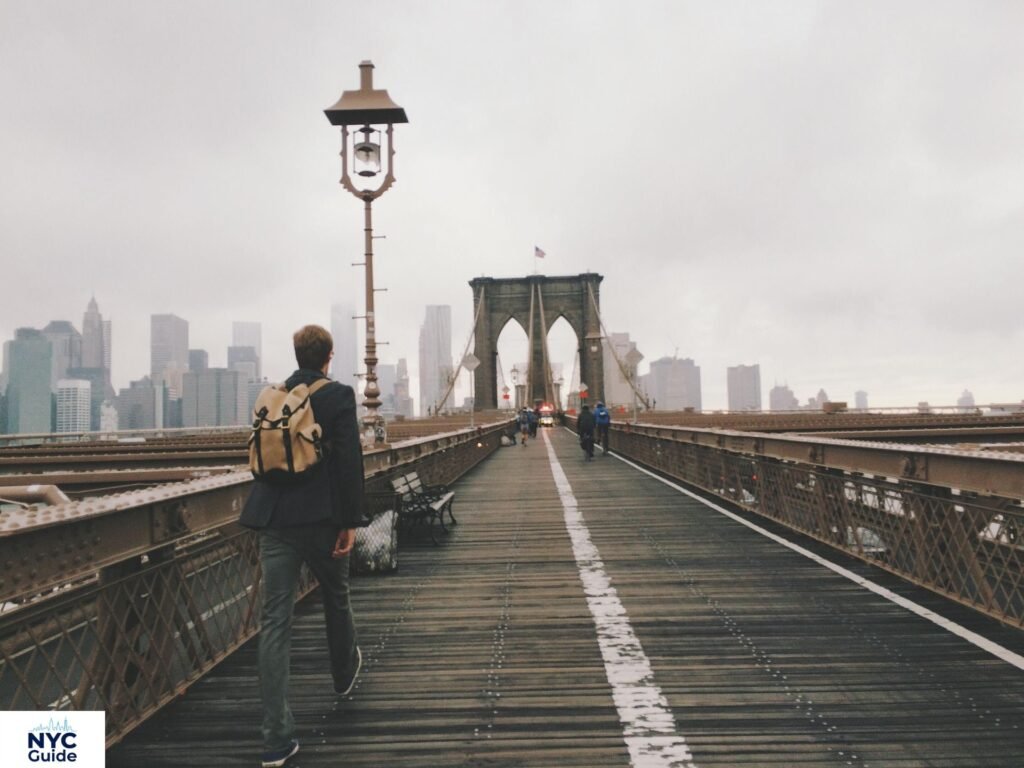
Walk from Manhattan to Brooklyn via Brooklyn Bridge. The Brooklyn Bridge pedestrian walkway is one of the great urban walks in the world. It takes about 30 to 45 minutes to walk across. Start on the Manhattan side at Park Row near City Hall. One mistake we made was starting from Brooklyn the Manhattan skyline views are much better walking toward Brooklyn, so go Manhattan to Brooklyn for the best photos.
Boat tour around Manhattan skyline. A circle line boat tour that circumnavigates the entire island takes about three hours. It’s a fantastic way to see the city from the water and get a sense of its scale. Prices range from about $35 to $55 depending on the tour.
Cultural and Historical Experiences
Visit 9/11 Memorial. Allow at least two hours for the memorial and museum. It’s sobering and important. The museum in particular is comprehensive and emotionally affecting.
Explore Greenwich Village. Spend a morning or afternoon just wandering. Visit Washington Square Park, walk down Bleecker Street, find a coffee shop, and soak up the neighborhood. It’s one of the few parts of Manhattan where the street grid breaks down and exploring without a map makes sense.
Discover Upper East Side architecture. Walk along 5th Avenue between 60th and 96th Streets. The apartment buildings and townhouses along this stretch are among the most architecturally impressive in the city.
Learn about September 11 and its aftermath. The 9/11 Museum does this thoughtfully and thoroughly. For a broader historical context, the museum’s exhibitions cover not just the attacks themselves but the events that followed, including the recovery and the global impact.
Food Experiences
Try NYC bagels. New York bagels are genuinely different from bagels anywhere else chewier, denser, better. Apollo Bagels in the West Village is consistently praised as one of the best in the city. Rico Bagel and Bagels & Schmear are also popular options. Get a bagel with lox and cream cheese.
Mexican food at Los Tacos No. 1. This spot in Chelsea Market serves some of the best tacos in Manhattan. The lines can be long but move fast. The adobada (marinated pork) tacos are exceptional.
Comfort food at Jacob’s Pickles. Located on the Upper West Side on Amsterdam Avenue, Jacob’s Pickles is known for its biscuits, fried chicken, and as the name suggests pickles. It’s the kind of place that feels genuinely New York even though it’s not a traditional NYC cuisine.
Photography and Skyline Spots
Top of the Rock views. The outdoor observation deck at 30 Rock gives you an unobstructed 360-degree view of Manhattan. Bring a wide-angle lens if you have one. Sunset and golden hour are the best times for photos of the Empire State Building lit up against the sky.
Photograph the Oculus. The interior of the Oculus is best photographed on a sunny day when the light comes through the roof. Come early in the morning before the shopping crowds arrive. Use the symmetry of the hall for composition.
Manhattan skyline from the water. The Staten Island Ferry, the Brooklyn waterfront at DUMBO or Brooklyn Bridge Park, or any of the Hudson River piers on the New Jersey side will give you the classic full skyline view. The Jersey City waterfront at sunset is one of the best spots for a panoramic shot.
Empire State Building observation deck. The 86th floor deck is open-air, which makes for cleaner photos than glass-enclosed decks. At night the city lights are spectacular. The views downtown toward One World Trade Center are particularly dramatic.
Other Boroughs of New York City
Brooklyn
Brooklyn is just across the East River from Manhattan and is easily reached by subway, the Brooklyn Bridge on foot, or ferry. It’s a borough of distinct neighborhoods Williamsburg, DUMBO, Park Slope, Brooklyn Heights, Bushwick each with its own character. DUMBO (Down Under the Manhattan Bridge Overpass) is famous for its cobblestone streets and views of both bridges. Brooklyn Bridge Park along the waterfront is excellent. Many visitors find Brooklyn’s energy more relaxed than Manhattan’s.
Queens
Queens is the most ethnically diverse urban area in the world, and its food scene reflects that. Flushing is a hub of Chinese and Korean food. Jackson Heights has exceptional South Asian and Latin American cuisine. Long Island City, just across the East River, has a growing arts scene and great Manhattan skyline views. Citi Field, home of the New York Mets, is here.
The Bronx
The Bronx is home to the New York Yankees (Yankee Stadium), the Bronx Zoo, the New York Botanical Garden, and Fordham University. Arthur Avenue in the Belmont neighborhood is known as the real Little Italy of New York more authentic and less touristy than Manhattan’s version. The Bronx is also the birthplace of hip-hop culture.
Staten Island
Staten Island is the most residential of the five boroughs and the least visited by tourists. Beyond the free ferry ride, it’s home to Snug Harbor Cultural Center, the Staten Island Museum, and some of New York’s best Sri Lankan food along Victory Boulevard.
Practical Travel Tips for Visiting Manhattan
Best Time to Visit
The best times to visit Manhattan are spring (April to June) and fall (September to November). The weather is mild, the light is good, and the crowds, while still present, are more manageable than in peak summer. Summer can be brutally hot and humid. Winter is cold but has its own appeal fewer tourists, holiday decorations, ice skating in Central Park and at Rockefeller Center.
Transportation Options
Manhattan’s public transportation subway system is the backbone of getting around. A single subway ride costs $2.90 with an OMNY tap-to-pay card. The subway runs 24 hours a day, which is genuinely useful. Get an OMNY card or use your contactless credit card directly on the readers.
For short distances, walking is often fastest, especially in Midtown where traffic is heavy. Cabs and rideshares (Uber, Lyft) are plentiful but can be expensive during rush hours due to congestion pricing. The NYC Ferry is a pleasant option for waterfront routes.
Where to Stay
Midtown Manhattan is the most convenient area for first-time visitors you’re within walking distance or a short subway ride from almost everything. It’s also the most expensive. The Upper West Side and Upper East Side tend to be slightly more affordable and feel more residential. Lower Manhattan and the Financial District have good hotel options and are quieter at night. Budget travelers should look at hostels in Midtown or neighborhoods like Hell’s Kitchen.
Safety and Budgeting Tips
Manhattan is generally safe for tourists, particularly in the main tourist areas. Use common sense be aware of your surroundings, don’t flash valuables, and hold your bag in front of you on crowded subway cars.
For budgeting: many of Manhattan’s best experiences are free. Central Park, the High Line, the Staten Island Ferry, the Oculus, and most of the city’s street life cost nothing. Pack snacks and eat lunch rather than dinner at nicer restaurants to save money. A $3 to $5 slice of pizza from a local pizzeria is often better than a $20 sit-down meal.
Final Thoughts
Manhattan, New York is one of those places that rewards effort. The more you walk, explore, and step off the obvious tourist path, the more the city gives back. Don’t try to see everything in one trip. Pick a few neighborhoods, choose a handful of attractions, eat well, and spend time just being in the city.
Whether you’re walking across the Brooklyn Bridge at sunrise, standing on the observation deck of the Empire State Building at night, or sitting in a café in Greenwich Village on a rainy afternoon, Manhattan has a way of becoming personal very quickly. It gets under your skin. Most people who visit once find themselves planning to return before they’ve even left.
Use this guide as a starting point, but let the city surprise you. That’s when Manhattan is at its best.
FAQ’s
What is Manhattan New York known for?
Manhattan New York is known for its iconic skyline, world-famous attractions, and cultural landmarks. Highlights include Central Park, Times Square, the Empire State Building, Broadway theaters, and some of the most important museums in the world.
Is Manhattan New York worth visiting for tourists?
Yes, Manhattan New York is one of the most popular destinations in the world. Visitors come for famous attractions, diverse neighborhoods, incredible food, museums, parks, and unforgettable skyline views.
How many days do you need to explore Manhattan New York?
Most travelers need 3 to 4 days to explore Manhattan New York comfortably. This allows enough time to visit major attractions like Central Park, the Empire State Building, museums, and several neighborhoods.
What are the best neighborhoods to visit in Manhattan New York?
Some of the best neighborhoods to visit in Manhattan New York include Midtown, Greenwich Village, SoHo, Harlem, the Upper East Side, and the Financial District, each offering unique attractions, food, and local culture.
What is the best time to visit Manhattan New York?
The best time to visit Manhattan New York is spring (April–June) and fall (September–November) when the weather is pleasant and walking around the city is more comfortable.