
Planning a visit to the American Museum of Natural History but not sure where to start? You’re not alone. With over 45 permanent exhibition halls, a planetarium, and millions of artifacts, this place can feel overwhelming before you even walk through the door. Many visitors leave wishing they had planned better.
The good news is that with a little preparation, AMNH becomes one of the most rewarding experiences New York City has to offer. This guide covers everything tickets, exhibits, hidden gems, family tips, and insider advice so you can walk in confident and walk out amazed.
Whether you’re a first-time visitor, a parent with young kids, or a repeat explorer looking for something new, this complete guide will help you make the most of every minute at the American Museum of Natural History.
What is the American Museum of Natural History?
History and Founding (1869)
The American Museum of Natural History was founded in 1869, making it one of the oldest and largest natural history museums in the world. It was established through the vision of a group of prominent New Yorkers, including Theodore Roosevelt Sr. and Albert Bickmore, who believed New York City deserved a world-class institution dedicated to science and nature. The museum opened its doors to the public in 1877 and has been growing ever since.
Mission and Global Importance
The museum’s mission goes far beyond displaying fossils and dioramas. AMNH is an active research institution. Scientists here conduct fieldwork on every continent. They study everything from deep-sea ecosystems to the genetic makeup of ancient species. The museum houses over 34 million specimens and artifacts, making its collection one of the most significant on the planet.
Why It’s One of the World’s Top Science Museums
AMNH consistently ranks among the best museums in NYC and the world. It combines scientific research, public education, and immersive storytelling in a way few institutions can match. The exhibits are not just displays they are carefully crafted experiences designed to make complex science accessible to everyone, from curious five-year-olds to seasoned researchers.
Annual Visitors and Cultural Impact
The museum welcomes approximately five million visitors each year. It has influenced generations of scientists, educators, and nature lovers. Its cultural footprint extends beyond the building itself most people recognize it from the Night at the Museum film franchise, which was set and partly filmed here.
Where is AMNH Located & How to Get There
Address and Map Overview
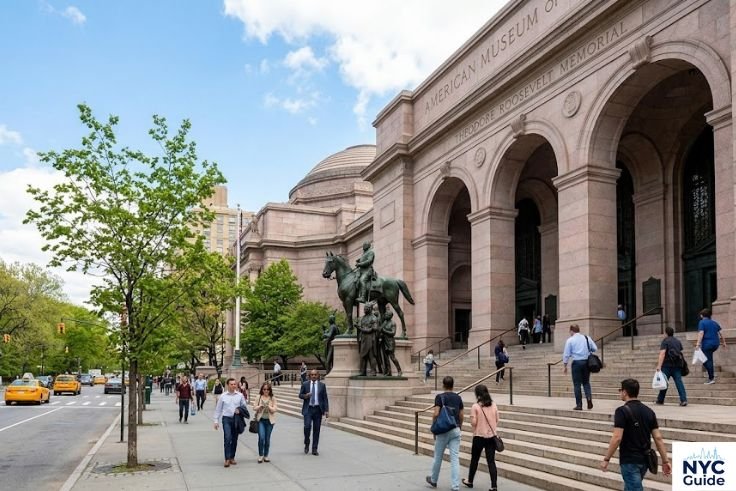
The museum is located at Central Park West and 79th Street, Manhattan, New York City. It sits on the western edge of Central Park, occupying four city blocks. The address is: 200 Central Park West, New York, NY 10024.
Subway Routes
The easiest way to reach AMNH is by subway. Take the B or C train to the 81st Street – Museum of Natural History station. The station even has museum-themed artwork on the platform, so you know you’re in the right place. The 1 train to 79th Street is also a short walk away.
Bus Routes and Walking Access
Several MTA bus lines stop near the museum, including the M79, M10, and M7. If you’re already in the Upper West Side neighborhood, the museum is easily walkable. From Columbus Circle, it’s about a 15-minute walk north along Central Park West.
Nearby Landmarks
Central Park is right across the street a perfect complement to your museum visit. Columbus Circle is about 10 blocks south. The neighborhood itself, the Upper West Side, is charming and worth exploring before or after your visit.
AMNH Tickets, Pricing & Free Entry Explained
General Admission (Pay-What-You-Wish for Residents)
One of the most misunderstood things about AMNH is its pricing policy. New York State residents and students can pay what they wish for general admission. This means you can technically pay as little as one dollar. You must show valid ID proving New York residency. Out-of-state visitors pay a suggested admission price.
As of recent pricing, suggested general admission is approximately:
- Adults: $28
- Children (3–12): $16.50
- Students and seniors: $22.50
These are suggested prices, not fixed for NY residents.
Ticket Types
There are two main ticket types:
General Admission covers the permanent exhibition halls. All-Inclusive tickets add access to special exhibitions, space shows at the Hayden Planetarium, and IMAX films. All-Inclusive tickets cost more but offer significantly more content.
Online vs On-Site Booking
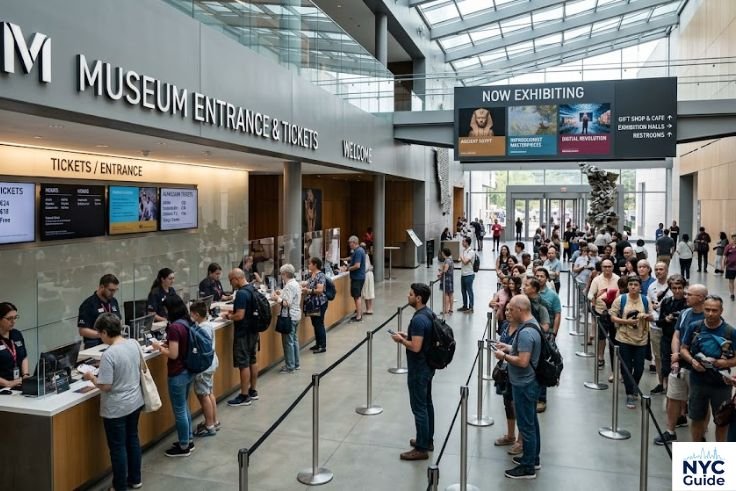
Booking online in advance is strongly recommended, especially on weekends and during school holidays. Online booking lets you skip the ticket line. You can still buy tickets at the door, but wait times can be long during peak periods.
Membership Benefits
An AMNH membership pays for itself quickly if you plan to visit more than once. Members get unlimited general admission, discounts on special exhibitions, and early access to events. Annual membership starts at around $110 for individuals.
Best Way to Save Money
- New York residents should always bring ID and use the pay-what-you-wish option.
- The New York City Explorer Pass and Go City Card include AMNH.
- Visiting on weekdays avoids premium pricing pressure.
- Skip planetarium shows if budget is tight the permanent halls alone are worth hours of exploration.
AMNH Opening Hours & Best Time to Visit
Weekly Schedule
The museum is open daily from 10:00 AM to 5:30 PM. Hours can vary during holidays and special events, so always check the official website before your visit.
Best Days to Visit
Weekdays are significantly less crowded than weekends. Tuesday through Thursday tend to be the quietest days. Saturdays, especially in summer and during school breaks, can be extremely busy.
Best Time Slots
Arriving right when the museum opens at 10:00 AM gives you the best experience. The most popular halls particularly the dinosaur halls are noticeably quieter in the first hour. Afternoons, especially between 1:00 PM and 3:00 PM, tend to be the busiest.
Seasonal Crowd Trends
Summer (June through August) and school holidays are peak seasons. Spring and fall are ideal the weather is pleasant, and crowds are manageable. Winter weekdays are perhaps the most peaceful time to visit, though the Butterfly Conservatory (a seasonal exhibit) typically runs in winter, which does draw extra visitors.
Museum Layout & How to Plan Your Visit
Overview of Floors and Halls
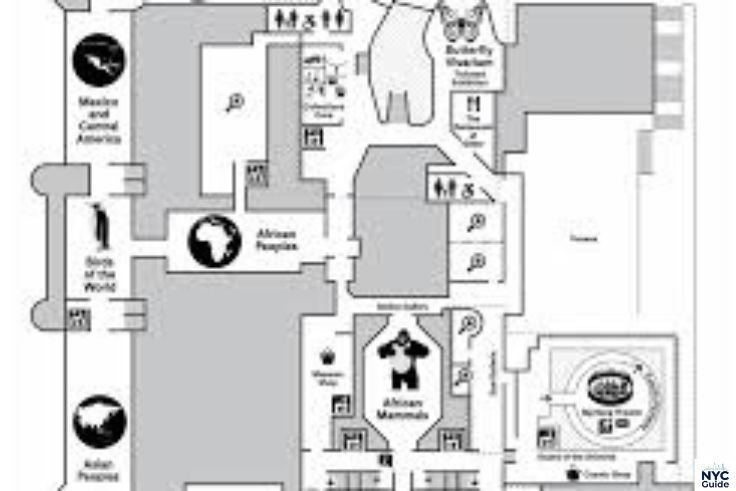
AMNH has four floors of exhibitions plus a lower level. Here’s a rough breakdown:
- First Floor: Ocean Life, North American Mammals, Meteorites, African Peoples, Mexico and Central America
- Second Floor: African Mammals, Asian Peoples, Reptiles and Amphibians, North American Birds
- Third Floor: Dinosaur Halls (the big draw), Vertebrate Origins, Primates, Human Origins
- Fourth Floor: Small mammals, birds of the world
- Rose Center for Earth and Space: Connected to the main building, houses the Hayden Planetarium
Suggested Routes
2-Hour Visit: Rose Center → Milstein Hall of Ocean Life → Hall of Saurischian Dinosaurs. This covers the three most iconic attractions.
4-Hour Visit: Add Akeley Hall of African Mammals, Hall of Human Origins, and a quick walk through the Hall of Gems and Minerals.
Full-Day Visit: Take your time with every floor. Visit the Richard Gilder Center for Science, Education, and Innovation. Catch a planetarium show. Eat lunch in the museum. Revisit your favorite hall at the end.
Avoiding Museum Fatigue
Don’t try to see everything. Pick three to five must-see exhibits before you arrive and focus on those first. Take breaks the museum has seating areas throughout. Children especially need downtime, so build in rest periods.
Must-See Exhibits at the American Museum of Natural History
Milstein Hall of Ocean Life
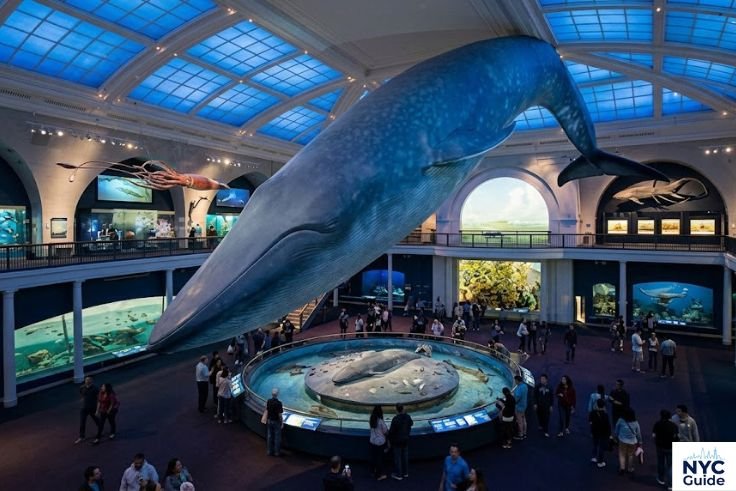
I still remember stepping into this hall for the first time and feeling genuinely speechless. The room is anchored by a 94-foot blue whale model suspended from the ceiling the most iconic image of the entire museum. It’s a full-scale replica and it genuinely takes your breath away, no matter how old you are.
Beyond the whale, the hall explores marine biodiversity across multiple ecosystems coral reefs, open ocean, and the deep sea. The dioramas and lighting create an almost meditative atmosphere. This is one of those spaces where you slow down without realizing it.
Hall of Saurischian Dinosaurs
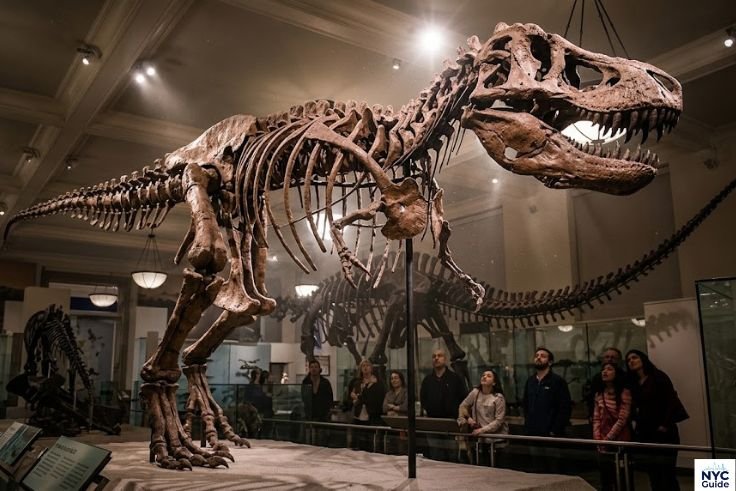
This is the hall that most visitors rush to first, and rightfully so. It houses one of the most impressive dinosaur collections anywhere in the world. The Tyrannosaurus rex skeleton is mounted in a dynamic, running posture a significant shift from older, upright displays. The Titanosaur, a massive sauropod dinosaur, is so large that its neck actually extends out of the hall into the corridor.
The exhibits don’t just show bones they walk you through evolutionary history and what we know about dinosaur behavior, diet, and extinction. It’s genuinely educational without feeling like a lecture.
Akeley Hall of African Mammals
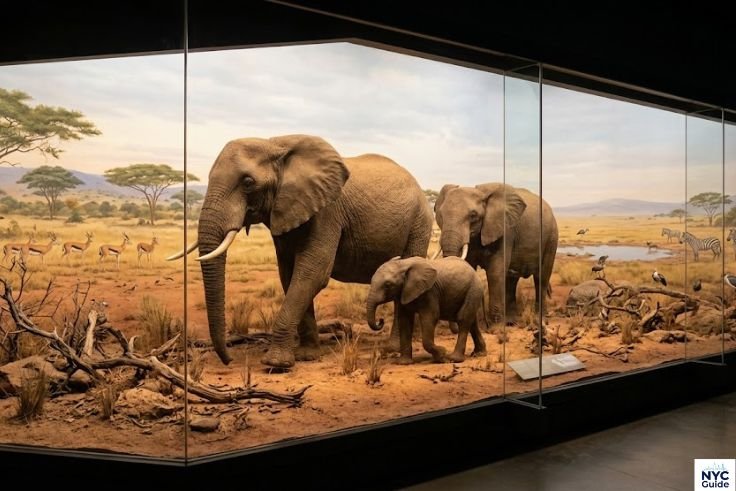
Carl Akeley, the naturalist and taxidermist who created this hall, was a visionary. The dioramas here are considered among the finest in museum history. Each scene captures a specific African landscape the Serengeti, Congo forests, Nile Valley with such precision that the animals look alive.
What makes this hall special is its subtle conservation message. These animals exist in a moment frozen in time. The hall reminds you, quietly, that many of these species face real threats today.
Bernard Family Hall of North American Mammals
Similar in style to the African Mammals hall, this space showcases wildlife habitats across North America from the Rocky Mountains to eastern forests to open prairies. The bison herd diorama is particularly striking. Kids tend to love this hall because the animals feel close and familiar.
Rose Center for Earth and Space
The Rose Center is architecturally stunning a massive glass cube housing the Hayden Planetarium sphere. It feels like a completely different building from the rest of the museum. The space shows inside the planetarium are narrated (past shows have been narrated by celebrities including Neil deGrasse Tyson) and cover topics like the formation of the universe and dark matter.
Even outside the show itself, the Rose Center has excellent interactive exhibits on cosmic evolution, our solar system, and the scale of the universe. The spiral ramp descending around the planetarium is lined with a timeline of the universe beautifully done.
Richard Gilder Center for Science, Education, and Innovation
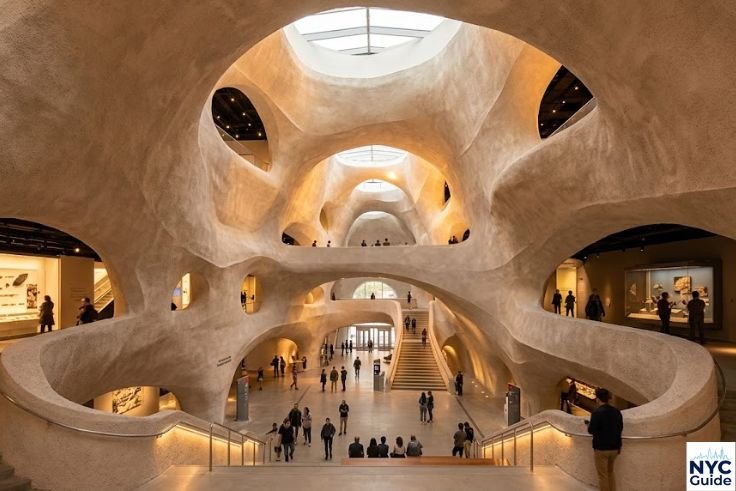
This is the museum’s newest major addition, opened in 2023. The architecture alone is worth seeing organic curved walls and layered spaces inspired by natural forms like canyons and caves. Inside, the Gilder Center hosts interactive science experiences focused on biology, collections, and research. It’s especially engaging for older kids and adults who want a deeper understanding of how science actually works.
Hidden Gems Most Visitors Miss
Hall of Gems and Minerals
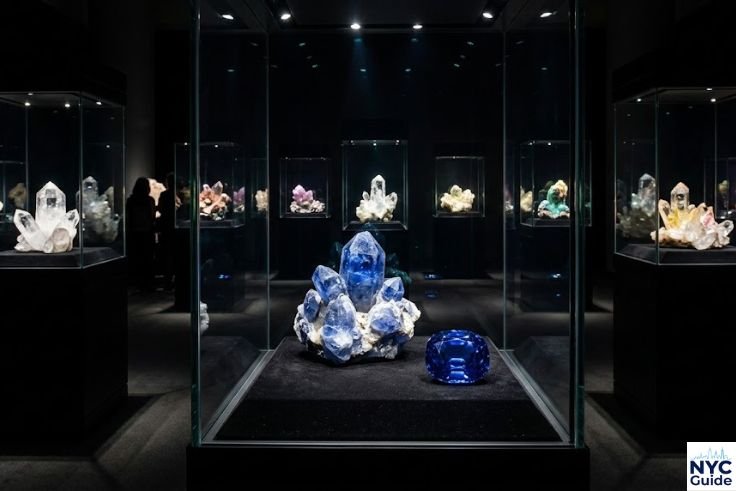
This hall is genuinely underrated. It contains the Star of India sapphire, one of the largest gem-quality star sapphires in the world, along with stunning meteorite specimens and thousands of mineral samples. The lighting is dim and theatrical it feels like a treasury.
Northwest Coast Hall
Located on the first floor, this hall features monumental totem poles and artifacts from Indigenous cultures of the Pacific Northwest. It’s one of the oldest halls in the museum and carries a quiet, powerful atmosphere that most visitors walk past without stopping.
Lesser-Known Fossil Exhibits
Beyond the famous dinosaur halls, the museum has fossil exhibits covering fish, invertebrates, and early vertebrate life that many visitors never find. These halls are quieter and often give you a more contemplative experience.
Quiet Exploration Zones
The upper floors particularly the fourth floor bird halls are almost always quiet. If you need a break from crowds, head up there. The exhibits are interesting, and the pace drops significantly.
Special Exhibitions & Seasonal Events
AMNH runs several rotating special exhibitions throughout the year. These require separate tickets (or are included with All-Inclusive admission). Past exhibitions have covered topics like T. rex: The Ultimate Predator, Sharks, and Climate Change.
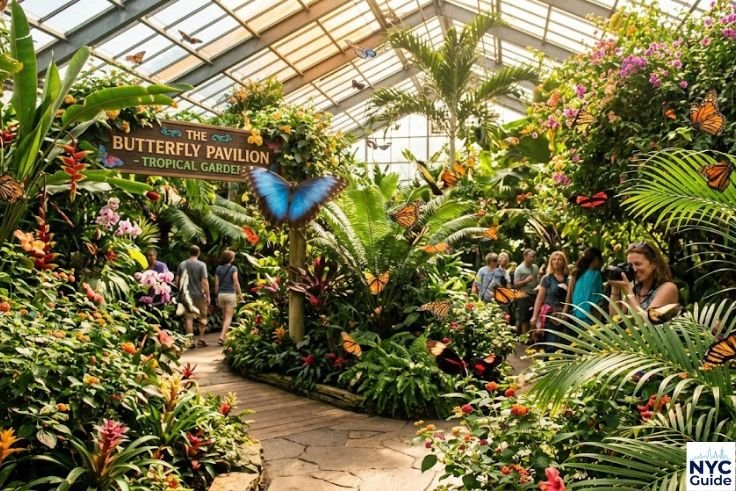
The Butterfly Conservatory typically runs from October through May. It’s a warm, lush greenhouse filled with hundreds of live tropical butterflies. It’s one of the most beloved seasonal experiences at the museum butterflies will land on you if you stand still long enough.
Space shows at the Hayden Planetarium rotate periodically. Check the current schedule online before your visit. IMAX films are shown in the LeFrak Theater and cover nature and science topics.
Visiting AMNH with Kids (Family-Focused Guide)
Best Exhibits for Kids by Age Group
Toddlers (2–4): Milstein Hall of Ocean Life (the whale alone justifies the visit), African Mammals dioramas.
Ages 5–8: Dinosaur halls, North American Mammals, Rose Center for Earth and Space.
Ages 9–12: Richard Gilder Center interactive exhibits, Hall of Human Origins, space shows.
Teenagers: Gems and Minerals, Gilder Center, Hall of Ocean Life.
Interactive Zones
The Discovery Room (check current availability as hours vary) is designed specifically for young children. It has hands-on science activities and tactile exhibits. It’s often the highlight for parents of toddlers and young kids.
Stroller-Friendly Routes
The museum is largely stroller-friendly with elevators throughout. The first floor is the easiest to navigate with a stroller. Some older halls have slightly tighter corridors, but nothing impassable.
Family Rest Areas
There are benches throughout the museum. The food court area offers a place to sit, eat, and recharge. Nursing rooms are available check with staff for the nearest one.
AMNH for First-Time Visitors vs Repeat Visitors
What to Prioritize on First Visit
First-timers should focus on the top five: Milstein Hall of Ocean Life, Hall of Saurischian Dinosaurs, Akeley Hall of African Mammals, Rose Center for Earth and Space, and the Gilder Center. These represent the best of what the museum offers.
What to Explore on a Second Visit
Return visitors can go deeper spend time in the Hall of Human Origins, explore the Northwest Coast Hall, and actually read the exhibit text instead of rushing through. The quieter halls reveal themselves slowly.
Themed Visit Ideas
Dinosaur Day: Focus entirely on the third floor fossil halls. Start with Saurischian Dinosaurs, then Ornithischian Dinosaurs, then Vertebrate Origins.
Space Day: Arrive early for a Hayden Planetarium show, then spend time in the Rose Center and explore the meteorite collection on the first floor.
Ocean Day: Milstein Hall, the invertebrate fossil halls, and the marine biology displays.
How Long Do You Need at AMNH?
Quick Visit (2–3 Hours): Completely doable if you focus. Hit the whale hall, the dinosaurs, and the Rose Center. Don’t try to add more you’ll end up rushing everything.
Half-Day (4–5 Hours): Allows you to include the African Mammals, Gilder Center, and perhaps a planetarium show. This is the sweet spot for most adult visitors.
Full-Day (7+ Hours): For families with kids who move slowly, serious museum enthusiasts, or anyone who wants to truly explore. Bring snacks, take breaks, and don’t feel guilty if you revisit a favorite hall twice.
Food, Cafes & Dining Options Inside AMNH
The museum has a food court on the lower level offering hot meals, sandwiches, salads, pizza, and kid-friendly options. It’s reasonably priced by New York City standards but not cheap. There’s also the Café on Four on the fourth floor.
The museum does allow outside food in designated eating areas, so packing your own lunch is a smart budget move.
Outside the museum, the Upper West Side has excellent dining options within a short walk. Amsterdam Avenue and Columbus Avenue have everything from casual delis to sit-down restaurants. Shake Shack has a location nearby. There are also several excellent brunch spots if you’re visiting on a weekend morning.
Rules, Accessibility & Visitor Guidelines
Bag Policy
Bags are subject to inspection at the entrance. Large bags and backpacks are allowed but may need to go through security screening.
Photography Rules
Photography is permitted throughout the museum for personal use. Flash photography is discouraged in certain galleries to protect artifacts. Tripods and professional equipment may require special permission.
Accessibility Services
AMNH is committed to accessibility. Wheelchairs are available for loan. The museum has elevators throughout. Audio description guides and sensory-friendly maps are available. Visitors with specific accessibility needs can contact the museum in advance for personalized assistance.
Coat Check
A coat check is available near the main entrance. It’s worth using in winter carrying a heavy coat through four floors of exhibits gets old quickly.
What to Do Near the American Museum of Natural History
Walk in Central Park
Central Park is directly across the street. Even a short walk into the park after your museum visit is refreshing. The area near 79th Street features the Delacorte Theater (summer Shakespeare), the Great Lawn, and Turtle Pond.
Visit Belvedere Castle
Belvedere Castle is about a 10-minute walk into Central Park from the museum entrance. It’s a Victorian folly offering great views over the park and it’s free to enter. Kids love climbing around it.
Explore the Upper West Side
The Upper West Side is one of New York’s most livable and pleasant neighborhoods. Broadway and Amsterdam Avenue are lined with bookshops, bakeries, and restaurants. Zabar’s, the famous deli, is a few blocks north.
Nearby Kid-Friendly Attractions
The Children’s Museum of Manhattan is about a 10-minute walk north. The New York Historical Society is directly next door to AMNH on Central Park West. Both are worth combining with an AMNH visit for a full day in the neighborhood.
AMNH Travel Tips (Insider Advice)
Enter through the 77th Street entrance rather than the main Central Park West entrance it tends to be less crowded, especially on busy days.
Visit the most popular exhibits the dinosaur halls and the whale hall first thing in the morning. By midday, these spaces can be packed.
The museum’s official app is useful for navigation. Download it before you arrive. It includes an interactive map and information about current special exhibitions.
For the best photos, the whale in Milstein Hall looks spectacular when photographed from the upper mezzanine level. The Titanosaur in the dinosaur hall is best photographed from the corridor where its neck extends.
Guided tours are available and worth considering for first-time visitors who want context and storytelling rather than self-guided wandering. Audio guides are also available for rent.
Common Mistakes to Avoid at AMNH
Trying to see everything in one visit is the number one mistake. The museum is simply too large. Decide in advance which five or six halls matter most to you and focus there.
Ignoring the map is another common error. The layout is confusing at first. Pick up a physical map at the entrance or download the app before you start walking.
Visiting at peak hours weekend afternoons between noon and 3:00 PM means crowds, long lines for planetarium shows, and a generally more stressful experience. If you must visit on a weekend, arrive right at opening.
Skipping timed exhibits is a mistake many people make. Space shows at the Hayden Planetarium require separate timed tickets. Book these in advance online, not when you arrive.
Is the American Museum of Natural History Worth Visiting?
Yes , without qualification. The American Museum of Natural History is one of the genuinely great museums in the world. The combination of iconic exhibits, world-class research, beautiful architecture, and sheer scale makes it unlike almost anywhere else.
Pros: Exceptional permanent collection, family-friendly, pay-what-you-wish for NY residents, multiple experiences under one roof, connected to Central Park.
Cons: Can feel overwhelming without a plan, special exhibitions cost extra, can be very crowded on weekends.
Who should visit: Everyone. Families with young children will find more here than almost any other NYC attraction. Adults without kids will find it equally rewarding perhaps more so, since you can move at your own pace. Science enthusiasts could spend days here. Casual visitors will still find at least three or four things that genuinely impress them.
If you’re visiting New York City and have even half a day to spare, this museum deserves it.
FAQs About AMNH
Not exactly. New York State residents and students can pay what they wish for general admission, which means you choose the amount. Out-of-state visitors pay suggested admission prices (around $28 for adults). It is not fully free, but NY residents have significant flexibility.
You can bring food, but it must be eaten in designated dining areas, not in the exhibition halls. The museum has a food court and seating areas where outside food is permitted.
Yes, backpacks are allowed. They may be subject to a brief security inspection at the entrance. There is a coat check if you want to store large bags during your visit.
Absolutely. The blue whale, the animal dioramas, and the dinosaur skeletons are all visually thrilling for young children. The museum is stroller-friendly and has family-oriented spaces including the Discovery Room for hands-on activities.
For general admission, walk-in is usually possible, though weekends can have longer lines. For special exhibitions and Hayden Planetarium space shows, advance tickets are strongly recommended — shows frequently sell out, especially on weekends and during school holidays.