
If you’re planning a visit to Central Park and wondering what Strawberry Fields is all about, you’re in the right place. Strawberry Fields in Central Park is a peaceful memorial dedicated to John Lennon, one of the most iconic musicians in history. It draws millions of visitors every year, yet somehow still manages to feel intimate and calm.
Planning a visit can raise a lot of questions. Where exactly is it? What will you see there? Is it worth the trip? This guide answers all of that and more. Whether you’re a longtime Beatles fan or simply a curious traveler exploring New York City, this article will help you plan your visit with confidence.
One of the most visited memorials in New York City, Strawberry Fields is more than just a tourist stop. It’s a symbol of peace, love, and music that continues to resonate with people from every corner of the world. By the time you finish reading, you’ll know exactly what to expect, how to get there, and how to make the most of your time.
What Is Strawberry Fields in Central Park NYC?
Strawberry Fields is a 2.5-acre memorial landscape within Central Park in Manhattan. It was created to honor the life and legacy of John Lennon, the legendary musician and peace activist who was shot and killed just steps away from this spot in 1980.
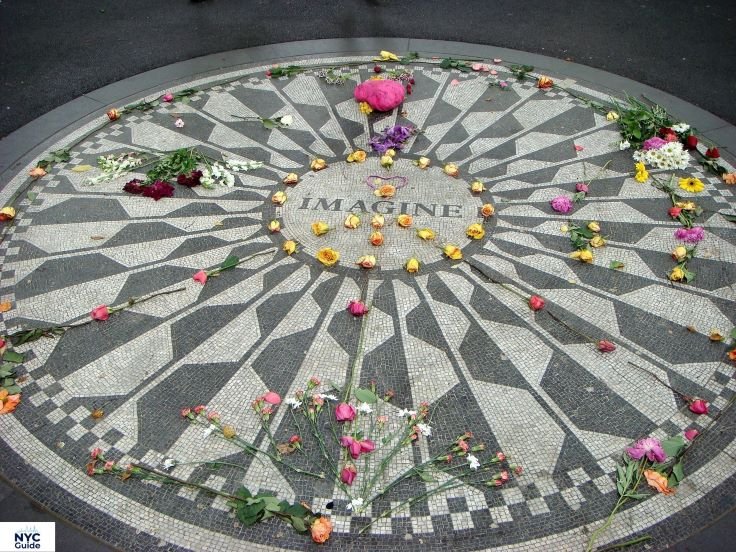
The memorial is best known for its iconic “Imagine” mosaic, a circular black-and-white tile installation set into the ground at the center of the site. The word “Imagine” sits at the very heart of the mosaic, a direct reference to Lennon’s most beloved solo song.
This is not a traditional memorial with statues or plaques. It’s a living, breathing garden a quiet place for reflection in the heart of NYC. People come here to sit, think, leave flowers, and simply feel connected to something larger than themselves.
The memorial is maintained by the Central Park Conservancy and is open to the public 365 days a year at no cost.
Where Is Strawberry Fields Located in Central Park?
Exact Location Near West Side & 72nd Street
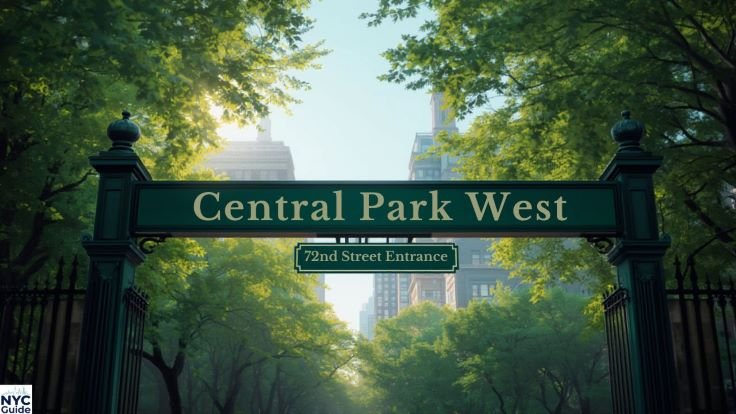
Strawberry Fields is located on the west side of Central Park in Manhattan, near West 72nd Street. It sits along the park’s western edge, close to Central Park West the street that borders the park on that side.
The exact entrance most visitors use is at Central Park West and West 72nd Street. Once inside the park, follow the path westward and you’ll reach the memorial within a two to three minute walk.
It is just steps away from The Dakota building, the famous residential apartment complex where John Lennon lived and outside of which he was killed on December 8, 1980.
Map & Directions Inside Central Park
Once you enter Central Park from the West 72nd Street entrance, walk along the main path heading slightly northwest. You’ll see a tear-shaped landscape set slightly off the main path. Look for the circular mosaic on the ground that’s the heart of Strawberry Fields.
If you have Google Maps open, simply search “Strawberry Fields Central Park” and it will drop a pin at the correct location. The coordinates are approximately 40.7755° N, 73.9749° W.
Signage inside the park is reasonably clear, and most park staff can point you in the right direction if you ask.
Nearby Landmarks
Several notable landmarks sit close to Strawberry Fields, making it easy to combine your visit with nearby sights.
- The Dakota Building — Just across Central Park West, this is where John Lennon lived and died.
- Bethesda Terrace & Fountain — About a 10-minute walk east through the park, one of Central Park’s most photographed spots.
- The Lake — Directly to the east of Strawberry Fields, offering beautiful views and rowboat rentals.
- Sheep Meadow — A large open lawn popular for picnics and relaxing, about 5 minutes south.
- Cherry Hill Fountain — A short walk from the memorial, lovely in any season.
The Story Behind Strawberry Fields & John Lennon
Who Was John Lennon
John Lennon was a British musician, singer, songwriter, and peace activist born on October 9, 1940, in Liverpool, England. He co-founded The Beatles in the late 1950s, a band that would go on to become the best-selling music act in history.
After The Beatles disbanded in 1970, Lennon launched a successful solo career. Songs like “Imagine,” “Give Peace a Chance,” and “Working Class Hero” made him one of the most influential voices of his generation not just in music, but in global politics and culture.
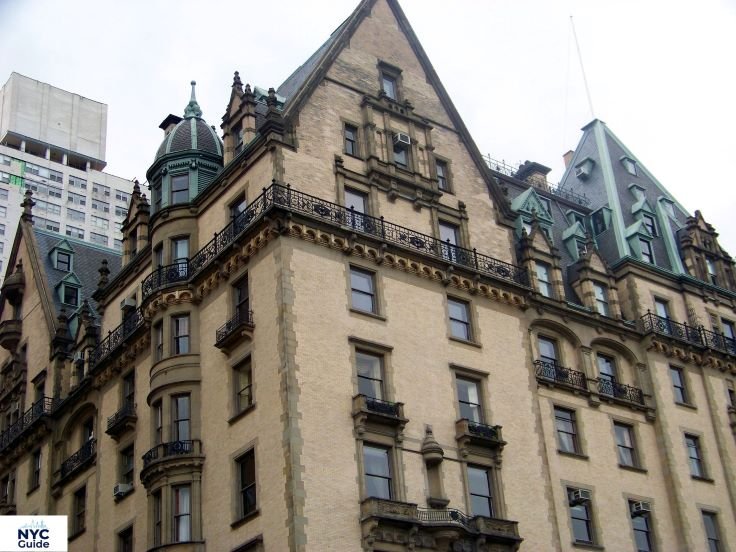
He moved to New York City in 1971 with his wife, Yoko Ono, and settled into The Dakota apartment building on the Upper West Side. He loved New York deeply and considered it his home. On December 8, 1980, he was shot and killed outside The Dakota as he returned home. He was 40 years old.
Why This Memorial Was Created
After Lennon’s death, the outpouring of grief from around the world was immense. Yoko Ono, who continued to live at The Dakota, worked with the City of New York and the Central Park Conservancy to create a permanent memorial in the park that Lennon loved to walk through.
The goal was not to build a monument of sadness, but a space of peace. Yoko Ono personally funded the landscaping of the area, donating over one million dollars to bring the vision to life. She wanted a place where people could come to reflect, remember, and feel hopeful not just grieve.
The memorial was officially dedicated on October 9, 1985, which would have been Lennon’s 45th birthday.
Connection to “Strawberry Fields Forever”
The name “Strawberry Fields” comes directly from one of The Beatles’ most celebrated songs, “Strawberry Fields Forever,” released in 1967. Lennon wrote the song, and it drew inspiration from a real place Strawberry Field, a Salvation Army children’s home in Woolton, Liverpool, where Lennon used to play as a child.
The song is widely considered one of the greatest songs ever written. Its dreamlike quality, its themes of memory, childhood, and the beauty of imperfection made it deeply personal for Lennon. Naming this memorial after that song connects the place to Lennon’s most personal artistic expression.
The Meaning of the Imagine Mosaic at Strawberry Fields
Symbolism of “Imagine”
The mosaic at the center of Strawberry Fields features just one word: Imagine. It is a direct reference to Lennon’s 1971 solo song of the same name, which called on people to imagine a world without war, without division, and without greed.
The circular shape of the mosaic is intentional. A circle has no beginning and no end it represents unity, wholeness, and continuity. The black-and-white color scheme reflects simplicity and balance, steering clear of the noise and complexity of the world outside.
At its core, the mosaic is a quiet but powerful statement. It says: peace is possible. Hope is worth holding onto.
Why “Imagine” Is Written in the Center
The word “Imagine” sits at the very center of the mosaic for a reason. It’s an invitation to the viewer, to the passerby, to the world. Lennon believed imagination was the first step toward change. Before any real-world transformation can happen, it must first be imagined.
Placing it at the center of the design means no matter how you approach the mosaic, that word is the first thing that draws your eye. It’s unavoidable, intentional, and deeply meaningful.
Visitor Experience at the Mosaic
When I visited Strawberry Fields on a quiet Tuesday morning, the mosaic had fresh flowers arranged around the word “Imagine.” A few people were sitting cross-legged nearby, eyes closed. A musician was playing a gentle acoustic version of unsurprisingly “Imagine” nearby.
Visitors typically lay flowers, place photographs, or simply stand quietly. Some cry. Some smile. Some just take a photo and move on. Whatever you bring to this spot, it meets you where you are.
It’s worth spending at least 10 to 15 minutes here. Don’t rush it.

A Garden of Peace – Design & Atmosphere of Strawberry Fields
Landscape Design & Layout
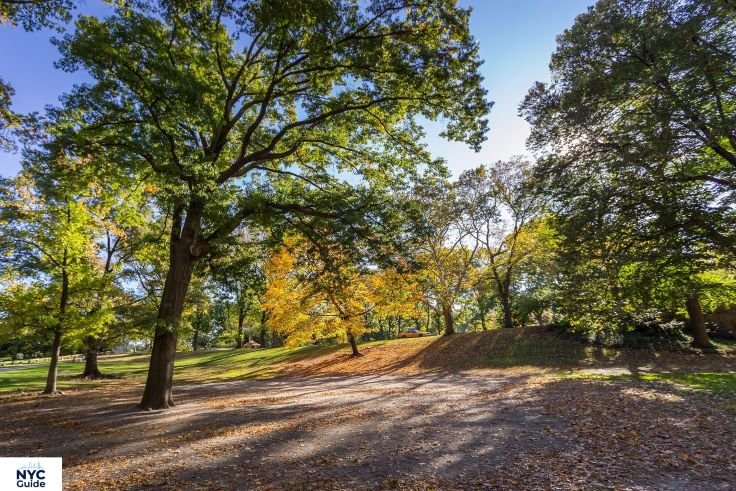
The landscape at Strawberry Fields covers 2.5 acres in a teardrop shape. The design was handled by landscape architect Bruce Kelly, who worked to create a space that feels natural and unhurried.
The site is planted with trees, shrubs, and flowering plants from around the world a deliberate choice to reflect the global community of people who loved Lennon’s message. Elm trees line the pathways, providing shade and a sense of enclosure that separates the memorial from the busier parts of the park.
The Imagine mosaic sits on a flat, paved area surrounded by gentle planting. It’s accessible and easy to approach from multiple angles.
Peaceful Environment & Purpose
The entire design of this space is built around peace. There are no loud attractions here, no food vendors, no carnival energy. It is deliberately low-key.
People come here to slow down. You’ll often see visitors sitting on benches, reading, meditating, or simply breathing in the calm. It’s one of those rare spots in New York City where the noise of the world seems to genuinely pull back.
The Central Park Conservancy maintains the area carefully to preserve this atmosphere. Rules are in place to discourage disruptive behavior, and most visitors naturally respect the tone of the space.
Meditative Experience
Many people describe visiting Strawberry Fields as unexpectedly moving, even if they weren’t huge Beatles fans before arriving. There’s something about the combination of the music often played nearby, the flowers, the mosaic, and the knowledge of what happened just across the street that creates a genuinely emotional atmosphere.
If you’re the kind of traveler who enjoys meaningful, reflective experiences over purely visual ones, this place will likely stay with you long after you leave New York.
How Strawberry Fields Was Designed & Named
Naming Inspiration
As mentioned earlier, the name traces back to “Strawberry Fields Forever” the 1967 Beatles track written by Lennon. The original Strawberry Field in Liverpool was a place of childhood freedom and imagination for Lennon. He described it as a place where “nothing is real,” a dreamlike escape from the pressures of everyday life.
Naming this Central Park memorial after that song and that memory was Yoko Ono’s way of tying the space to Lennon’s inner world to the boy who used to climb over the garden wall of a children’s home in Liverpool to play.
International Contributions
One of the most touching aspects of Strawberry Fields is that 121 countries contributed plants, seeds, or stones to the memorial garden at the time of its creation. This was organized as a symbol of global mourning and global solidarity.
Countries from every continent sent donations to help build this small patch of international peace inside New York City. It was a reminder that Lennon’s message had crossed every border and touched every culture.
The Imagine mosaic itself was a gift from the city of Naples, Italy. Italian craftsmen created the intricate tile work, and it was installed as a permanent tribute.
Creation & Dedication History
Yoko Ono began working on the memorial project in the early 1980s, in collaboration with the City of New York. She donated over $1 million to fund the landscaping and restoration of the area.
The memorial was officially dedicated on October 9, 1985 what would have been John Lennon’s 45th birthday. Yoko Ono was present at the dedication ceremony. The site was declared a “Garden of Peace” at that event, a title it carries to this day.
Visiting Strawberry Fields Central Park
Best Time to Visit
Early morning on weekdays is the best time to visit Strawberry Fields if you want a quiet, personal experience. Arriving before 9:00 AM means fewer crowds and a more reflective atmosphere.
October 9th (Lennon’s birthday) and December 8th (the anniversary of his death) draw large gatherings of fans each year. These dates can be deeply moving to witness, but expect crowds.

Spring and fall are the best seasons overall. The trees are either in bloom or turning gold, and the weather is pleasant for walking through the park.
Summer brings more tourists but also more street musicians and an energetic vibe. Winter visits feel more solitary and contemplative.
What to Expect
When you arrive, you’ll find the circular Imagine mosaic at the center of a paved clearing. Flowers are almost always present placed by visitors throughout the day. A musician is frequently stationed nearby playing Beatles songs or Lennon’s solo work.
The area is calm but not completely silent. You’ll hear the park around you birds, distant city noise, maybe the soft strum of a guitar. It doesn’t feel like a museum. It feels alive.
Visitors of all ages and backgrounds come here. You’ll see elderly Beatles fans who remember exactly where they were when Lennon died, alongside teenagers who discovered his music recently. It’s a genuinely cross-generational space.
Visitor Rules & Etiquette
Strawberry Fields is a public space with no official ticketing or formal rules beyond general park regulations. However, there is an understood etiquette:
- Keep voices low and respectful.
- Do not step on or disturb the flowers placed on the mosaic.
- No amplified music is officially permitted, though acoustic performances are common and welcomed.
- Treat the mosaic with care avoid standing directly on it for extended photo shoots.
- Do not litter. Use park bins.
- Be considerate of other visitors who are there for quiet reflection.
Most visitors naturally observe these unwritten rules. The space itself seems to invite respectful behavior.
How to Get to Strawberry Fields NYC
Subway Directions
The most convenient subway option is the B or C train to 72nd Street on the Upper West Side. Exit at 72nd Street and Central Park West, and you will be right at the main entrance that leads directly to Strawberry Fields. The walk from the subway exit to the memorial is under five minutes.
Alternatively, the 1, 2, or 3 trains stop at 72nd Street on Broadway, which is a short walk west to Central Park from there. It adds about 5 to 7 extra minutes on foot.
Walking Routes in Central Park
If you’re already inside Central Park coming from the Bethesda Fountain area for instance head west along the main transverse path and you’ll reach Strawberry Fields fairly quickly.
Coming from the south, enter the park at 59th Street and walk north along the western side. The walk takes around 15 to 20 minutes at a leisurely pace.
Central Park is extremely walkable and well-marked. Most visitors enjoy combining Strawberry Fields with a broader Central Park walking tour that takes in the Bethesda Terrace, the Boathouse, and Sheep Meadow in the same outing.
Bus & Tour Options
Several hop-on hop-off bus tours in New York City include Strawberry Fields as a stop or nearby destination. These tours are convenient if you’re covering multiple Manhattan landmarks in a single day.
Private walking tours of Central Park also frequently include Strawberry Fields as a key stop. These guided tours offer historical context and storytelling that can enrich the experience considerably.
The M10 bus runs along Central Park West and stops near 72nd Street, making it another viable surface transit option.
Things to Do at Strawberry Fields Central Park
Take Photos at Imagine Mosaic
The Imagine mosaic is one of the most photographed spots in all of Central Park. For the cleanest shot, try arriving early when foot traffic is low. The flat, circular design photographs well from directly above some visitors hold their camera or phone above the mosaic for a top-down shot, while others prefer a ground-level angle that frames the mosaic against the surrounding trees.
Natural light is best in the morning. On overcast days, the black-and-white mosaic actually photographs beautifully without harsh shadows.
Pay Tribute to John Lennon
Many visitors come specifically to leave flowers, which is a longstanding tradition at the memorial. You can bring fresh flowers from any of the street vendors near the park entrance. Roses, daisies, and lilies are commonly left.
Some visitors bring handwritten notes or personal letters. Others simply stand at the mosaic in silence for a few minutes. There is no wrong way to pay tribute here. The space welcomes every kind of remembrance.
On significant dates like December 8th, large communal gatherings take place. People sing Lennon’s songs together, share memories, and create a spontaneous sense of community that feels remarkably moving.
Enjoy Street Performances
Acoustic musicians are a near-constant presence near the Imagine mosaic. Most of them play Beatles songs or Lennon’s solo catalog, and many are genuinely talented. On my last visit, a musician played a fingerpicked version of “In My Life” that stopped several passersby in their tracks.
Tipping these performers is appreciated and encouraged. They add an element to the visit that no guidebook can fully capture.
Occasionally you’ll also encounter small groups of fans who gather and sing together spontaneously. It’s one of those uniquely New York experiences that you can’t plan for but won’t forget.
Interesting Facts About Strawberry Fields NYC
- 121 countries donated plants or materials to the memorial garden, making it a truly international tribute.
- The Imagine mosaic was gifted by the city of Naples, Italy, and crafted by Italian artisans.
- Yoko Ono donated more than $1 million of her own funds to create and maintain the memorial.
- The site was officially dedicated on October 9, 1985 — Lennon’s 45th birthday.
- Strawberry Fields covers 2.5 acres and was designed by landscape architect Bruce Kelly.
- The original Strawberry Field in Liverpool was a Salvation Army children’s home — not a field of actual strawberries.
- On the 25th anniversary of Lennon’s death in 2005, thousands gathered at the memorial for a candlelight vigil.
- The Dakota building, visible from the memorial entrance, still operates as a private residential building. Yoko Ono continues to live there.
- Despite being a major tourist attraction, entry to Strawberry Fields is completely free.
- Central Park’s Strawberry Fields is maintained by the Central Park Conservancy, a nonprofit organization.
Is Strawberry Fields Worth Visiting?
Who Should Visit
Strawberry Fields is worth visiting for a wide range of travelers:
- Beatles and Lennon fans — This is essentially sacred ground. Don’t miss it.
- Music lovers in general — Even if The Beatles aren’t your favorite band, the cultural significance of this space is undeniable.
- History and culture seekers — It’s a genuine piece of New York City and global pop culture history.
- Travelers seeking quiet moments — If you want to step away from the sensory overload of Manhattan for 20 minutes, this spot delivers.
- Families with curious kids — It’s a great opportunity to introduce younger generations to Lennon’s legacy and the idea of peace as a value worth honoring.
Pros & Cons
Pros:
- Completely free to visit
- Easy to reach via public transport
- Genuinely moving and atmospheric
- Well-maintained and clean
- Combines naturally with a broader Central Park visit
- Open every day of the year
Cons:
- Can get crowded on weekends and significant anniversary dates
- Brief visit for those with limited time most people spend 15 to 30 minutes
- No facilities on-site (restrooms are located elsewhere in the park)
- Street musicians, while generally welcome, can occasionally be intrusive
FAQs About Strawberry Fields Central Park
Yes. Strawberry Fields is entirely free. There are no tickets, no entry fees, and no reservations required. It is a public space within Central Park, which is also free.
Central Park is open daily from 6:00 AM to 1:00 AM, and Strawberry Fields is accessible during those hours. There is no separate schedule for the memorial.
The mosaic is the central attraction, but the entire 2.5-acre garden is worth exploring. The plantings, the benches, the atmosphere, and the frequent musical performances all contribute to the experience.
Yes. Leaving flowers is a beloved tradition at Strawberry Fields. The flowers are cleared and refreshed regularly by park staff, but fresh tributes are always welcome.
Absolutely. It’s a calm, beautiful garden that’s perfectly suitable for families. It can also be an opportunity to talk to children about history, peace, and music.
Early weekday mornings for solitude, or October 9th and December 8th for communal gatherings. Spring and fall offer the best weather and scenery.
Yes. The Dakota is directly across Central Park West from the 72nd Street entrance and is visible from near the memorial. It is a private residential building and cannot be entered by the public.
Most visitors spend 15 to 30 minutes. If you sit and absorb the atmosphere or watch a street performance, you might happily stay for an hour.
No. They share a name and a connection to John Lennon, but they are different places. Strawberry Field in Liverpool is the original site that inspired the Beatles song. The Central Park memorial was named in honor of that song and Lennon’s memory.
Dogs on leashes are permitted in Central Park, including the Strawberry Fields area. However, please be mindful of other visitors seeking a quiet experience.
Final Thoughts on Strawberry Fields NYC
Strawberry Fields is one of those rare places that truly earns its reputation. It doesn’t demand attention or try to impress it simply offers a quiet, open space where visitors can slow down and reflect. Yes, it’s absolutely worth visiting. It’s free, beautiful, and historically meaningful, yet it takes very little time out of your day.
For music lovers, travelers, and even casual visitors, it offers something most New York attractions cannot: genuine emotional depth. Whether you’re a lifelong fan of John Lennon and The Beatles, or simply exploring New York City, this place leaves a lasting impression. Even without a deep connection to Lennon’s music, many visitors walk away having felt something real and that’s rare.
It’s accessible, beautifully maintained, and centered around the iconic “Imagine” mosaic, which continues to draw people from around the world. What it represents peace, hope, and the power of music never goes out of date. Next time you’re in Manhattan, take the B or C train to 72nd Street, walk into Central Park, and spend a few quiet moments here leave a flower, listen to a musician, and for just a moment, imagine.