
If you’ve ever searched for Brooklyn Bridge facts, you’re probably looking for more than just dates and numbers. Maybe you’re planning a visit and want to know what makes this bridge so special. Or maybe you’re just curious about the stories hiding behind one of the world’s most photographed landmarks. Either way, you’re in the right place.
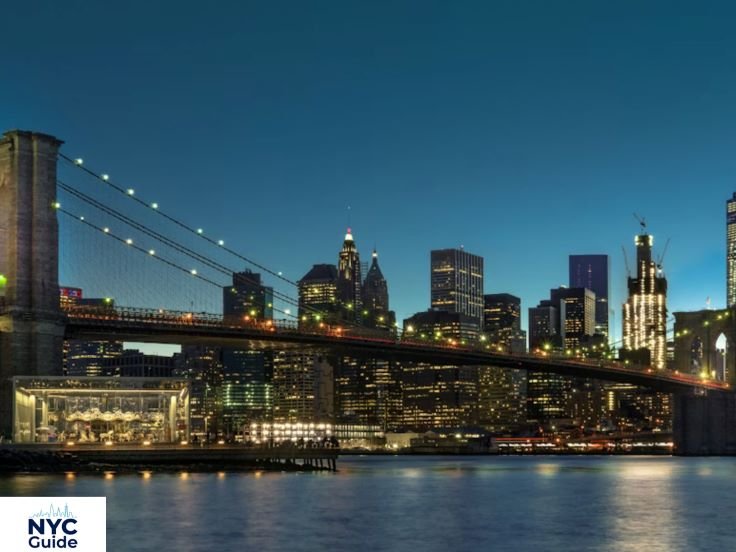
The Brooklyn Bridge is not just a bridge. It’s a story of tragedy, ambition, family sacrifice, and engineering genius. It survived wars, pandemics, and scandals. It has been sold by con artists, crossed by elephants, and used as a bomb shelter. The more you learn about it, the more fascinating it becomes.
In this guide, we’re going to cover everything the history, the hidden secrets, the construction challenges, the strange stories, and practical tips if you plan to walk across it yourself. By the end, you’ll see why this bridge has captured imaginations for over 140 years.
Introduction to the Brooklyn Bridge
Why the Brooklyn Bridge Is Famous
The Brooklyn Bridge is famous for several reasons. It was the longest suspension bridge in the world when it opened in 1883. It was also a massive technological achievement for its time. Nothing like it had ever been built before.
But it’s also famous because of the human story behind it. The designer died before construction finished. His son was paralyzed during building. His daughter-in-law stepped in and led the project through to completion. That story alone makes it unforgettable.
Today, the bridge draws millions of visitors every year. It appears in movies, TV shows, paintings, and photographs constantly. For most people, it simply is New York City.
Where the Bridge Is Located
The Brooklyn Bridge spans the East River. It connects the borough of Manhattan on the west side to the borough of Brooklyn on the east side. The Manhattan entrance sits near City Hall Park in Lower Manhattan. The Brooklyn entrance sits near DUMBO, a neighborhood known for its cobblestone streets and stunning bridge views.
You can walk to the Manhattan entrance easily from several subway stations. The Brooklyn side drops you right into one of the most photogenic neighborhoods in the entire city.
Why It Became an Icon of New York City
When the Brooklyn Bridge opened, Manhattan and Brooklyn were not yet part of the same city. They merged in 1898. So when this bridge opened in 1883, it physically connected two separate cities for the first time. That’s a big deal.
It also represented something bigger the power of human ambition and progress. People looked at it and believed that anything was possible. That feeling never went away. Over the decades, it became the symbol of New York itself.
The History of the Brooklyn Bridge
Early Planning and Vision
The idea of a bridge across the East River dates back to the 1850s. Before the bridge existed, the only way to cross between Manhattan and Brooklyn was by ferry. In winter, the East River sometimes froze, and the ferries couldn’t run. People were stranded.
John Augustus Roebling had already built suspension bridges in other parts of America. He saw the potential for a far grander project. He proposed a bridge that would be unlike anything built before using steel wire cables to support a span longer than any suspension bridge in history.
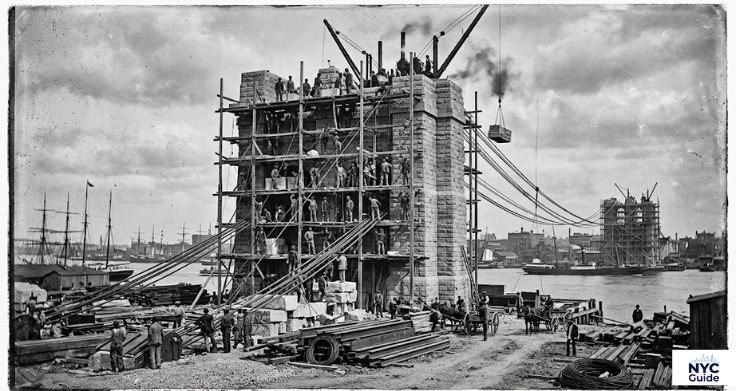
The proposal took years to gain approval. Politics, money, and skepticism slowed everything down. But eventually, the plan moved forward.
Who Designed the Brooklyn Bridge?
John Augustus Roebling designed the Brooklyn Bridge. He was a German-born engineer who had already earned a reputation for building impressive suspension bridges. His work on the Niagara Falls Railway Suspension Bridge showed what was possible.
Roebling believed that a bridge using twisted wire cables instead of iron chains would be stronger and more flexible. His design for the Brooklyn Bridge incorporated that idea at an entirely new scale. He envisioned two massive stone towers, four main cables, and a wide bridge deck that could carry trains, horse-drawn carriages, and pedestrians.
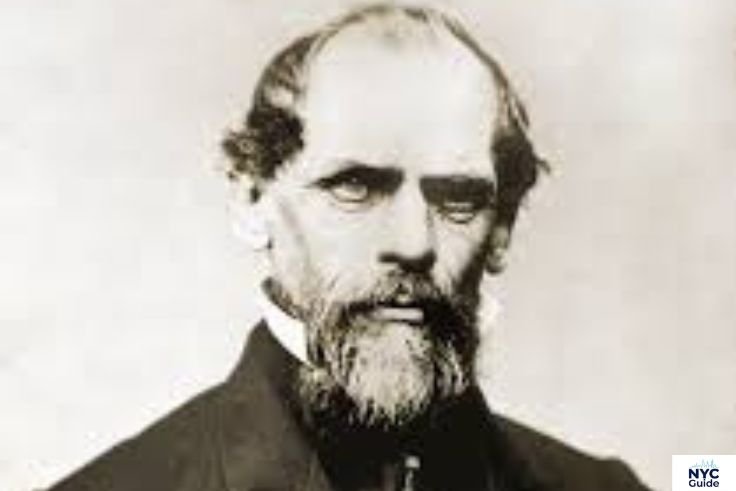
Sadly, John Roebling never saw his creation finished. In 1869, before construction properly began, a ferry accident crushed his foot. He refused proper medical treatment and died from tetanus just weeks later.
Boss Tweed’s Role in the Project
The Brooklyn Bridge project didn’t exist in a political vacuum. Boss Tweed, the infamous New York political boss, played a role in the early phase. He sat on the bridge company’s board and helped push the project through at a time when political corruption was rampant.
Tweed used the project partly for personal financial gain. His involvement brought money and political momentum, but it also brought controversy. By the time he was arrested and jailed for corruption in the early 1870s, construction was already underway. The bridge survived the scandal and moved forward.
The Roebling Family Story
The Roebling family’s connection to the Brooklyn Bridge is one of the most remarkable stories in American engineering history. John Roebling designed it and died before it began. His son Washington Roebling took over as chief engineer.
Washington supervised the construction of the underwater foundations. During this work, he spent long hours in the pressurized caissons beneath the river. The pressure changes caused a serious illness called caisson disease what we now know as decompression sickness. He was left severely disabled.
For years, Washington could not visit the construction site. He watched through a telescope from his apartment window in Brooklyn Heights. The project continued largely because of one remarkable person.
Emily Warren Roebling’s Contribution
Emily Warren Roebling was Washington’s wife. When her husband became disabled, she stepped in as the primary communicator between him and the construction team. But she did much more than carry messages.
Emily studied engineering, mathematics, and construction science on her own. She became deeply knowledgeable about the project. For eleven years, she was effectively the public face and operational manager of the bridge construction. She coordinated with workers, politicians, engineers, and critics.
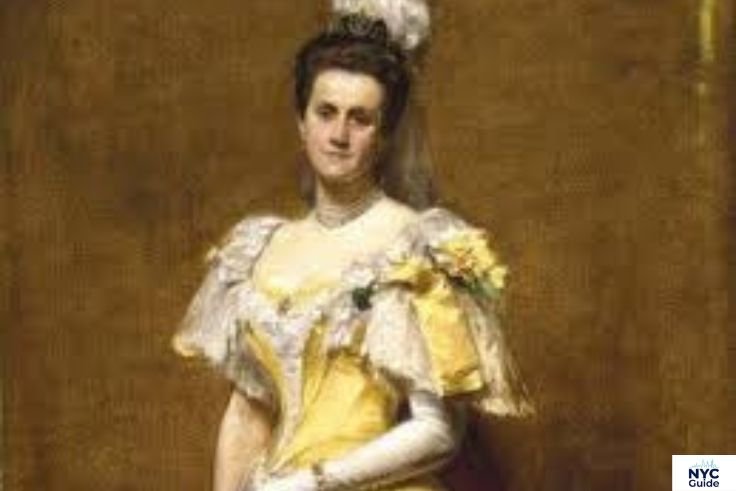
When the Brooklyn Bridge opened on May 24, 1883, Emily Warren Roebling was the first person to make the ceremonial crossing. She carried a rooster in her lap as a symbol of victory. It was a powerful and well-deserved honor.
Emily’s contribution was extraordinary for its time. Women had almost no formal role in engineering or public construction projects in the 19th century. She broke that barrier quietly and brilliantly.
Building the Bridge
Construction of the Brooklyn Bridge officially began in January 1870. The first task was building the foundations. This meant digging into the riverbed under pressure using wooden chambers called caissons.
After the foundations were secured, workers built the two massive stone towers. These towers took years to complete. They are made of granite and limestone and rise over 276 feet above the water.
Once the towers were up, workers spun the suspension cables. This was a precise and dangerous job. The cables are made of thousands of individual steel wires bundled together. After the cables were in place, the bridge deck was added and the bridge approaches were constructed on both shores.
Construction took 14 years in total. It was completed in 1883.
The Grand Opening Celebration
The Brooklyn Bridge opened on May 24, 1883. The opening was a massive public celebration. President Chester A. Arthur attended. So did the Governor of New York. Thousands of people lined the streets.
Emily Warren Roebling made the first official crossing. Washington Roebling, too ill to attend in person, watched from his apartment window. Fireworks lit up the sky that night. Newspapers around the world covered the event.
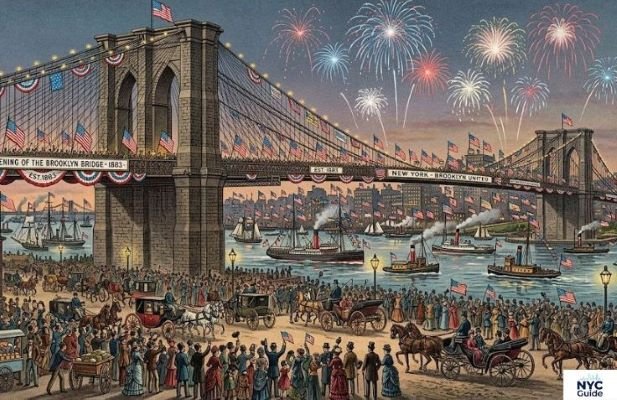
It was described as one of the greatest achievements in American history. And in many ways, it was.
How the Bridge Connected Two Different Cities
In 1883, Manhattan and Brooklyn were separate cities. Brooklyn was actually the third most populous city in America at the time. The bridge physically joined them, but it also set the stage for their political merger.
Before the bridge, crossing the East River meant taking a ferry. The ferries were unreliable, slow, and dangerous in bad weather. The bridge changed daily life dramatically. Commuters, workers, and goods could now move freely between both sides.
Brooklyn’s real estate values rose quickly after the bridge opened. New neighborhoods developed. Commerce expanded. The merger of New York City’s five boroughs in 1898 which included Brooklyn — was in part enabled by the psychological and physical connection the bridge had created.
The Brooklyn Bridge Through the 20th Century
The 20th century brought enormous changes to how the bridge was used. Trolley lines that once ran across the bridge were removed. The elevated rail line was dismantled in the 1940s. Cars became the dominant form of traffic.
The bridge was also strengthened and renovated multiple times over the decades. During both World Wars, it served as a critical infrastructure link. During the Cold War, secret preparations were made to use it as part of civil defense.
By the mid-20th century, the bridge had become such an established landmark that most New Yorkers took it for granted. But it never stopped being remarkable.
The Brooklyn Bridge in the 21st Century
Today the Brooklyn Bridge is one of the most visited tourist attractions in New York City. Millions of people walk across it every year. It has been renovated and reinforced multiple times in recent decades.
The pedestrian walkway is one of the best free experiences in New York. It offers stunning views of the Manhattan skyline, the East River, and the harbor. The bridge has been carefully maintained and is expected to stand for generations to come.
In 2023, the bridge celebrated its 140th anniversary. There are ongoing plans to improve pedestrian access and keep the structure in excellent condition.
Brooklyn Bridge Construction Facts
Underwater Foundations and Caissons
The most dangerous part of building the Brooklyn Bridge was creating the foundations underwater. Engineers used wooden chambers called caissons essentially giant airtight boxes that were sunk to the river bottom.
Workers inside the caissons dug out the riverbed under compressed air pressure. The air pressure kept water from flooding in. But those pressure conditions caused serious health problems.
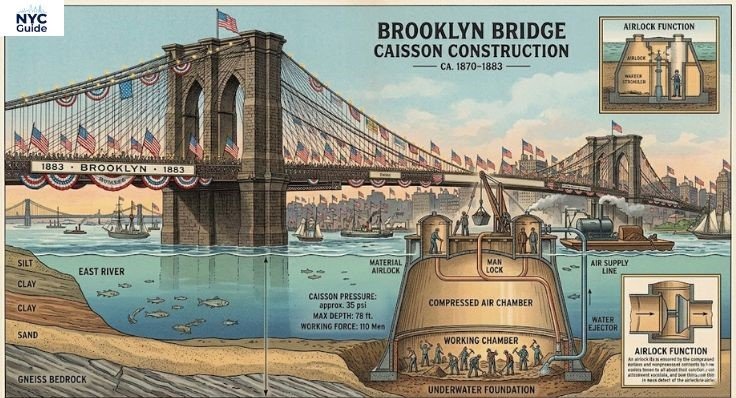
The Manhattan caisson sat on bedrock about 44 feet below the water’s surface. The Brooklyn caisson sat on a sand and gravel layer about 78 feet down. Workers spent hours inside these dark, pressurized chambers doing backbreaking labor.
Tower Construction
The two towers of the Brooklyn Bridge are among the most recognizable architectural features on the New York skyline. Each tower stands about 276 feet above the water. They were built using granite from Maine and limestone from New York.
The towers took several years to build. At the time of completion, they were among the tallest structures in the United States. The Gothic arched openings in each tower were both decorative and functional they reduced wind resistance and became a defining visual element of the design.
Cable Spinning and Anchorages
The suspension cables are what make the Brooklyn Bridge work. Each of the four main cables is about 15.75 inches in diameter. Each cable contains 5,434 individual steel wires. All together, the cables contain about 14,000 miles of wire.
The cable spinning process was developed by John Roebling himself. Workers looped individual wires back and forth across the river over and over until each cable was complete. This process took well over a year.
The cables are anchored to massive stone anchorages on both shores. These anchorages weigh about 60,000 tons each. They hold the entire tension load of the bridge.
The Main Suspension Section
The main span of the Brooklyn Bridge the section suspended between the two towers is 1,595.5 feet long. When it opened, it was the longest suspension bridge span in the world by a significant margin.
The bridge deck hangs from the main cables using vertical suspender wires. It also has additional diagonal stay cables connecting the deck directly to the towers. This was Roebling’s innovation. He added those cables as an extra safety measure, making the structure far more rigid than a typical suspension bridge.
Why It Was an Engineering Marvel
The Brooklyn Bridge was an engineering marvel for multiple reasons. Nothing of this scale had ever been attempted before. The use of steel wire cables instead of iron chains was new. The combination of a suspension bridge with cable stays was new. The underwater caisson technique at this depth and scale was new.
When it opened, engineers from around the world came to study it. It became a model for suspension bridge construction that influenced bridge building for decades.
Construction Deaths and Challenges
At least 27 workers died during the construction of the Brooklyn Bridge. Some estimates place the number higher. Workers fell from great heights, were crushed by equipment, or suffered accidents in the caissons below the river.
John Roebling himself died before construction truly began. His death cast a shadow over the project from the start. Throughout the 14 years of construction, the project faced constant challenges labor strikes, political interference, material shortages, and technological problems no one had faced before.
Caisson Disease and Worker Illnesses
Caisson disease now called decompression sickness or “the bends” was one of the most serious health threats during construction. Workers who spent time in the pressurized caissons and then came out too quickly developed severe symptoms.
These symptoms included joint pain, paralysis, and sometimes death. At the time, no one fully understood why it happened. Washington Roebling was among those badly affected. He suffered permanent damage that left him an invalid for the rest of his life.
Over 100 workers are believed to have suffered from caisson disease during the bridge’s construction. Three died from it directly.
Why People Believed the Bridge Was Cursed
Given the death of its designer, the paralysis of its chief engineer, and the ongoing worker casualties, many people believed the Brooklyn Bridge was cursed. This idea circulated in newspapers and public conversation throughout the construction period.
There were moments when the project truly seemed doomed. In 1872, a fire broke out inside the Brooklyn caisson. There were scandals about inferior wire cable being supplied by a corrupt contractor. And the project ran over budget repeatedly.
Despite everything, it was finished. And that is perhaps the most impressive fact of all.
Interesting Facts About the Brooklyn Bridge
It Was Once the Longest Suspension Bridge in the World
When it opened in 1883, the Brooklyn Bridge had the longest main span of any suspension bridge in the world at 1,595.5 feet. It held that record for years. The next competitor wasn’t built until the late 19th century.
Today, the Brooklyn Bridge doesn’t rank among the top longest bridges globally. But that doesn’t diminish what it achieved. Building it required technology and techniques that simply didn’t exist before.
The First Crossing Was a Rooster
Well, almost. Emily Warren Roebling carried a rooster on her lap when she made the first official ceremonial crossing on opening day. The rooster was a traditional symbol of victory and good luck.
It was a meaningful gesture. After years of struggle, sacrifice, and doubt, Emily’s crossing with that rooster was a quiet but powerful statement. She had earned that moment more than almost anyone.
The Bridge Toll Used to Be Higher
When the Brooklyn Bridge first opened, it was a toll bridge. The toll for pedestrians was one cent. For horse and wagon, it was five cents. For a hog, it was two cents.
Today, pedestrians and cyclists cross for free. Cars pay a toll as part of the broader New York City bridge and tunnel system. The tolls are collected electronically.
Elephants Once Crossed the Bridge
Just six days after the opening, a rumor spread that the bridge was structurally unsound and about to collapse. People panicked. A stampede on the pedestrian walkway killed twelve people.
To restore public confidence, showman P.T. Barnum led 21 elephants from his circus across the bridge in 1884. If it could hold 21 elephants, the thinking went, it could hold anything. The stunt worked brilliantly as a public relations move.
It Quickly Became a Cultural Sensation
Within months of opening, the Brooklyn Bridge became a cultural phenomenon. Painters painted it. Poets wrote about it. Photographers lined up to capture it. It appeared in advertisements, postcards, and newspapers constantly.
Walt Whitman wrote about it. Joseph Stella painted an iconic representation of it. Hart Crane dedicated a long poem to it. From the very beginning, it captured the American imagination.
The Bridge Has Always Been Crowded
The Brooklyn Bridge has never been quiet. From its first week, it was popular. Over 150,000 people crossed it in its first year. Today, about 100,000 vehicles and thousands of pedestrians cross daily.
During rush hour, the pedestrian walkway can feel genuinely busy. Tourists and commuters share the space. On weekends and during good weather, the walkway is packed. Go early in the morning if you want a quieter experience.
It Has Been a Major Protest Route for Decades
The Brooklyn Bridge has been a site of political protest for well over a century. Labor unions marched across it in the early 20th century. Civil rights marchers used it. Anti-war protesters crossed it.
In 2011, during the Occupy Wall Street movement, hundreds of protesters were arrested on the bridge. It remains a powerful symbolic location for demonstrations of all kinds.
Peregrine Falcons Live on the Bridge
The Brooklyn Bridge is home to a small population of peregrine falcons. These birds of prey have nested on the bridge’s towers for years. They are some of the fastest animals on earth, capable of diving at over 200 miles per hour.
If you look carefully at the towers when you’re walking across, you might spot them. New York City has a surprisingly healthy population of peregrine falcons, and the bridge is one of their favorite spots.
The Original Color May Have Been Red
There is historical debate about what color the Brooklyn Bridge was originally painted. Some accounts suggest it may have started with a reddish-brown or ochre color before eventually being painted its familiar gray-brown tone.
The bridge has been repainted many times over the decades. Each repainting is a major project. The current color is a warm gray-brown that blends beautifully with the stone towers.
The Towers Were Almost Designed to Look Egyptian
Before John Roebling settled on the Gothic arch design, there were early proposals and discussions about other architectural styles. Egyptian revival was popular in the mid-19th century, and some initial concepts reportedly explored that aesthetic.
Roebling’s final choice the pointed Gothic arches was inspired by medieval cathedral architecture. It gave the towers a sense of grandeur and spiritual weight that purely functional design would have lacked. The choice was a defining decision in American architectural history.
Hidden Secrets of the Brooklyn Bridge
Champagne Vaults Inside the Bridge
Inside the stone anchorages of the Brooklyn Bridge, there are large vaulted chambers. In the 1980s, New York City briefly opened these spaces to the public and leased them to a wine merchant who used them to store wine and champagne.
The idea was that the cool, stable temperature inside the stone vaults made them ideal for wine storage. The lease eventually ended, but the chambers are still there. They are occasionally opened for special tours and art installations.
The Buried Time Capsule
When the Brooklyn Bridge was built, a time capsule was allegedly placed inside one of the caissons or foundations. The capsule was said to contain newspapers, coins, and other items representing life in 1880s New York.
The exact location has never been fully confirmed, and it has never been retrieved. Somewhere beneath the East River, possibly inside the concrete foundations, a small piece of 19th century New York may still be waiting to be found.
The Cold War Bomb Shelter
This is perhaps the most surprising secret of the Brooklyn Bridge. In 2006, during routine inspection work, workers discovered a Cold War-era emergency supply cache inside one of the stone anchorage chambers on the Manhattan side.
The cache contained enough supplies for thousands of people canned crackers, water drums, medical supplies, paper blankets, and even drugs like Dextran for treating shock. Everything was dated to around 1957-1962. The supplies were from the Federal Civil Defense Administration.
Apparently, the city planned to use the bridge’s cavernous anchorages as emergency shelters in case of a nuclear attack. Nobody had told anyone. The discovery was a complete surprise, even to bridge officials.
The Secret Beach Near the Bridge
On the Brooklyn side, directly under the bridge, there is a small unofficial beach known locally as the “secret beach” or Pebble Beach. It sits at the edge of the East River with stunning views of the bridge above and the Manhattan skyline across the water.
It’s not an official public beach. But locals have been visiting it for years. To reach it, you walk through DUMBO and find your way down to the water’s edge near the base of the bridge. Sunset views from there are extraordinary.
Fossils Hidden in the Stone
The limestone and granite used to build the Brooklyn Bridge’s towers contain embedded fossils. Marine fossils from ancient sea creatures are reportedly visible in some of the stones used in construction.
Most visitors walk right past these without knowing they exist. If you take your time examining the towers up close, and know what to look for, you might find them. It’s a small but genuine hidden treasure.
The Planned Shopping Arcade
In the original plans and early discussions about how to use the bridge’s space, there was actually a proposal to build a shopping arcade along the bridge’s promenade. Merchants would have had storefronts right on the bridge deck.
The idea was never implemented. The bridge became a transportation infrastructure project rather than a commercial zone. But it’s fascinating to imagine what it might have looked like if it had.
Why the Manhattan Tower Is Built on Sand
Here’s a fact that surprises almost everyone. The Manhattan tower of the Brooklyn Bridge is not built on bedrock. It sits on a layer of compacted sand and gravel about 44 feet below the riverbed.
This was a controversial decision at the time. Engineers worried it wasn’t strong enough. But Washington Roebling was confident in the foundation. Over 140 years later, the tower stands perfectly stable. His judgment was correct.
Tragedies, Rumors, and Strange Stories
The Fatal Stampede After Opening Week
One of the darkest events in the bridge’s early history happened just six days after opening. A woman tripped on the stairs leading up to the walkway. Someone shouted that the bridge was collapsing.
The panic spread instantly. People stampeded. Twelve people were crushed and killed. Many more were injured. It was a horrific tragedy that cast a shadow over the early celebrations.
The incident was made worse because it came so soon after public fear about the bridge’s safety. Rumors had been circulating since before opening day that the bridge might not be strong enough to hold crowds. The stampede seemed to confirm those fears.
Rumors That the Bridge Would Collapse
From the very beginning, some people believed the Brooklyn Bridge was going to fall down. The scale of the project was so unprecedented that many engineers and critics expressed serious doubts.
When the bridge opened, some New Yorkers refused to cross it. Letters appeared in newspapers questioning its safety. The rumors persisted for years. It was partly to address this public anxiety that P.T. Barnum staged his elephant crossing in 1884.
Scam Sales of the Brooklyn Bridge
The Brooklyn Bridge became the most famous symbol of con artist scams in American history. George C. Parker, a notorious con man, reportedly sold the Brooklyn Bridge to gullible tourists multiple times in the early 20th century.
He would pose as the bridge’s owner and offer it for sale at bargain prices. Some buyers apparently arrived the next morning with tools, ready to set up toll booths, only to be removed by police. Parker reportedly also sold Madison Square Garden and the Statue of Liberty.
This history gave rise to the phrase “if you believe that, I have a bridge to sell you” which is still used today.
Daredevils, Stunts, and Jumps
The Brooklyn Bridge has attracted daredevils since it opened. In 1885, Robert Odlum jumped from the bridge as a stunt. He died from the impact. Several others attempted similar jumps over the years.
Steve Brodie famously claimed to have jumped from the bridge and survived in 1886, though many historians believe he staged the event. His story became so famous that “pulling a brodie” entered the American slang dictionary as a phrase for attempting something reckless.
Why “I Have a Bridge to Sell You” Became Famous
The phrase became embedded in American culture because of the repeated con artist scams involving the bridge. It represents gullibility, dishonesty, and the art of the impossible sale.
It’s a testament to how deeply the Brooklyn Bridge was embedded in the public imagination. No other structure in America has ever inspired a lasting idiom quite like this one.
Structure and Design of the Brooklyn Bridge
The Bridge Deck
The bridge deck carries vehicle traffic in two directions. For most of its history, the deck also carried rail and trolley traffic. Today it carries cars, taxis, trucks, and emergency vehicles.
The deck is suspended from the main cables by vertical wire ropes called suspenders. It is also supported by diagonal stay cables that connect directly to the towers. This combination creates an unusually stiff and stable deck.
The Suspension Cables
The four main suspension cables are the heart of the bridge’s structure. Each cable is made of 5,434 parallel steel wires. The wires were galvanized to resist corrosion. This was innovative technology for 1870.
The cables hang in a gentle curve called a catenary. At their lowest point, the cables are about 128 feet above the water. The cables are connected to massive stone anchorages on both shores that hold the entire load.
The Towers
The two towers are the most iconic visual element of the Brooklyn Bridge. They stand 276.5 feet above mean high water. They are built from limestone, granite, and Rosendale cement.
Each tower contains two large Gothic arches, one for each direction of traffic. The arches are purely aesthetic but brilliantly conceived. They give the towers a sense of height and grace that purely functional towers would never have achieved.
The Pedestrian Walkway
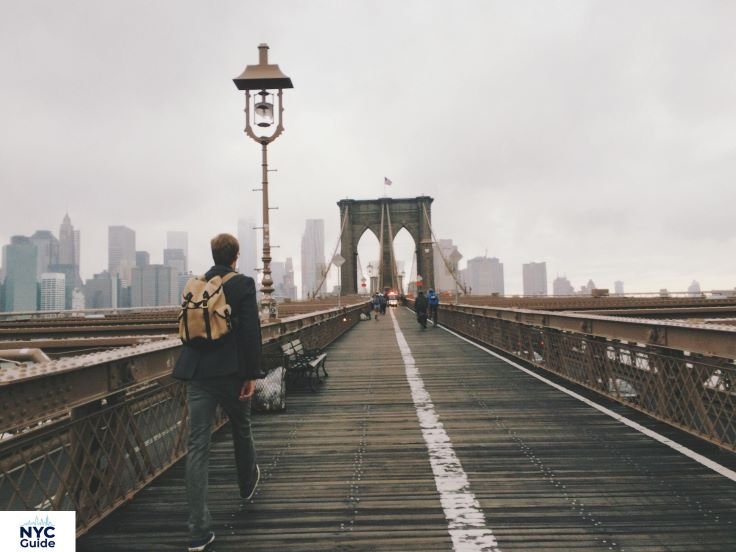
The pedestrian walkway runs down the center of the bridge, elevated above the vehicle lanes. It is about 1.3 miles long from end to end. The walkway is shared between pedestrians and cyclists, with separate lanes marked on the deck.
From the walkway, you get elevated views over the traffic below and panoramic views of the river and skyline. The raised central position gives walkers a genuinely spectacular perspective.
Bridge Approaches and Exits
On the Manhattan side, the bridge approach rises from near City Hall Park. The entrance to the pedestrian walkway is on Centre Street, near the Brooklyn Bridge-City Hall subway station.
On the Brooklyn side, the approach descends into DUMBO, landing near Washington Street and the famous view framed by the bridge arches with the Empire State Building visible in the background. This DUMBO view is one of the most photographed spots in New York City.
Dimensions and Length
Here are the key dimensions of the Brooklyn Bridge:
- Total length: 5,989 feet (about 1.13 miles)
- Main span: 1,595.5 feet
- Tower height above water: 276.5 feet
- Width of bridge deck: 85 feet
- Number of main cables: 4
- Number of wires per cable: 5,434
- Total wire length in cables: approximately 14,000 miles
What Makes the Design Unique
The Brooklyn Bridge was among the first large bridges to combine suspension cables with cable stays. Most suspension bridges rely only on the hanging cables. Roebling added diagonal stays running from the towers to the bridge deck as extra reinforcement.
This hybrid design made the bridge stiffer and more resistant to wind. It also gave the bridge its distinctive visual web of cables. No other bridge quite looks like it.
Transportation and Daily Use
Car Traffic on the Bridge
Today the Brooklyn Bridge carries six lanes of vehicle traffic. Cars, taxis, trucks, and buses cross it around the clock. It is one of the busiest bridges in New York City.
The bridge carries an estimated 100,000 vehicles per day. During rush hours, traffic can back up significantly. The bridge has no dedicated bicycle lane on the vehicle deck cyclists use the shared pedestrian walkway above.
Trolleys, Cable Cars, and Trains
For much of its early history, the Brooklyn Bridge carried far more than just cars. When it first opened, it had a cable car system running down the center of the deck. Later, elevated railway trains used the bridge.
Trolley cars ran across the bridge from the 1890s. At one point, the bridge served as a critical rail link between Manhattan and Brooklyn. All rail and trolley service was eventually discontinued. The last elevated trains stopped running in the 1940s.
Pedestrian and Bicycle Traffic
The pedestrian walkway is free and open to everyone. It is used daily by commuters, joggers, tourists, and cyclists. On a busy weekend day, you can expect the walkway to be quite crowded.
Cyclists are asked to stay in their designated lane on the right side of the walkway. Pedestrians use the left side. This separation is marked on the deck, but it doesn’t always work perfectly in practice. Go slowly, be patient, and watch out for cyclists if you’re walking.
Emergency Use of the Bridge
The Brooklyn Bridge has served as an emergency evacuation route multiple times. After the September 11 attacks in 2001, thousands of people walked across the bridge to escape Lower Manhattan. The images of those crowds became one of the defining visual memories of that day.
The bridge is considered critical infrastructure. It has never fully closed to the public for extended periods. Emergency repairs and maintenance are conducted with minimal disruption to traffic.
Bridge Tolls Over Time
When the bridge opened in 1883, tolls were collected. Pedestrians paid one cent. Vehicles paid varying amounts based on what they were carrying.
The bridge eventually became toll-free for pedestrians and cyclists. Today, vehicle tolls are managed electronically through E-ZPass as part of the broader New York City toll system. As of recent years, the toll rates have changed due to New York City’s congestion pricing program affecting overall Manhattan traffic patterns.
Walking the Brooklyn Bridge
How to Get to the Walkway
Getting to the Brooklyn Bridge walkway is easy. On the Manhattan side, take the 4 or 5 subway to Brooklyn Bridge-City Hall station, or the J or Z train to Chambers Street. From there, walk to the pedestrian entrance on the south side of the roadway near the approach ramp.
On the Brooklyn side, take the A or C train to High Street station. You’ll emerge right near the Brooklyn entrance. From DUMBO, the bridge entrance is just a short walk north.
Best Time to Visit
I’ve walked this bridge at many different times of day, and I can tell you: early morning is by far the best. Get there before 8am on a weekday and you’ll have the walkway almost to yourself. The light at sunrise hits the Manhattan skyline in a way that’s genuinely hard to describe.
Midday on weekends is the worst time to visit if you want a calm experience. The walkway becomes very crowded. Sunset is beautiful but also busy. If you can manage it, early morning or late evening on a weekday is ideal.
What to Expect During the Walk
The walk from Manhattan to Brooklyn takes about 30 to 40 minutes at a comfortable pace. The walkway rises gently as you approach the center of the bridge, then descends toward Brooklyn.
The views are spectacular throughout. You’ll see the Manhattan skyline to your left and right, the harbor in the distance, and the East River below. When we first walked across, my friend couldn’t stop stopping to take photographs. Budget extra time for that.
Tips for First-Time Visitors
A few things worth knowing before you go:
- Wear comfortable shoes. The walkway is wooden and slightly uneven in places.
- Bring water, especially in summer. There are no shops on the bridge.
- Watch for cyclists. They move fast and the shared lane can get confusing.
- Don’t lean over the railing trying to take vertical shots — the drop is significant.
- The wind on the bridge can be strong. Bring a light jacket even on warm days.
- If you lock a padlock to the cables, be aware that the city removes them regularly.
Best Photo Spots
The best photo spots on the Brooklyn Bridge are:
The center of the main span, looking back toward Manhattan. This gives you the classic cable perspective shot with the skyline behind it.
The Brooklyn side, just before the anchorage. Looking back toward Manhattan from here gives you the full span of the bridge with the city behind it.
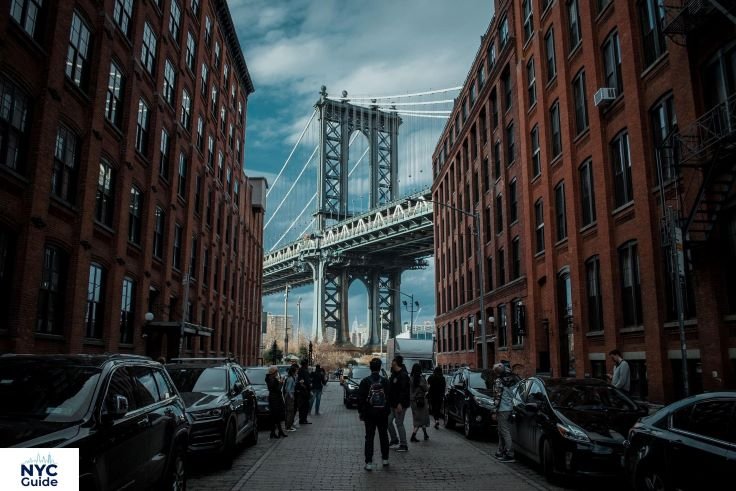
Washington Street in DUMBO, looking upward through the bridge arches with the Manhattan Bridge and Empire State Building framed perfectly behind.
The waterfront in Brooklyn Bridge Park, looking across the water at the full bridge from the side. This spot is best at sunset.
Seeing the Brooklyn Bridge by Boat
Why Boat Tours Are Popular
Walking the bridge gives you one perspective. Seeing it from the water gives you an entirely different one. From a boat on the East River, you can appreciate the full scale of the structure in a way that’s impossible from the bridge itself.
Boat tours also let you see the bridge alongside other iconic New York landmarks the skyline, Governors Island, the Statue of Liberty, and the harbor. It’s a much broader perspective on the city.
Best Harbor Views of the Bridge
The best harbor views of the Brooklyn Bridge come from somewhere in the middle of the East River, positioned roughly south of the bridge looking north. From there, you see both towers framing the Manhattan skyline behind them.
Circles Line tours and other New York Harbor boat tours all include excellent views of the Brooklyn Bridge as part of their routes. The East River Ferry also offers great views as it travels between Brooklyn and Manhattan.
Brooklyn Bridge Sunset Cruises
Several companies offer sunset cruises specifically designed to showcase the Brooklyn Bridge and the Manhattan skyline at golden hour. These are popular for tourists and very popular for proposals.
The light at sunset on the bridge is genuinely spectacular. The stone towers glow warm amber, and the cables catch the light in a beautiful way. Prices for dedicated sunset cruises typically range from around $30 to $60 per person depending on the operator and what’s included.
Nearby Waterfront Attractions
After walking the bridge, the Brooklyn waterfront offers several excellent options:
Brooklyn Bridge Park stretches for 1.3 miles along the waterfront. It has sports fields, playgrounds, a beach, and incredible views. Jane’s Carousel, a restored 1920s carousel inside a glass pavilion, sits right at the water’s edge.
DUMBO is just inland from the bridge on the Brooklyn side. It has excellent restaurants, coffee shops, galleries, and the famous Washington Street photo spot. Time Out Market New York in DUMBO is a great option for a meal with many vendors under one roof.
The Brooklyn Bridge’s Cultural Impact
The Bridge in Movies and TV Shows
The Brooklyn Bridge appears in hundreds of films and television shows. It has been featured in superhero movies, romantic comedies, thrillers, and documentaries. It is one of the most filmed structures in the world.
When directors want to establish New York City quickly, they cut to the Brooklyn Bridge. It communicates “New York” instantly to audiences anywhere in the world. Few landmarks carry that kind of universal visual shorthand.
Why It Became a Symbol of New York
The Brooklyn Bridge became a symbol of New York because it represented the best of the city’s character ambition, resilience, diversity, and the willingness to attempt the impossible. New York was already remarkable in the 1880s, and the bridge felt like its perfect expression.
It also represented American industrialism and progress at a moment when America was establishing itself as a world power. The bridge was proof that American engineering and labor could achieve something truly extraordinary.
Anniversary Celebrations
The Brooklyn Bridge’s anniversary celebrations have been major events. The 100th anniversary in 1983 included fireworks, speeches, and a massive public celebration. The 125th anniversary brought similar events. The 140th anniversary in 2023 was also commemorated with public programs and media coverage.
Each anniversary brings renewed attention to the bridge’s history and the people who built it. Emily Warren Roebling and Washington Roebling have received increasing recognition in recent decades for their extraordinary contributions.
Its Role in Art, Photography, and Literature
From the day it opened, the Brooklyn Bridge inspired artists. Joseph Stella’s painting “Brooklyn Bridge” from 1919 is one of the most famous American artworks of the 20th century. Hart Crane’s long poem “The Bridge” used the structure as its central metaphor for American identity.
Photographers have been documenting the bridge since the 1880s. Alfred Stieglitz, Walker Evans, and countless others made iconic images of it. It remains one of the most photographed subjects in American art history.
Frequently Asked Questions About the Brooklyn Bridge
Yes, walking across the Brooklyn Bridge is free and open to everyone. The pedestrian walkway runs the full length of the bridge. The walk takes about 30 to 40 minutes one way at a relaxed pace. Cyclists must use the designated lane on the walkway.
The Brooklyn Bridge took 14 years to build. Construction ran from January 1870 to the opening on May 24, 1883. It was one of the longest construction projects of its era.
The Brooklyn Bridge opened on May 24, 1883. As of 2024, it is 141 years old. Construction began in 1870, so the project itself spans more than 150 years of history.
The Brooklyn Bridge is famous for its beautiful design, its engineering innovation, its remarkable construction story, and its role as a symbol of New York City. It was the world’s longest suspension bridge when it opened and remains one of the most recognized structures on earth.
Yes. When the Brooklyn Bridge opened in 1883, it charged tolls for pedestrians and vehicles. Pedestrians paid one cent. Today, pedestrians and cyclists cross for free. Vehicle tolls are still collected electronically.
The Brooklyn Bridge is unique among New York City bridges for several reasons. It is the oldest of the major East River bridges. It is the only one with a raised central pedestrian walkway offering elevated views. Its Gothic stone towers are architecturally distinctive. And its construction story — involving the Roebling family’s sacrifices gives it a human depth that purely functional bridges lack.
Final Thoughts
The Brooklyn Bridge is many things at once. It’s a feat of engineering, a work of art, a piece of living history, and one of the great public spaces in any city in the world. Every Brooklyn Bridge fact you learn opens a door to another story about ambition, sacrifice, resilience, and the extraordinary things people can achieve.
If you ever visit New York, walk across it. Go early in the morning. Stop in the middle. Look at the skyline. Think about the Roeblings. Think about the workers who spent years in the dark beneath the river. Think about Emily Warren Roebling carrying a rooster on opening day, having carried the whole project on her shoulders for years.
The Brooklyn Bridge earns its fame completely. It always has.