
If you’ve ever walked through the heart of Manhattan, you’ve probably looked up at the towering skyscrapers around Times Square and wondered what are these buildings, and what’s inside them? One structure that often catches the eye is Four Times Square New York City, a massive office tower that stands proudly in the middle of one of the world’s most famous neighborhoods.
Many visitors don’t realize this building has a fascinating story. It’s not just another glass tower. It changed how New York City thinks about green architecture, and for years it was home to some of the most powerful media companies in the world. Whether you’re a tourist, a history lover, or just curious, this guide will tell you everything you need to know.
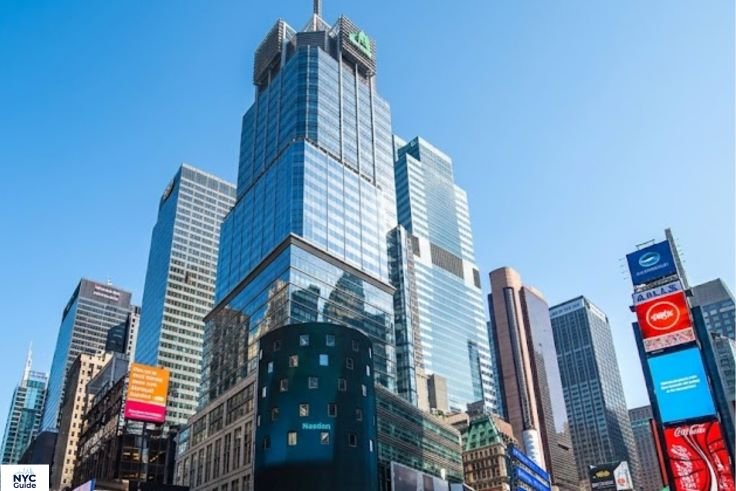
In this complete guide, you’ll learn about its history, architecture, ownership, sustainability features, and exactly how to get there. By the end, you’ll have a full picture of why this building matters and what to do when you visit the area.
What Is Four Times Square in New York City?
Overview of the Building
Four Times Square is a 48-story commercial office skyscraper located in Midtown Manhattan. It was completed in 1999 and rises approximately 809 feet (247 meters) above street level. The building was developed by the Durst Organization, one of New York’s oldest and most respected real estate families.
For many years, it served as the headquarters of Condé Nast, the global media giant behind magazines like Vogue, The New Yorker, and Wired. Because of that long association, the building is widely known as the Condé Nast Building, even though the company has since relocated.
Location in Times Square
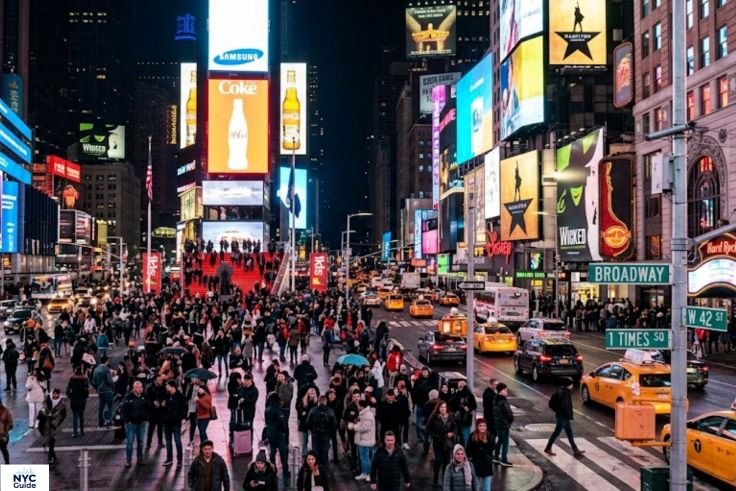
The building sits at 1475 Broadway, right in the thick of Times Square’s commercial corridor. If you’ve stood in Times Square and looked north, you’ve almost certainly seen it. It rises cleanly above the neon-lit streets and the constant flow of tourists.
Why It’s Important
Four Times Square was a landmark in more ways than one. When it was built, it became one of the first skyscrapers in the United States designed with serious environmental and sustainability standards. That decision pushed the entire construction industry to think differently about how tall buildings should be built. It was ahead of its time, and its influence continues to this day.
Where Is Four Times Square Located?
Exact Address
The official address of Four Times Square is 1475 Broadway, New York, NY 10036. This places it squarely in the Times Square district of Midtown Manhattan, between West 42nd Street and West 43rd Street.
Nearby Landmarks
The building is surrounded by some of New York City’s most iconic locations:
- Times Square — literally at your doorstep
- Bryant Park — just a few blocks east, perfect for a relaxing break
- Broadway Theatre District — within easy walking distance
- Port Authority Bus Terminal — a short walk west on 42nd Street
- Grand Central Terminal — about 10 minutes east on foot
Map Context
If you’re navigating by landmarks, Four Times Square sits just north of the famous TKTS steps and the red bleachers at Times Square. The building’s large digital billboard signs on its lower floors make it easy to identify even from a distance.
History of Four Times Square
Construction Timeline
Construction on Four Times Square began in 1996 and was completed in 1999. The project was developed by the Durst Organization, which has been shaping the Manhattan skyline since the early 20th century.
The building was designed by the architecture firm Fox & Fowle Architects (now FXFOWLE), with a focus on creating a modern, high-performance tower that met new environmental standards.
Development of Times Square
By the 1990s, Times Square was going through a massive transformation. It had spent decades with a rough reputation, but city-led redevelopment efforts in the late 1980s and 1990s began attracting serious corporate investment. The Durst Organization bet big on this transformation, and Four Times Square was one of its most ambitious moves.
When the building opened in 1999, Times Square was already well on its way to becoming the business and entertainment hub it is today. The tower helped anchor the north end of the square as a legitimate corporate address.
Role in NYC Commercial Growth
Four Times Square became a symbol of Midtown Manhattan’s commercial revival. Its arrival along with the arrival of a major tenant like Condé Nast sent a clear message: serious, global companies were willing to plant their flag in Times Square. That confidence helped attract more investment and shaped the neighborhood we see today.
Who Owns Four Times Square?
Ownership Details
Four Times Square is owned and managed by the Durst Organization. This family-run real estate company was founded in 1915 and has developed dozens of significant Manhattan properties. Douglas Durst and his family have led the organization through several generations, maintaining a reputation for quality and innovation.
Real Estate Background
The Durst Organization didn’t just build Four Times Square they pioneered the idea of making it a green building at a time when that concept was barely on anyone’s radar in commercial real estate. Their investment in sustainability features made the tower a case study in responsible development.
Business Importance
Owning a building at 1475 Broadway is no small thing. The location puts the Durst Organization at the center of one of the highest-traffic commercial corridors in the world. The building generates significant rental income and remains a prestigious Manhattan address.
Architecture and Design of Four Times Square
Skyscraper Design
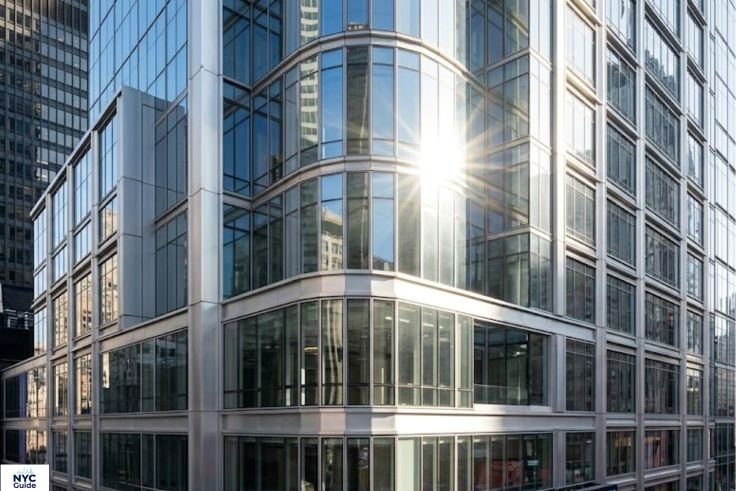
Four Times Square was designed by Fox & Fowle Architects, a firm known for thoughtful urban design. The building follows a sleek, curtain-wall glass tower design that blends into the Midtown skyline while still standing out for its height and proportion.
The facade uses a mix of glass and aluminum panels, giving it a clean, modern appearance. The lower floors incorporate large digital signage panels, which is almost mandatory for any building on the Times Square corridor.
Height and Floors
- Height: Approximately 809 feet (247 meters)
- Floors: 48 above ground
- Total floor area: Over 1.5 million square feet of rentable space
Unique Structural Features
One of the more interesting structural choices was the integration of sustainability systems directly into the building’s mechanical infrastructure. The architects worked closely with environmental engineers from the beginning not as an afterthought, but as a core design requirement. This was genuinely unusual for a commercial tower in the late 1990s.
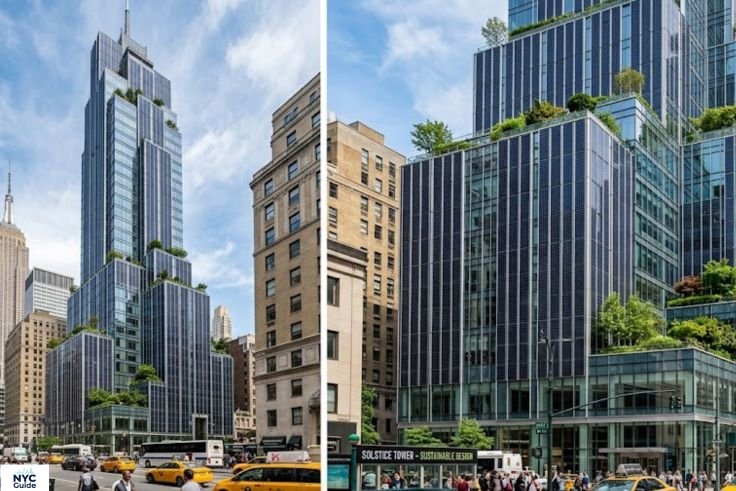
The building also has fuel cells on its roof and solar panels integrated into the facade on its upper floors features that were remarkably forward-thinking for the era.
Why Four Times Square Is Called the Condé Nast Building
Connection with Condé Nast
When Four Times Square opened, its anchor tenant was Condé Nast Publications, the powerhouse media company. Condé Nast occupied a massive portion of the building and stayed for over 15 years, until relocating to One World Trade Center in 2014. During that time, the tower became synonymous with the company’s name.
The Condé Nast Building nickname stuck. Even today, many New Yorkers and real estate professionals refer to it by that name, even though Condé Nast no longer holds offices there.
Major Tenants
Over the years, Four Times Square the Condé Nast Building has housed a number of significant corporate tenants including legal firms, finance companies, and media organizations. After Condé Nast’s departure, the Durst Organization worked to fill the large vacant floors with new tenants.
Branding Significance
For Condé Nast, having a Times Square address was a branding statement. Fashion, media, and culture all intersect in Times Square, and the Condé Nast Building location reinforced the company’s identity as a hub of global style and influence.
Sustainability Features of Four Times Square
Green Building Concept
When Four Times Square was completed in 1999, it became one of the first environmentally responsible skyscrapers in New York City possibly in the entire United States. The Durst Organization made a deliberate choice to go beyond standard construction codes and build something genuinely sustainable.
Energy Efficiency
The building incorporates several impressive green features:
- Fuel cells on the roof to generate electricity
- Solar panels integrated into the south and east facades on floors 37 through 43
- Non-toxic and recycled materials used throughout construction
- High-performance glazing to reduce heat gain and energy loss
- Indoor air quality systems designed to reduce pollutants inside the building
At the time, these features were almost unheard of in a large commercial tower. The building used roughly 35–40% less energy than a comparable conventional skyscraper.
Why It Was Ahead of Its Time
Most developers in the 1990s didn’t think green buildings were worth the extra cost. The Durst Organization proved them wrong. Four Times Square showed that sustainable design was not only possible at skyscraper scale it was also financially viable. It became a model that influenced green building standards across the country and helped shape what would eventually become the LEED certification framework.
Offices and Businesses Inside Four Times Square
Media Companies
For most of its history, the dominant presence inside the building was Condé Nast, whose editorial teams for Vogue, GQ, The New Yorker, Vanity Fair, and other titles worked in these offices. Visiting the lobby at the right time of day, you might have spotted editors and writers heading in or out.
Corporate Offices
Beyond media, the building has housed law firms, financial services companies, and various corporate tenants. The large floor plates typical of modern Manhattan office towers make it attractive for companies that need space to grow.
Commercial Use
The ground-floor retail spaces along Broadway have hosted various restaurants, retailers, and service businesses over the years. This is common for Times Square towers, where street-level foot traffic is enormous.
Can You Visit Four Times Square?
Public Access vs Private Building
Four Times Square is a private commercial office building. It is not a tourist attraction in the traditional sense. There is no observation deck, no ticketed entry, and no public tours. The lobby is semi-accessible during business hours if you have a meeting or delivery, but general public access is limited.
What Tourists Can and Can’t Do
You can:
- Walk past and admire the exterior
- Take photos from the street
- Observe the large digital billboard displays on the facade
- Visit nearby attractions just steps away
You cannot:
- Enter the building without a valid reason (meeting, appointment)
- Access upper floors without tenant authorization
- Take a tourist elevator or observation tour
If you want to experience Times Square architecture up close, the exterior of Four Times Square is impressive enough on its own. The scale of the building becomes very apparent when you’re standing directly beneath it at street level.
Things to See Around Four Times Square
When I visited this area, I was genuinely overwhelmed by how much there is to do and see within a short walking radius. Here’s what I’d recommend:
Times Square Attractions
Times Square itself needs no introduction. The lights, the energy, the street performers — it’s unlike anywhere else on earth. Spend at least an hour just wandering and taking it in. The TKTS booth near the red steps offers same-day discounted Broadway tickets, which is a great option if you want to catch a show without paying full price.
Bryant Park
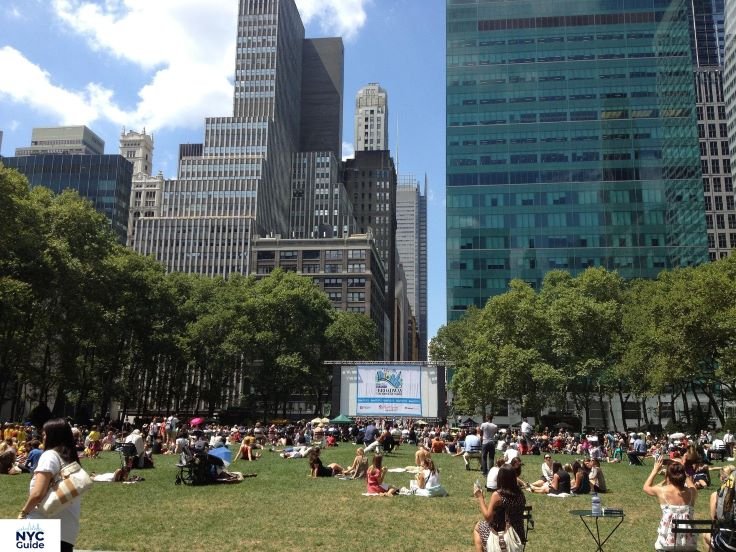
About five minutes east on 42nd Street, Bryant Park is one of Manhattan’s most beloved green spaces. It has free Wi-Fi, seasonal events, a carousel, and in winter it hosts a free ice skating rink. After the sensory overload of Times Square, Bryant Park feels like a genuine exhale.
Broadway Theatre District
The Broadway Theatre District stretches from roughly 40th to 54th Street between 6th and 9th Avenues. World-famous shows have run here for decades. Even if you don’t catch a performance, walking past the illuminated marquees at night is magical. Book tickets in advance through official ticketing sites or try your luck at the TKTS booth.
Other Nearby Highlights
- Rockefeller Center — about 10 minutes north
- The High Line — a longer walk west, but worth it
- Museum of Modern Art (MoMA) — 10–15 minutes north on foot
- Hudson Yards — accessible by subway
Four Times Square vs Other NYC Skyscrapers
Comparison with Nearby Buildings
New York City is full of iconic towers, so how does Four Times Square stack up?
| Building | Height | Floors | Known For |
| Four Times Square | 809 ft | 48 | Green design, Condé Nast |
| Empire State Building | 1,454 ft | 102 | Observation deck, iconic skyline |
| One World Trade Center | 1,776 ft | 104 | Tallest in Western Hemisphere |
| Chrysler Building | 1,046 ft | 77 | Art Deco design |
| 30 Rockefeller Plaza | 850 ft | 70 | NBC Studios, Top of the Rock |
Importance in the Skyline
Four Times Square may not be the tallest building in New York, but it punches above its weight in terms of cultural and architectural significance. Its green building credentials, its role in the Times Square revival, and its association with Condé Nast give it a story that many taller buildings simply don’t have.
For architecture enthusiasts, it belongs on the list of must-know Manhattan skyscrapers alongside more famous names.
Interesting Facts About Four Times Square
Here are some facts that most visitors don’t know:
- First green skyscraper: When completed in 1999, Four Times Square was widely considered one of the first large commercial buildings in the U.S. built to strict environmental standards.
- Solar panels in the 1990s: Installing solar panels on a skyscraper facade in the late 1990s was considered radical. Most developers thought it was unnecessary.
- Condé Nast’s long tenure: The Condé Nast Building housed the company’s editorial offices for approximately 15 years before they relocated to One World Trade Center.
- Fuel cells on the roof: The building uses hydrogen fuel cells to supplement its electricity — a feature more common today but genuinely pioneering in 1999.
- 1.5 million square feet: The rentable office space inside equals roughly 140,000 square meters — enough to fill multiple city blocks horizontally.
- Durst family legacy: The Durst Organization has owned and developed Manhattan real estate for over 100 years, and Four Times Square remains one of their most recognized properties.
How to Get to Four Times Square
Getting to 1475 Broadway is easy Times Square is one of the best-connected transit hubs in New York City.
Subway Stations
The closest subway stations are:
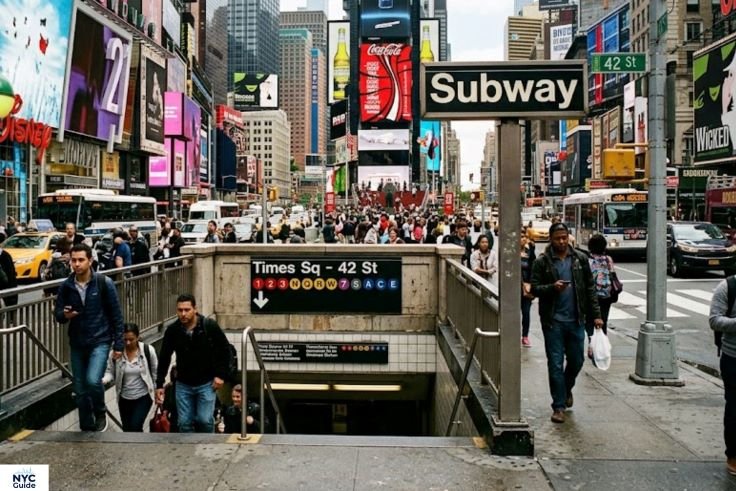
- Times Square – 42nd Street Station — serves the N, Q, R, W, S, 1, 2, 3, 7, and A, C, E lines. This is the main hub and puts you directly at the building.
- 49th Street Station — serves the N and R lines, a short walk south.
Walking Directions
From Times Square Station, exit toward 42nd Street and Broadway. Walk north along Broadway for about a block. The building entrance is between 42nd and 43rd Streets on Broadway. You’ll recognize it by the large digital displays on the lower facade.
Transport Options
- Bus: Multiple MTA bus routes serve 42nd Street and Broadway.
- Taxi or rideshare: Drop off on Broadway or 7th Avenue and walk.
- On foot: If you’re already in Midtown, it’s walkable from most hotels between 34th and 57th Street.
Tip: Avoid driving to Times Square. Traffic and parking in this area are extremely difficult and expensive. Subway is always the best choice.
Best Time to Visit Times Square Area
Day vs Night
The area around Four Times Square looks completely different depending on the time of day.
Daytime: Easier to navigate, less crowded (relatively), better for photos of the building’s architecture and scale. You can clearly see the solar panel integration on the upper floors.
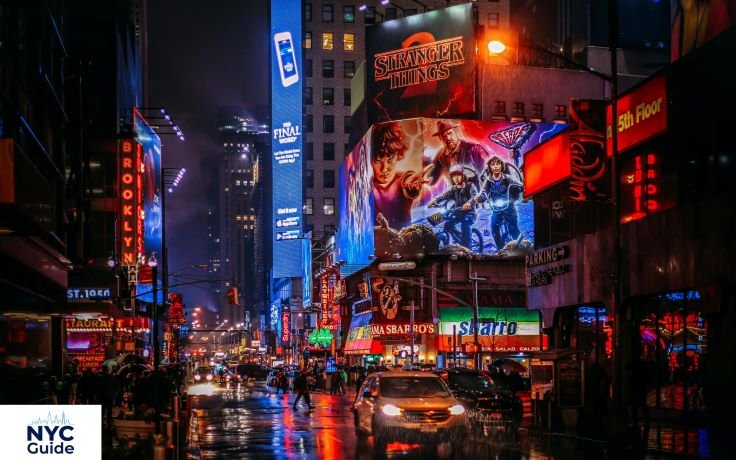
Nighttime: Times Square comes alive after dark. The neon signs and digital billboards light up the entire neighborhood. It’s visually stunning and feels electric. However, crowds are larger and the sensory experience is more intense.
Crowd Levels
- Early morning (before 9 AM): Quietest time. Ideal for photography.
- Midday (11 AM – 2 PM): Very busy with tourists and workers.
- Evening (6 PM – 10 PM): Peak Times Square experience — loud, bright, crowded.
- Late night (after 11 PM): Still busy on weekends, calmer on weekdays.
Experience Tips
- Avoid visiting during major events like New Year’s Eve unless you specifically want that experience crowds reach hundreds of thousands.
- Weekdays are generally less packed than weekends.
- Summer is peak tourist season; late fall and winter (except holidays) tend to have slightly smaller crowds.
Final Thoughts on Four Times Square New York City
Four Times Square New York City is more than just a tall building on a famous street. It’s a piece of urban history a structure that helped define a neighborhood’s revival, hosted the editorial offices of some of the world’s most influential magazines, and quietly led a green building revolution that changed how skyscrapers are designed.
You might not be able to ride an elevator to the top or wander the floors. But standing outside and knowing the story behind this tower makes the experience richer. It’s the kind of building that rewards curiosity.
If you’re visiting Times Square and most people who come to New York City do take a moment to look up at the Condé Nast Building. Think about the sustainability engineers who figured out how to put solar panels on a skyscraper in 1999. Think about the fashion editors and writers who once worked behind those glass panels. Think about what it took to transform Times Square from what it was into what it is today.
That story, quietly told in steel and glass, is worth knowing.
FAQs About Four Times Square NYC
Four Times Square is a 48-story commercial office skyscraper located at 1475 Broadway in Midtown Manhattan. It was built in 1999 by the Durst Organization and is known for being one of the first green skyscrapers in New York City.
It’s famous for two main reasons: its long association with Condé Nast Publications, which earned it the nickname the Condé Nast Building, and its pioneering sustainability features, including rooftop fuel cells and facade-integrated solar panels.
No. It’s a private office building. Tourists cannot access the upper floors or take tours. You can walk past, admire the exterior, and take photos from the street.
The building is owned by the Durst Organization, a family-run Manhattan real estate company that has been developing properties in New York for over a century.
The most famous tenant was Condé Nast, which occupied the building from 1999 to approximately 2014. Since then, various corporate tenants including law firms and financial companies have leased space in the building.
The building stands approximately 809 feet (247 meters) tall and has 48 floors.
The Times Square – 42nd Street Station, served by the N, Q, R, W, 1, 2, 3, 7, A, C, and E lines, is the closest subway stop.